ACCC association of cancer care centers
Join/Renew
Login
Join/Renew
Login
Education & Resources
ACCC eXchange LogInCorporate Member Sponsored ResourcesPresentations & AbstractsPresident's ThemeACCC Connect eLearning LogIn
Publications
Oncology IssuesPatient Assistance & Reimbursement GuideTrending Now in Cancer Care
Events
2026 ACCC Leadership SummitAnnual Meeting & Cancer Center Business SummitCapitol Hill DayNational Oncology ConferenceOncology Reimbursement MeetingsOncology State Society Meetings
Policy & Advocacy
2024 Policy Wrap-Up and ACCC 2025 Policy PrioritiesLetters & StatementsAccess, Payment & Reimbursement ReformWhite Bagging & Brown BaggingAdvocacy ResourcesCancer Moonshot
Membership
Join | RenewWho We AreMembership Types & BenefitsCorporate MembersACCC Member Portal FAQMember Directory
Partners
Oncology State SocietiesPartner OrganizationsCME
News
News ReleasesAdvocacy News ReleasesOncology News
About ACCC
Timeline / 50th Anniversary2025 Impact ReportACCC Innovator AwardsACCC FellowsACCC Senior Staff
Breast CancerMetastatic Breast Cancer
Gastrointestinal CancerBiliary Tract CancerColorectal CancerGastric CancerLiver Cancer
Genitourinary CancerBladder CancerProstate CancerRenal Cell Carcinoma
Gynecologic CancerOvarian Cancer
Head & Neck Cancer
Hematologic MalignanciesAcute Lymphocytic Leukemia (ALL)Acute Myeloid Leukemia (AML)Chronic Lymphocytic Leukemia (CLL)Mantle Cell Lymphoma (MCL)Multiple Myeloma (MM)Myelodysplastic Syndromes (MDS)
Lung CancerNon-Small Cell Lung Cancer (NSCLC)Small Cell Lung Cancer (SCLC)
Sarcoma
Skin CancerMelanomaNon-Melanoma Skin Cancers (NMSC)
Clinical Practice & TreatmentCancer DiagnosticsCare CoordinationEHR Integration for Biomarker TestingQuality Improvement Collaboration: Integration of Precision Medicine in Community OncologyTreatment
Financial NavigationFAN Boot CampFinancial Advocacy Network (FAN) Resource LibraryPatient Assistance & Reimbursement GuidePrior Authorization
Health Equity & Access3, 2, 1, Go! Practical Solutions for Addressing Cancer Care DisparitiesAppalachian Community Cancer AllianceOncology Advanced PractitionersPersonalizing Care for Patients of All BackgroundsSocial Drivers of Health
Patient-Centered CareAddressing Care Disparities for VeteransAdolescent and Young Adult (AYA)Care Action Plans for People with CancerDermatologic ToxicitiesEmpowering CaregiversGeriatric OncologyHealth LiteracyNutritionOncology PharmacyPatient NavigationPsychosocial Care in OncologyShared Decision-MakingSupportive CareSurvivorship Care
Practice Management & OperationsCancer Program FundamentalsLeadership Sustainment and Engagement VideosOncology Practice Transformation and Integration CenterOncology Team Resiliency
ResearchACCC Community Oncology Research Institute (ACORI)
Technology & InnovationTelehealth & Digital Medicine
ACCCBuzz Blog
CANCER BUZZ Podcast
Oncology Issues
Join/Renew
Login
Breast CancerMetastatic Breast Cancer
Gastrointestinal CancerBiliary Tract CancerColorectal CancerGastric CancerLiver Cancer
Genitourinary CancerBladder CancerProstate CancerRenal Cell Carcinoma
Gynecologic CancerOvarian Cancer
Head & Neck Cancer
Hematologic MalignanciesAcute Lymphocytic Leukemia (ALL)Acute Myeloid Leukemia (AML)Chronic Lymphocytic Leukemia (CLL)Mantle Cell Lymphoma (MCL)Multiple Myeloma (MM)Myelodysplastic Syndromes (MDS)
Lung CancerNon-Small Cell Lung Cancer (NSCLC)Small Cell Lung Cancer (SCLC)
Sarcoma
Skin CancerMelanomaNon-Melanoma Skin Cancers (NMSC)
Clinical Practice & TreatmentCancer DiagnosticsCare CoordinationEHR Integration for Biomarker TestingQuality Improvement Collaboration: Integration of Precision Medicine in Community OncologyTreatment
Financial NavigationFAN Boot CampFinancial Advocacy Network (FAN) Resource LibraryPatient Assistance & Reimbursement GuidePrior Authorization
Health Equity & Access3, 2, 1, Go! Practical Solutions for Addressing Cancer Care DisparitiesAppalachian Community Cancer AllianceOncology Advanced PractitionersPersonalizing Care for Patients of All BackgroundsSocial Drivers of Health
Patient-Centered CareAddressing Care Disparities for VeteransAdolescent and Young Adult (AYA)Care Action Plans for People with CancerDermatologic ToxicitiesEmpowering CaregiversGeriatric OncologyHealth LiteracyNutritionOncology PharmacyPatient NavigationPsychosocial Care in OncologyShared Decision-MakingSupportive CareSurvivorship Care
Practice Management & OperationsCancer Program FundamentalsLeadership Sustainment and Engagement VideosOncology Practice Transformation and Integration CenterOncology Team Resiliency
ResearchACCC Community Oncology Research Institute (ACORI)
Technology & InnovationTelehealth & Digital Medicine
ACCCBuzz Blog
CANCER BUZZ Podcast
Oncology Issues
    • Education & Resources
    • Publications
    • Events
    • Policy & Advocacy
    • Membership
    • Partners
    • News
    • About ACCC
ACCC association of cancer care centers
1801 Research Boulevard, Suite 400, Rockville, MD 20850
Tel: 301.984.9496 Fax: 301.770.1949 Email Us
Contact UsVolunteers
Advertise
Career Center
Terms and Conditions
Privacy Policy
ACCC Rebranding
Copyright © 2026 Association of Cancer Care Centers. All Rights Reserved.
Advertisement

Blog

Article

August 31, 2023

The Road to Comprehensive Biomarker Testing for All

In the era of personalized medicine, biomarker testing is a tool the oncology workforce can and should leverage to deliver next generation cancer care.

The Road to Comprehensive Biomarker Testing for All

Every patient’s cancer journey is unique, and in this era of personalized medicine, the oncology workforce has the tools to match the specific needs of patients with cancer. One of those tools is biomarker testing and it plays an important role in facilitating personalized cancer care by allowing oncologists to identify specific genetic mutations and alterations that can guide treatment decisions and enhance treatment efficacy. This testing minimizes a trial-and-error approach, reduces adverse treatment effects, enhances access to clinical trials, and improves prognostic information about the

As with many advances in healthcare, access to biomarker testing has not been available to all patients due to a lack of comprehensive coverage. Medicare patients and even patients with private insurance have access to biomarker testing on a case-by-case basis, considering factors such as the specific test, its purpose, the type of cancer, and the clinical context. Patients with Medicaid, state-based insurance plans, or those who are underinsured, have the least access to testing. Recent developments in state legislative efforts have underscored the importance of reshaping coverage for these patients and creating pathways for access.

Policy Landscape

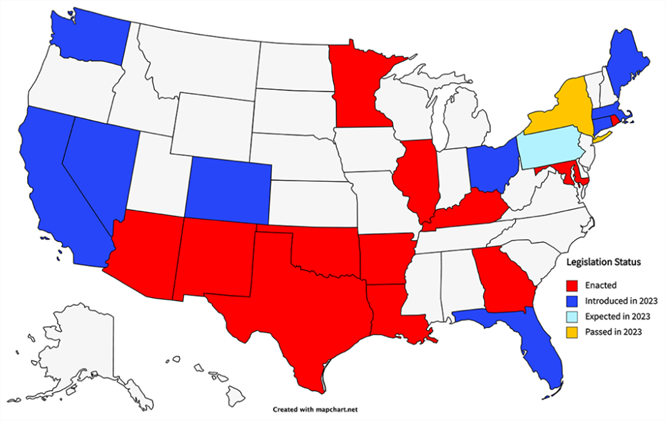
Over the last few years, the American Cancer Society Cancer Action Network (ACS CAN) has partnered with several organizations and cancer centers across the country to pass state legislation enabling comprehensive biomarker coverage for all patients. So far, 12 states have passed legislation, and an additional 10 states introduced legislation during the 2023 legislative session. For more information about the ACS CAN campaign, visit their website. The map below illustrates the current policy landscape:

Legislation enacted: AZ, IL, LA, RI, KY, NM, MD, MN, TX, GA, AR*, OK
Legislation passed in 2023: NY
Legislation introduced in 2023: CA, CT, CO, FL, MA, ME, NV, OH, PA (expected)

Source: fightcancer.org

The recent passage of state laws that emphasize biomarker testing in cancer care represents a significant step forward in personalized care for all. However, policy change is only half of the picture—implementation is the next step. The multidisciplinary cancer care team now has more tools at their fingertips than ever to enable more patients to receive targeted therapies and better outcomes. The navigation and implementation of these new laws requires proactive efforts by providers; collaboration across the multidisciplinary team; greater education for patients; increased engagement with insurance providers; streamlined workflows; and solutions for infrastructure barriers.

How ACCC is Helping

The Association of Community Cancer Centers (ACCC) is leading the way through initiatives such as Evolving Biomarkers in NSCLC, Emerging Biomarkers: Innovative Therapies for NTRK Gene Fusion Testing, and Eliminating Precision Medicine Disparities, which offers multidisciplinary cancer care teams guidance and support on navigating the evolving biomarker testing landscape. ACCC is also launching a new program, Improving Access to Biomarker Testing in Medicaid Populations, which will examine patient and provider perspectives on disparities in access and raise awareness on the critical value of comprehensive biomarker testing for all populations.

While hurdles exist, the benefits of integrating biomarker testing into patient treatment plans are clear. By staying informed, collaborating across disciplines, and advocating for patients, oncology providers can navigate the complexities of state laws and successfully overcome implementation challenges. Through these efforts, the potential for improved patient outcomes and more effective cancer treatment can become a staple of next generation cancer care.

To find more tools and resources related to biomarker testing visit the Cancer Diagnostics webpage.

ACCC’s Cancer Diagnostics: Transforming Complex to Clear education program is supported by AstraZeneca, Amgen, Bristol Myers Squibb, Exact Sciences, Lilly Oncology, and Merck.