ACCC association of cancer care centers
Join/Renew
Login
Join/Renew
Login
Education & Resources
ACCC eXchange LogInSponsored Education from ACCC Corporate PartnersACCC eLearning LogInPresentations & Abstracts
Publications
Oncology IssuesPatient Assistance & Reimbursement GuideTrending Now in Cancer CareBusiness Case Studies for Hiring New Staff
Events
2026 ACCC Leadership SummitAnnual Meeting & Cancer Center Business SummitCapitol Hill DayNational Oncology ConferenceOncology Reimbursement MeetingsOncology State Society Meetings
Policy & Advocacy
ACCC 2026 Policy PrioritiesLetters & StatementsAccess, Payment & Reimbursement ReformWhite Bagging & Brown BaggingAdvocacy ResourcesCancer Moonshot
Membership
Join | RenewWho We AreMembership Types & BenefitsCorporate MembersACCC Member Portal FAQMember Directory
Partners
Oncology State SocietiesPartner OrganizationsCME
News
News ReleasesAdvocacy News ReleasesOncology News
About ACCC
Timeline / 50th Anniversary2025 Impact ReportPresident's ThemeACCC Innovator AwardsACCC FellowsBoard of TrusteesACCC Senior Staff
Breast CancerMetastatic Breast Cancer
Gastrointestinal CancerBiliary Tract CancerColorectal CancerGastric CancerLiver Cancer
Genitourinary CancerBladder CancerProstate CancerRenal Cell Carcinoma
Gynecologic Cancer
Head & Neck Cancer
Hematologic MalignanciesAcute Lymphocytic Leukemia (ALL)Acute Myeloid Leukemia (AML)Chronic Lymphocytic Leukemia (CLL)Mantle Cell Lymphoma (MCL)Multiple Myeloma (MM)Myelodysplastic Syndromes (MDS)
Lung CancerNon-Small Cell Lung Cancer (NSCLC)Small Cell Lung Cancer (SCLC)
Sarcoma
Skin CancerMelanomaNon-Melanoma Skin Cancers (NMSC)
Clinical Practice & TreatmentCancer DiagnosticsCare CoordinationEHR Integration for Biomarker TestingQuality Improvement Collaboration: Integration of Precision Medicine in Community OncologyTreatment
Financial NavigationFAN Boot CampFinancial Advocacy Network (FAN) Resource LibraryPatient Assistance & Reimbursement GuidePrior Authorization
Health Equity & Access3, 2, 1, Go! Practical Solutions for Addressing Cancer Care DisparitiesAppalachian Community Cancer AllianceOncology Advanced PractitionersPersonalizing Care for Patients of All BackgroundsSocial Drivers of Health
Patient-Centered CareAddressing Care Disparities for VeteransAdolescent and Young Adult (AYA)Care Action Plans for People with CancerDermatologic ToxicitiesEmpowering CaregiversGeriatric OncologyHealth LiteracyNutritionOncology PharmacyPatient NavigationPsychosocial Care in OncologyShared Decision-MakingSupportive CareSurvivorship Care
Practice Management & OperationsCancer Program FundamentalsLeadership Sustainment and Engagement VideosOncology Practice Transformation and Integration CenterOncology Team Resiliency
ResearchACCC Community Oncology Research Institute (ACORI)
Technology & InnovationTelehealth & Digital Medicine
ACCCBuzz Blog
CANCER BUZZ Podcast
Oncology Issues
Join/Renew
Login
Breast CancerMetastatic Breast Cancer
Gastrointestinal CancerBiliary Tract CancerColorectal CancerGastric CancerLiver Cancer
Genitourinary CancerBladder CancerProstate CancerRenal Cell Carcinoma
Gynecologic Cancer
Head & Neck Cancer
Hematologic MalignanciesAcute Lymphocytic Leukemia (ALL)Acute Myeloid Leukemia (AML)Chronic Lymphocytic Leukemia (CLL)Mantle Cell Lymphoma (MCL)Multiple Myeloma (MM)Myelodysplastic Syndromes (MDS)
Lung CancerNon-Small Cell Lung Cancer (NSCLC)Small Cell Lung Cancer (SCLC)
Sarcoma
Skin CancerMelanomaNon-Melanoma Skin Cancers (NMSC)
Clinical Practice & TreatmentCancer DiagnosticsCare CoordinationEHR Integration for Biomarker TestingQuality Improvement Collaboration: Integration of Precision Medicine in Community OncologyTreatment
Financial NavigationFAN Boot CampFinancial Advocacy Network (FAN) Resource LibraryPatient Assistance & Reimbursement GuidePrior Authorization
Health Equity & Access3, 2, 1, Go! Practical Solutions for Addressing Cancer Care DisparitiesAppalachian Community Cancer AllianceOncology Advanced PractitionersPersonalizing Care for Patients of All BackgroundsSocial Drivers of Health
Patient-Centered CareAddressing Care Disparities for VeteransAdolescent and Young Adult (AYA)Care Action Plans for People with CancerDermatologic ToxicitiesEmpowering CaregiversGeriatric OncologyHealth LiteracyNutritionOncology PharmacyPatient NavigationPsychosocial Care in OncologyShared Decision-MakingSupportive CareSurvivorship Care
Practice Management & OperationsCancer Program FundamentalsLeadership Sustainment and Engagement VideosOncology Practice Transformation and Integration CenterOncology Team Resiliency
ResearchACCC Community Oncology Research Institute (ACORI)
Technology & InnovationTelehealth & Digital Medicine
ACCCBuzz Blog
CANCER BUZZ Podcast
Oncology Issues
    • Education & Resources
    • Publications
    • Events
    • Policy & Advocacy
    • Membership
    • Partners
    • News
    • About ACCC
ACCC association of cancer care centers
5425 Wisconsin Ave #600, Chevy Chase, MD 20815
Tel: 301.984.9496 Email Us
Contact UsVolunteers
Advertise
Career Center
Terms and Conditions
Privacy Policy
ACCC Rebranding
Copyright © 2026 Association of Cancer Care Centers. All Rights Reserved.
HomeACCCBuzz Blog

Taking Care in a Pandemic

April 3, 2020

Taking Care in a Pandemic

For resources on COVID-19 as it applies to the oncology community, please visit ACCC’s continually updated Coronavirus Resource page. ACCC members can also access ACCCExchange, a forum that allows them to communicate in real time with their colleagues about how the COVID-19 virus is affecting their communities and their patients.

When COVID-19 was first detected in China late last year, it took everyone unawares. Just as would happen in the U.S. and across the globe only a few months later, healthcare providers in China were deployed seemingly overnight to fight a disease that no one had experienced before. With the mandate to “flatten the curve” as best they could, healthcare staff worked around the clock caring for overwhelming numbers of seriously ill and dying patients. The long days of treating the sick while wearing cumbersome protective gear and masks resulted in the exhaustion of body and mind, as many providers often tend to their own needs last.

As the pandemic continues to rage on a global scale, researchers are tapping the experiences of Chinese healthcare workers for lessons learned that can be applied to others. In response to a survey administered to approximately 1,300 front-line healthcare workers in China in late January 2020, 70 percent reported distress, 50 percent reported depression, 45 percent reported anxiety, and 34 percent reported insomnia.

Considering the circumstances brought about by the COVID-19 pandemic, these numbers are hardly surprising. But it remains alarming that the professionals on whom we depend to provide care during an unprecedented pandemic are themselves suffering from want of care.

Lessons Learned

Knowing how to package and deliver healthcare amid a global health crisis is difficult, even for mental health professionals. But many have recognized that the best source of any type of advice is often the insight of those who have lived through similar experiences—and emerged with hard-won wisdom.

In the case of the coronavirus, some healthcare workers who have tended to patients during another disease outbreak—most notably, those who were involved in the recent fight against Ebola—have taken to the Internet to share their experiences. Their words of advice range from the clinical (best practices for treating patients in an overloaded health system) to the practical (self-protection in a very contagious environment). But the most compelling truths often come from individual insights into the unique psychological toll that delivering clinical care in the midst of a pandemic can take.

For example, an emergency physician who worked in West Africa during the height of the Ebola epidemic writes in a recent article that the most important thing for healthcare workers to remember while working in an intense care environment is to take care of their own health. If you don’t, he writes, you won’t be able to help others. Besides the importance of ensuring you get enough rest and enough to eat, it’s essential to take some self-care time, however short it may be. “You are a precious and limited resource,” writes the doctor, “and you must act the part.”

Mindfulness

A word often associated with the self-care that many mental health professionals recommend to busy providers is “mindfulness.” The term is tossed around so much, it’s become a cultural buzzword. But what does it really mean to practice mindfulness?

Mental health professionals agree that mindfulness starts with awareness, with fully acknowledging your surroundings, being “awake to the moments of our lives.” Rather than positive thinking, being mindful means acknowledging what you feel and not judging yourself for your reactions. Doing so may help you be able to purposefully respond to the moment rather than reacting in a knee-jerk fashion.

In a recent CANCER BUZZ mini podcast on self-care during COVID-19,KristaNelson,MSW,LCSW,OSW-C,BCD, ACCC President-Elect and the Program Manager of Quality and Researchin theCancerSupportServicesandCompassiondepartment at Providence Cancer Institute, advises healthcare providers to “really pay attention not only to what you are feeling and how you are feeling it, but also consider not dwelling on the feeling. Acknowledge that we all suffer and that we all are having a hard time right now, and give yourself permission to feel the impact of that emotion on you.”

Two doctors from The Ohio State University Wexner Medical Center recently wrote that mindfulness is “disaster preparedness” in the sense that it “helps us not freak out when our initial reaction is to freak out by catastrophizing what MIGHT happen. … Mindfulness gives you the confidence that you can solve things that you can control and let go of the worry about things you can’t control.”

When you are in the midst of a busy shift in which there seem to be more patients than time to treat them, Krista Nelson recommends taking brief moments where you can find them to re-settle yourself. “I tend to take an opportunity when I use the hand sanitizer on the wall,” says Nelson. “In that moment, I feel the cold foam on my hand and feel my feet grounded. I close my eyes for just a moment, tell myself to forget about everything that happened before now. I just focus on my breath and everything in that room waiting for me, and I tell myself, ‘You’ve got this.’”

The Power of Music

Dean Quick, a board-certified music therapist at Levine Cancer Institute, has seen his profession take on new applications since the coronavirus outbreak. Quick explains that music therapy is “the clinical use of music to address non-musical goals.” He uses it to treat cancer patients experiencing the symptoms and side effects of treatment, such as nausea or pain. “Music therapists are trained to use music to create a space in which people can experience whatever they need to experience,” explains Quick.

Music-assisted relaxation, a clinical technique that music therapists facilitate, can be delivered remotely. Currently Quick is using music relaxation to help both patients and staff under significant stress due to COVID-19. “Music is the great emotional liberator,” says Quick. “Stress clouds over other emotions that may be present. You cannot feel those emotions if you are too bowed down by stress, anger, or grief. Music bypasses thinking, helping people directly access emotions in the moment.”

In this time of social distancing, Quick is making music and guided meditation available on his YouTube channel. He recently created the Music Therapy for Self-Care channel specifically in response to the growing need for sources of self-care for overburdened patients and healthcare providers. His videos range from 13 to 19 minutes and include guided imagery, song discussion, and simple stress-reducing techniques.

If your schedule does not allow time for you to watch a full video, Quick says you can still access the self-care you need. “If you do not have 10 to 20 minutes to spare, do you have 3 to 5 minutes?” asks Quick. “Take time to listen to your favorite song, one that lifts you up. Commit to listening to that song once a day. The moment you miss a day of checking in with yourself, the stress can build up and steamroll you. The more you can take even a little time to care for yourself, the less of a long-term battle you will have.”

Take Care of You

For many healthcare providers, the typical self-care tips do not apply. Recommendations to limit working hours or take extended breaks for activities such as sports or vacations are often difficult at any time, much less during a pandemic in which patient care can be an around-the-clock need.

Therefore, self-care must be a carefully constructed strategy that takes into account the conditions of the workplace and gives you an opportunity to carve out the space and time you need to fully function. Whether that involves listening to a favorite song, going outdoors for some fresh air, or centering yourself with some deep breathing, it should be something that you can easily commit to doing each day.

Although working with patients in the time of COVID-19 can make self-care extremely difficult, adopting as many of the behaviors below as possible will go a long way toward preserving your own mental and physical health:

  • Continually self-monitor and pace yourself.
  • Maintain a healthy diet and get adequate sleep and exercise.
  • Maintain helpful self-talk and avoid over-generalizing your fears.
  • Focus your efforts on what is within your power.
  • Accept situations you cannot change.
  • Avoid alcohol and excessive caffeine.
  • Avoid working too long by yourself without checking in with colleagues.
  • Avoid consuming excessive media coverage.
  • Avoid continually engaging in social media.
  • Talk to family, friends, and teammates about your experiences.

Finally, recognize that this situation is stressful, and don’t judge yourself for being fearful or anxious. “As healthcare providers, we have a reasonable tolerance of uncertainty,” says Krista Nelson, “And we have the ability to be flexible and use humor in times of crisis. But this is a very hard time; this is different. We need to be gentle with ourselves and have sources of self-distraction.”

In addition to a curated list of resources tailored to the needs of the cancer care community, the continually updated ACCC Coronavirus Resource page lists upcoming and on-demand podcasts and webinars aimed at addressing the needs of the cancer care team during the coronavirus pandemic. In an upcoming episode of our mini-podcast, Dean Quick will share additional self-care techniques.


Related Content

Decentralized Clinical Trials in Community Oncology: Advancing Access Requires More Than TechnologyACCCBuzz Blog

Decentralized Clinical Trials in Community Oncology: Advancing Access Requires More Than Technology

September 10, 2026

Highlights From Volume 41, Number 4 Oncology IssuesACCCBuzz Blog

Highlights From Volume 41, Number 4 Oncology Issues

Gabrielle Stearns

August 20, 2026

Transforming Access to Care Through Pre-Intake Navigation

Upcoming Events

ACCC 43rd National Oncology Conference

ACCC 43rd National Oncology Conference

In Person October 21, 2026 at 8:00 AM EDT450 Summer St, Boston, MA 02210, USAOmni Boston Hotel at the Seaport, Boston
Register Now!
ACCC Oncology Reimbursement Meeting | Reno

ACCC Oncology Reimbursement Meeting | Reno

In Person November 4, 2026 at 8:00 AM EST255 North Virginia Street, Reno, NV, USAWhitney Peak Hotel Reno, Tapestry Collection by Hilton,
Register Now!
ACCC Oncology Reimbursement Meeting | Providence

ACCC Oncology Reimbursement Meeting | Providence

In Person November 10, 2026 at 8:00 AM EST5 Avenue of the Arts, Providence, RI, USARenaissance Providence Downtown Hotel,
Register Now!
MSOS 2026 Bozeman Meeting
Oncology

MSOS 2026 Bozeman Meeting

In Person Meeting & NetworkingSeptember 22, 2026 at 5:30 PM EDT5 W Mendenhall St suite 102, Bozeman, MT 59715, USA Urban Kitchen, Bozeman
Register Now!
MSCO 2026 Fall Conference
Oncology

MSCO 2026 Fall Conference

In Person Conference & ConventionSeptember 22, 2026 at 5:00 PM CDT1500 Park Pl Blvd, Minneapolis, MN, USADoubleTree by Hilton Hotel Minneapolis - Park Place, Minneapolis
Register Now!
HSCO 2026 September Dinner Symposium
Oncology

HSCO 2026 September Dinner Symposium

In Person Conference & ConventionSeptember 23, 2026 at 5:30 PM HST3660 Waialae Ave, Honolulu, HI, USA3660 On The Rise, Honolulu
Register Now!
RIOS Fall Meeting
Oncology

RIOS Fall Meeting

In Person Conference & ConventionSeptember 25, 2026 at 5:30 PM EDT139 Mathewson Street, Providence, RI, USAHotel Providence, Providence
Register Now!
Yellowstone Best of ASCO 2026 Presented By ISCO/MSOS/WSOS
Oncology

Yellowstone Best of ASCO 2026 Presented By ISCO/MSOS/WSOS

In Person Conference & ConventionOctober 2, 2026 at 6:00 PM MDT400 E Snow King Ave, Jackson, WY, USASnow King Resort, Jackson
Register Now!
IOS 2026 Oncology Practice Summit
Oncology

IOS 2026 Oncology Practice Summit

In Person Conference & ConventionOctober 3, 2026 at 7:30 AM EDT8787 Keystone Crossing, Indianapolis, IN, USASheraton Indianapolis Hotel at Keystone Crossing, Indianapolis
Register Now!
MOS 2026 Fall Conference
Oncology

MOS 2026 Fall Conference

In Person Conference & ConventionOctober 6, 2026 at 5:15 PM CDT7730 Bonhomme Avenue, Clayton, St. Louis, MO, USALe Méridien St. Louis Clayton, Clayton
Register Now!
Advertisement
Advertisement

Trending Now on
ACCCBuzz Blog

Decentralized Clinical Trials in Community Oncology: Advancing Access Requires More Than Technology

Decentralized Clinical Trials in Community Oncology: Advancing Access Requires More Than Technology

Decentralized clinical trial approaches, including remote consent, telehealth, local laboratory and imaging services, and more, can help reduce some of the many barriers that prevent eligible patients from participating in trials. But as the participants in ACCC’s Advancing Decentralized Clinical Trials in the Community Setting Roundtable Series emphasized, implementing DCT elements is not simply a matter of adopting new technology. Doing so successfully requires thoughtful workflows and oversight structures that consider equity, scalability, and sustainability.

Highlights From Volume 41, Number 4 Oncology Issues

Highlights From Volume 41, Number 4 Oncology Issues

From precision medicine to psychosocial care to navigation for a diverse population, the latest issue Oncology Issues brings insights into not just institutional and administrative barriers to treatment, but areas of care that directly impact the lived experience of those navigating the cancer care continuum.

ACCCBuzz Blog

Transforming Access to Care Through Pre-Intake Navigation

Rachel Radwan

August 6, 2026

An APP-Led Outpatient Bispecific Antibody ClinicACCCBuzz Blog

An APP-Led Outpatient Bispecific Antibody Clinic

Rachel Radwan

August 4, 2026

Advancing Critical Priorities at the State Level: Louisiana, Iowa, and Washington Awarded for Their Efforts at 2026 ASCO Annual MeetingACCCBuzz Blog

Advancing Critical Priorities at the State Level: Louisiana, Iowa, and Washington Awarded for Their Efforts at 2026 ASCO Annual Meeting

Rachel Radwan

July 29, 2026

Designing a Safe, Fully Outpatient CAR T-Cell Program in the CommunityACCCBuzz Blog

Designing a Safe, Fully Outpatient CAR T-Cell Program in the Community

Rachel Radwan

July 27, 2026

Local Staff, Lasting Impact: A New Model for Rural Cancer PreventionACCCBuzz Blog

Local Staff, Lasting Impact: A New Model for Rural Cancer Prevention

Rachel Radwan

July 16, 2026

A Pharmacist-Led Strategy to Improve Care With Oncolytic Virus TreatmentsACCCBuzz Blog

A Pharmacist-Led Strategy to Improve Care With Oncolytic Virus Treatments

Rachel Radwan

July 14, 2026

Transforming Access to Care Through Pre-Intake Navigation

Transforming Access to Care Through Pre-Intake Navigation

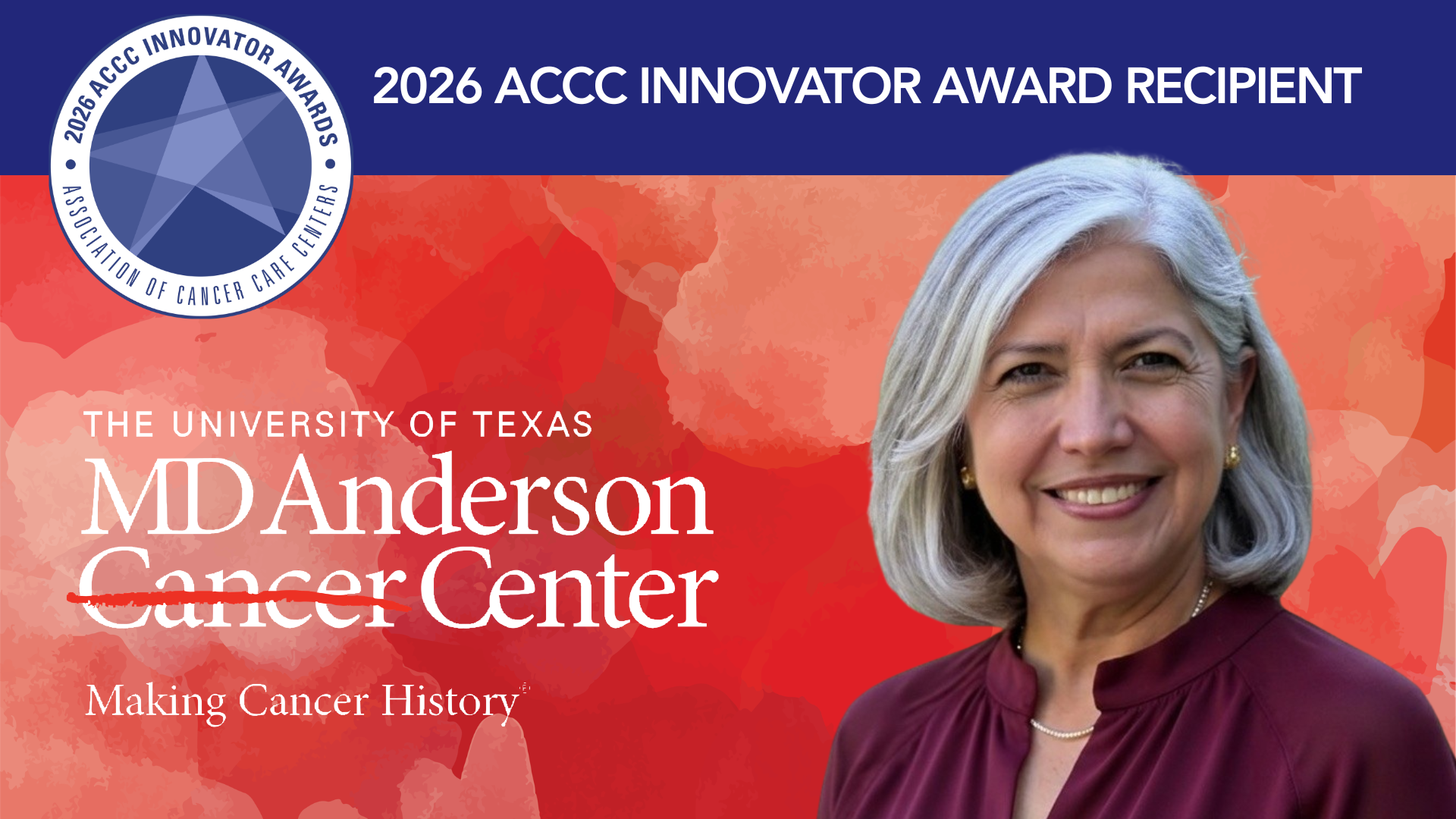
The University of Texas MD Anderson Cancer Center in Houston, Texas, developed a novel Pre-Intake Navigation (PIN) program, which identifies and resolves early financial and insurance barriers, enabling patients to access timely, high-quality cancer care with less anxiety and fewer delays. PIN shifts financial navigation from a late-stage, reactive task to an early, standardized, patient‑centered process embedded in the call center workflow.

An APP-Led Outpatient Bispecific Antibody Clinic

An APP-Led Outpatient Bispecific Antibody Clinic

Understanding both the benefits to be had from offering BsAb therapy to its community and the scope of this undertaking, Vanderbilt-Ingram Cancer Center took a novel approach with its APP-led BsAb step-up dosing clinic, which won the program a 2026 ACCC Innovator Award.

View All ACCCBuzz Blogs

Recently Heard on
CANCER BUZZ Podcast

Embedding Local Expertise in Rural Cancer Prevention - Podcast [Ep. 241]

From Reactive to Proactive: Improving Access to Cancer Care Through Pre-Intake Navigation - [Podcast] Ep. 240

Real-World Oncology Decentralized Trials - [Video Podcast] Ep. 66

The Real Cost of Cancer: Financial Toxicity, Transportation Challenges, and Access Gaps – [Video Podcast] Ep. 65

View All Podcasts

Latest from Oncology Issues

August 2026
August 2026
June 2026
April 2026
February 2026
December 2025
View All Oncology Issues

Join the Conversation

ACCC eXchange Digital Banner
Login