ACCC association of cancer care centers
Join/Renew
Login
Join/Renew
Login
Education & Resources
ACCC eXchange LogInSponsored Education from ACCC Corporate PartnersACCC eLearning LogInPresentations & Abstracts
Publications
Oncology IssuesPatient Assistance & Reimbursement GuideTrending Now in Cancer CareBusiness Case Studies for Hiring New Staff
Events
2026 ACCC Leadership SummitAnnual Meeting & Cancer Center Business SummitCapitol Hill DayNational Oncology ConferenceOncology Reimbursement MeetingsOncology State Society Meetings
Policy & Advocacy
ACCC 2026 Policy PrioritiesLetters & StatementsAccess, Payment & Reimbursement ReformWhite Bagging & Brown BaggingAdvocacy ResourcesCancer Moonshot
Membership
Join | RenewWho We AreMembership Types & BenefitsCorporate MembersACCC Member Portal FAQMember Directory
Partners
Oncology State SocietiesPartner OrganizationsCME
News
News ReleasesAdvocacy News ReleasesOncology News
About ACCC
Timeline / 50th Anniversary2025 Impact ReportPresident's ThemeACCC Innovator AwardsACCC FellowsBoard of TrusteesACCC Senior Staff
Breast CancerMetastatic Breast Cancer
Gastrointestinal CancerBiliary Tract CancerColorectal CancerGastric CancerLiver Cancer
Genitourinary CancerBladder CancerProstate CancerRenal Cell Carcinoma
Gynecologic CancerOvarian Cancer
Head & Neck Cancer
Hematologic MalignanciesAcute Lymphocytic Leukemia (ALL)Acute Myeloid Leukemia (AML)Chronic Lymphocytic Leukemia (CLL)Mantle Cell Lymphoma (MCL)Multiple Myeloma (MM)Myelodysplastic Syndromes (MDS)
Lung CancerNon-Small Cell Lung Cancer (NSCLC)Small Cell Lung Cancer (SCLC)
Sarcoma
Skin CancerMelanomaNon-Melanoma Skin Cancers (NMSC)
Clinical Practice & TreatmentCancer DiagnosticsCare CoordinationEHR Integration for Biomarker TestingQuality Improvement Collaboration: Integration of Precision Medicine in Community OncologyTreatment
Financial NavigationFAN Boot CampFinancial Advocacy Network (FAN) Resource LibraryPatient Assistance & Reimbursement GuidePrior Authorization
Health Equity & Access3, 2, 1, Go! Practical Solutions for Addressing Cancer Care DisparitiesAppalachian Community Cancer AllianceOncology Advanced PractitionersPersonalizing Care for Patients of All BackgroundsSocial Drivers of Health
Patient-Centered CareAddressing Care Disparities for VeteransAdolescent and Young Adult (AYA)Care Action Plans for People with CancerDermatologic ToxicitiesEmpowering CaregiversGeriatric OncologyHealth LiteracyNutritionOncology PharmacyPatient NavigationPsychosocial Care in OncologyShared Decision-MakingSupportive CareSurvivorship Care
Practice Management & OperationsCancer Program FundamentalsLeadership Sustainment and Engagement VideosOncology Practice Transformation and Integration CenterOncology Team Resiliency
ResearchACCC Community Oncology Research Institute (ACORI)
Technology & InnovationTelehealth & Digital Medicine
ACCCBuzz Blog
CANCER BUZZ Podcast
Oncology Issues
Join/Renew
Login
Breast CancerMetastatic Breast Cancer
Gastrointestinal CancerBiliary Tract CancerColorectal CancerGastric CancerLiver Cancer
Genitourinary CancerBladder CancerProstate CancerRenal Cell Carcinoma
Gynecologic CancerOvarian Cancer
Head & Neck Cancer
Hematologic MalignanciesAcute Lymphocytic Leukemia (ALL)Acute Myeloid Leukemia (AML)Chronic Lymphocytic Leukemia (CLL)Mantle Cell Lymphoma (MCL)Multiple Myeloma (MM)Myelodysplastic Syndromes (MDS)
Lung CancerNon-Small Cell Lung Cancer (NSCLC)Small Cell Lung Cancer (SCLC)
Sarcoma
Skin CancerMelanomaNon-Melanoma Skin Cancers (NMSC)
Clinical Practice & TreatmentCancer DiagnosticsCare CoordinationEHR Integration for Biomarker TestingQuality Improvement Collaboration: Integration of Precision Medicine in Community OncologyTreatment
Financial NavigationFAN Boot CampFinancial Advocacy Network (FAN) Resource LibraryPatient Assistance & Reimbursement GuidePrior Authorization
Health Equity & Access3, 2, 1, Go! Practical Solutions for Addressing Cancer Care DisparitiesAppalachian Community Cancer AllianceOncology Advanced PractitionersPersonalizing Care for Patients of All BackgroundsSocial Drivers of Health
Patient-Centered CareAddressing Care Disparities for VeteransAdolescent and Young Adult (AYA)Care Action Plans for People with CancerDermatologic ToxicitiesEmpowering CaregiversGeriatric OncologyHealth LiteracyNutritionOncology PharmacyPatient NavigationPsychosocial Care in OncologyShared Decision-MakingSupportive CareSurvivorship Care
Practice Management & OperationsCancer Program FundamentalsLeadership Sustainment and Engagement VideosOncology Practice Transformation and Integration CenterOncology Team Resiliency
ResearchACCC Community Oncology Research Institute (ACORI)
Technology & InnovationTelehealth & Digital Medicine
ACCCBuzz Blog
CANCER BUZZ Podcast
Oncology Issues
    • Education & Resources
    • Publications
    • Events
    • Policy & Advocacy
    • Membership
    • Partners
    • News
    • About ACCC
ACCC association of cancer care centers
5425 Wisconsin Ave #600, Chevy Chase, MD 20815
Tel: 301.984.9496 Email Us
Contact UsVolunteers
Advertise
Career Center
Terms and Conditions
Privacy Policy
ACCC Rebranding
Copyright © 2026 Association of Cancer Care Centers. All Rights Reserved.
HomeACCCBuzz Blog

#ACCCNOC: Financial Advocacy, Value-Based Care + Biomarker Testing

October 5, 2023

Key takeaways from day 1 of #ACCCNOC.
#ACCCNOC: Financial Advocacy, Value-Based Care + Biomarker Testing

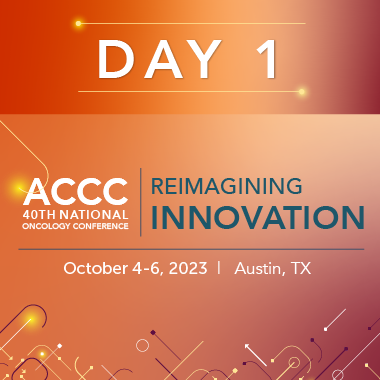
The Association of Cancer Care Centers (ACCC) will welcome more than 600 attendees over a 3-day span (October 4-6) to Austin, Texas this week for the highly anticipated ACCC 40th National Oncology Conference. Day 1 of the meeting included a Pre-Conference focused on the ACCC Financial Advocacy Network (FAN), an exclusive session on electronic health record (EHR) integration to facilitate timely and comprehensive biomarker testing, and an enlightening discussion on the importance of delivering value-based care while juggling alternative payment models.

Lessons from Financial Advocates

In opening the ACCC Financial Advocacy Network Pre-Conference, the network’s chair Angie Santiago, CRCS, manager of Oncology Financial Advocacy at Sidney Kimmel Cancer Center at the Thomas Jefferson University Health System, shared a personal story that reinforced her dedication to the field. “On May 22 this year, my grandmother was admitted into the ER [emergency room] with what turned out to be breast cancer,” she said. According to Santiago, although her experience as a financial advocate ensured she was prepared to help her grandmother navigate the cancer care continuum, a few things surprised her.

“As oncology financial advocates, we often do not think of how many appointments a patient goes through before they begin treatment,” Santiago said. “My grandmother had 10 appointments before she started treatment on July 18.” Santiago enrolled her grandmother in the Sidney Kimmel Cancer Center at the Thomas Jefferson University Health System compassion program, which eliminated her co-pay costs. However, Santiago understands that many newly diagnosed patients with cancer are not readily afforded such resources—thus emphasizing the need for financial advocacy. “We need to be there for every patient. Let us think about helping our patients with more permanent solutions, rather than temporary solutions,” Santiago concluded.

Santiago’s place on stage was taken by Rifeta Kajdić Hodžić, senior program manager at ACCC. Kajdić Hodžić shared data from an ACCC census survey conducted across 31 states, designed to explore the staffing trends for oncology financial advocacy programs, effective practices for financial distress screening, and the major challenges in helping patients access financial assistance programs. “We are happy to report that there has been a lot of growth in the role,” Kajdić Hodžić said. “We are trending in the right direction, however we are not where we want to be yet, as financial toxicity is still growing.” According to Kajdić Hodžić, the survey revealed that rural cancer centers and programs were not utilizing their EHR as well as their counterparts in urban areas. Further, she pointed out that there are significant gaps and opportunities to screen patients for financial distress.

Of particular interest to attendees was Kajdić Hodžić’s revelation that 24% of the survey respondents answered, “yes,” to this question: Have you ever not recommended FAN services to a patient because of the burden? “I was hoping we would have a lower number than this,” Kajdić Hodžić said. “It is sad that 24% have said yes, and it makes you think about where the journey of the patients affected by this decision led—all the missed treatments they may have experienced.”

Building on Kajdić Hodžić’s session, Christie Mangir, vice president at Rhizome led a 10-minute group exercise that asked attendees to vote on what solutions they felt were most impactful and feasible in financial advocacy. To conclude the Pre-Conference, attendees discussed “hot topics” in the financial advocacy landscape, focusing primarily on specialty pharmacy, white bagging, payer issues, delivery of drugs, and drug shortages.

The Current Environment for Value-Based Care

The term value-based care is not new to the medical lexicon, but what does value in this context mean? Is it value to the payer? Value to the patient? Or value to the provider? According to Kathy Oubre, MS,chief executive officer at Pontchartrain Cancer Center, the definition of value is on dependent who is designing the value-based care model. “Value-based care simply provides a framework to capture and measure metrics related to the quality services we are already delivering,” Oubre said to begin the session. Oubre believes that delivering value-based care should be the goal of every cancer center or program, irrespective of their size. “No matter your practice size, value-based care is an opportunity to look at what you do well and areas where you can improve and then design an alternative payment model together,” she said.

Providing value-based care against the backdrop of changing payment models has proven challenging for cancer programs and practices in the US. However, ACCC’s Alternative Payment Model (APM) Coalition is focused on addressing concerns about lack of preparedness to perform under new payment models, patient and provider access to the latest treatments, infrastructure, and long-term sustainability.

For cancer programs and practices around the country looking to establish an APM, Oubre and her co-presenter, Colt Hatcher, vice president of Business Operations at The Center of Cancer and Blood Disorders, outlined this 3-step process:

  • Identify the quality metrics you want to measure and report as well as the payer you want to partner with.
  • Demonstrate the benefit(s) the APM will bring to the payer by showing how your practice or program meets these quality metrics, as well as the benefit(s) the APM will bring to patients.
  • During discussions to develop and implement the APM, underscore the need for a higher degree of collaboration, communication, and transparency.

"You need to understand what makes your payers tick—what holds value for them,” Oubre said. “Then keep patients at the center of what you do, come to your payers with a value-based framework. You don't want your payers to be in the driver seat." Building on Oubre’s sentiments, Hatcher concluded the session, “Payer contracts can no longer be based on just fee-for-service reimbursement. Start now, even if it's on a small scale. Start with 1 or 2 value-based contracts."

Biomarker Testing: Solutions for EHR Integration

Key stakeholders were invited to engage in a discussion on effective practices to facilitate timely and comprehensive testing for the biomarker environment. In the opening roundtable discussion, attendees were asked, “What single barrier, if removed, would most enable more effective use of EHR for comprehensive biomarker testing?"

"Heterogeneity in biomarker testing, balancing the testing landscape—what to order, when to order—rather than a wild west of testing,” answered Christopher McNair, PhD, associate director for Data Science at Sidney Kimmel Cancer Center at the Thomas Jefferson University Health System. Sandra Kurtin, PhD, ANP-C, AOCN, assistant professor of Clinical Medicine and Adjunct Clinical and the assistant professor of Nursing at Banner University Medical Center, University of Arizona Cancer Center identified insurance authorization as the most significant barrier.

In discussing potential solutions to the barriers discussed, James Chen, MD, senior vice president, Medical Informatics at Tempus Labs Inc., believes facilitating interoperability provides a strong staring point. "We don’t have the same way of communicating at the genomic level, we don’t use the same language. We need interoperability.” Dr. Kurtin echoed Dr. Chen's sentiments, emphasizing the importance of open communication between the information technology (IT) department and clinicians at a cancer program or practice. "I like to think I’m bilingual – I speak IT and I speak clinical—I believe EHR integrations should be collaborative. We need to make IT processes reasonable for clinicians.”

Following the roundtable discussion, 3 different ACCC members shared case studies on their successful EHR integration to facilitate timely and comprehensive biomarker testing. The session concluded with breakout groups that allowed participants to share ideas for improving workflow and standardizing biomarker testing throughout the cancer care continuum. For more information on EHR integration, visit the ACCC website.


Related Content

Highlights From Volume 41, Number 4 Oncology IssuesACCCBuzz Blog

Highlights From Volume 41, Number 4 Oncology Issues

Gabrielle Stearns

August 20, 2026

Transforming Access to Care Through Pre-Intake NavigationACCCBuzz Blog

Transforming Access to Care Through Pre-Intake Navigation

Rachel Radwan

August 6, 2026

An APP-Led Outpatient Bispecific Antibody Clinic

Upcoming Events

ACCC 43rd National Oncology Conference

ACCC 43rd National Oncology Conference

In Person October 21, 2026 at 8:00 AM EDT450 Summer St, Boston, MA 02210, USAOmni Boston Hotel at the Seaport, Boston
Register Now!
ACCC Oncology Reimbursement Meeting | Reno

ACCC Oncology Reimbursement Meeting | Reno

In Person November 4, 2026 at 8:00 AM EST255 North Virginia Street, Reno, NV, USAWhitney Peak Hotel Reno, Tapestry Collection by Hilton,
Register Now!
ACCC Oncology Reimbursement Meeting | Providence

ACCC Oncology Reimbursement Meeting | Providence

In Person November 10, 2026 at 8:00 AM EST5 Avenue of the Arts, Providence, RI, USARenaissance Providence Downtown Hotel,
Register Now!
NMSCO 2026 Fall Conference
Oncology

NMSCO 2026 Fall Conference

In Person Conference & ConventionSeptember 12, 2026 at 7:30 AM MDT2101 Louisiana Boulevard NE Albuquerque, NM, 87110Marriott Albuquerque, Albuquerque
Register Now!
TxSCO 2026 Annual Conference
Oncology

TxSCO 2026 Annual Conference

In Person Conference & ConventionSeptember 18, 2026 at 6:00 PM CDT501 Gaylord Trail, Grapevine, TX, USAGaylord Texan Resort & Convention Center, Grapevine
Register Now!
KYSCO 2026 Fall Oncology Review
Oncology

KYSCO 2026 Fall Oncology Review

In Person Conference & ConventionSeptember 19, 2026 at 7:00 AM EDT500 S 4th St, Louisville, KY, USAThe Seelbach Hilton Louisville, Louisville
Register Now!
ESHOS Horizons 2026
Oncology

ESHOS Horizons 2026

In Person Conference & ConventionSeptember 19, 2026 at 7:30 AM EDT1 Liberty Street, New York, NY, USAConvene at One Liberty Plaza, New York
Register Now!
MSOS 2026 Bozeman Meeting
Oncology

MSOS 2026 Bozeman Meeting

In Person Meeting & NetworkingSeptember 22, 2026 at 5:30 PM EDT5 W Mendenhall St suite 102, Bozeman, MT 59715, USA Urban Kitchen, Bozeman
Register Now!
MSCO 2026 Fall Conference
Oncology

MSCO 2026 Fall Conference

In Person Conference & ConventionSeptember 22, 2026 at 5:00 PM CDT1500 Park Pl Blvd, Minneapolis, MN, USADoubleTree by Hilton Hotel Minneapolis - Park Place, Minneapolis
Register Now!
HSCO 2026 September Dinner Symposium
Oncology

HSCO 2026 September Dinner Symposium

In Person Conference & ConventionSeptember 23, 2026 at 5:30 PM HST3660 Waialae Ave, Honolulu, HI, USA3660 On The Rise, Honolulu
Register Now!
Advertisement
Advertisement

Trending Now on
ACCCBuzz Blog

Highlights From Volume 41, Number 4 Oncology Issues

Highlights From Volume 41, Number 4 Oncology Issues

From precision medicine to psychosocial care to navigation for a diverse population, the latest issue Oncology Issues brings insights into not just institutional and administrative barriers to treatment, but areas of care that directly impact the lived experience of those navigating the cancer care continuum.

Transforming Access to Care Through Pre-Intake Navigation

Transforming Access to Care Through Pre-Intake Navigation

The University of Texas MD Anderson Cancer Center in Houston, Texas, developed a novel Pre-Intake Navigation (PIN) program, which identifies and resolves early financial and insurance barriers, enabling patients to access timely, high-quality cancer care with less anxiety and fewer delays. PIN shifts financial navigation from a late-stage, reactive task to an early, standardized, patient‑centered process embedded in the call center workflow.

ACCCBuzz Blog

An APP-Led Outpatient Bispecific Antibody Clinic

Rachel Radwan

August 4, 2026

Advancing Critical Priorities at the State Level: Louisiana, Iowa, and Washington Awarded for Their Efforts at 2026 ASCO Annual MeetingACCCBuzz Blog

Advancing Critical Priorities at the State Level: Louisiana, Iowa, and Washington Awarded for Their Efforts at 2026 ASCO Annual Meeting

Rachel Radwan

July 29, 2026

Designing a Safe, Fully Outpatient CAR T-Cell Program in the CommunityACCCBuzz Blog

Designing a Safe, Fully Outpatient CAR T-Cell Program in the Community

Rachel Radwan

July 27, 2026

Local Staff, Lasting Impact: A New Model for Rural Cancer PreventionACCCBuzz Blog

Local Staff, Lasting Impact: A New Model for Rural Cancer Prevention

Rachel Radwan

July 16, 2026

A Pharmacist-Led Strategy to Improve Care With Oncolytic Virus TreatmentsACCCBuzz Blog

A Pharmacist-Led Strategy to Improve Care With Oncolytic Virus Treatments

Rachel Radwan

July 14, 2026

Extending Patient-Centered Cancer Care to Transgender and Nonbinary IndividualsACCCBuzz Blog

Extending Patient-Centered Cancer Care to Transgender and Nonbinary Individuals

Gabrielle Stearns

June 30, 2026

An APP-Led Outpatient Bispecific Antibody Clinic

An APP-Led Outpatient Bispecific Antibody Clinic

Understanding both the benefits to be had from offering BsAb therapy to its community and the scope of this undertaking, Vanderbilt-Ingram Cancer Center took a novel approach with its APP-led BsAb step-up dosing clinic, which won the program a 2026 ACCC Innovator Award.

Advancing Critical Priorities at the State Level: Louisiana, Iowa, and Washington Awarded for Their Efforts at 2026 ASCO Annual Meeting

Advancing Critical Priorities at the State Level: Louisiana, Iowa, and Washington Awarded for Their Efforts at 2026 ASCO Annual Meeting

At the 2026 ASCO Annual Meeting, the Louisiana Oncology Society received the ASCO Jeffrey C Ward Affiliate Advocacy Award for advancing critical advocacy priorities that have translated into meaningful legislative victories. The Iowa Oncology Society and Washington State Medical Oncology Society were also recognized for their advocacy efforts in 2025 at the meeting, receiving second place awards.

View All ACCCBuzz Blogs

Recently Heard on
CANCER BUZZ Podcast

Closing the Gap in Medical Necessity Review With a Clinical Documentation Integrity Registered Nurse - [Mini Podcast] Ep. 239

Utilizing APPs to Deliver Bispecific Antibodies in the Outpatient Setting - [Mini Podcast] Ep. 238

Between the Orders and the Infusion: The Patient Experience of Bispecific Antibodies - [Podcast] Ep. 237

Centering Compassion in Cancer Care – [Video Podcast] Ep. 64

View All Podcasts

Latest from Oncology Issues

August 2026
August 2026
June 2026
April 2026
February 2026
December 2025
View All Oncology Issues

Join the Conversation

ACCC eXchange Digital Banner
Login