
Author(s):
The Centers for Medicare & Medicaid Services (CMS) released the proposed rules for calendar year (CY) 2027 Hospital Outpatient Prospective Payment System (OPPS) and Ambulatory Surgical Center (ASC) Payment System on July 2, 2026, and the Medicare Physician Fee Schedule (MPFS) on July 14, 2026.¹,²
The OPPS proposed rule includes updates to outpatient payment rates; wage index policies; and payment for drugs, biologicals, and radiopharmaceuticals. Of particular importance to oncology programs are substantial proposed changes to payment for drugs purchased through the 340B Drug Pricing Program. The MPFS proposed rule includes recommended updates to physician payment, practice expense methodology, evaluation and management (E/M) services, radiation oncology services, remote monitoring, and other policies with potential implications for oncology practices.
For CY 2027, CMS proposes a 2.4% increase to OPPS payment rates. The update reflects a 3.2% increase in the hospital market basket, offset by a 0.8 percentage-point productivity adjustment.
For hospitals that meet Hospital Outpatient Quality Reporting requirements, CMS proposes an OPPS conversion factor of $102.004. Hospitals that do not meet reporting requirements would receive a conversion factor of $100.015. CMS estimates total OPPS payments of approximately $110.9 billion in CY 2027, an increase of approximately $9.5 billion compared with CY 2026.
CMS similarly proposes a 2.4% payment increase for ambulatory surgical centers (ASCs) that meet the ASC Quality Reporting Program requirements. The proposed ASC conversion factor is $57.766 for facilities meeting quality reporting requirements and $56.638 for those that do not. CMS estimates total ASC payments of approximately $9.9 billion, an increase of $520 million compared with CY 2026.
The proposed rule would also establish a cost-of-living adjustment for outpatient services in Alaska and Hawaii that parallels the adjustment for inpatient services in those states.
For separately payable drugs and biologicals, CMS proposes to generally continue its existing payment methodologies. When average sales price data are unavailable during a product’s initial sales period, CMS proposes payment based on wholesale acquisition cost (WAC) plus 3%. If WAC information is also unavailable, payment would be based on 95% of the product’s most recent average wholesale price (AWP).
CMS proposes to end pass-through payment status for 49 drugs and biologicals on December 31, 2026, with another 28 products proposed to lose pass-through status during CY 2027. CMS proposes continued pass-through payment for 45 drugs and biologicals that received approval between April 1, 2025, and April 1, 2026.
For CY 2027, CMS proposes to package drugs, biologicals, and therapeutic radiopharmaceuticals with an estimated per-day administration cost of $140 or less. Items exceeding $140 would generally remain separately payable unless otherwise subject to a packaging policy. This proposal would maintain the current threshold in CY 2026.
CMS also proposes to continue its invoice-pricing policy when adequate pricing information is unavailable for separately payable drugs, biologicals, and radiopharmaceuticals. Medicare Administrative Contractors (MACs) would calculate payment based on provider invoices when CMS lacks average sales price (ASP), WAC, AWP, or arithmetic mean unit cost information needed to establish a rate.
CMS proposes to continue the enhanced payment methodology established for qualifying biosimilar biological products under the Inflation Reduction Act. During the applicable five-year period, a qualifying biosimilar with an ASP below the ASP of its reference biological would be paid at the biosimilar’s ASP plus 8% of the reference product’s ASP through October 1, 2027.
Biosimilars would also remain exempt from the OPPS packaging threshold when their reference biologicals are separately payable. As a result, qualifying biosimilars may continue to receive separate payment even when their per-day costs fall below the packaging threshold.
Radiopharmaceutical payment policies continue to evolve under OPPS. CMS proposes maintaining a $655-per-day packaging threshold for qualifying non-pass-through diagnostic radiopharmaceuticals in CY 2027. Products with per-day costs exceeding that threshold would be separately payable. For future years, CMS proposes using the most recently available fourth-quarter Producer Price Index data to update the threshold.
For therapeutic radiopharmaceuticals with pass-through status, CMS proposes to continue payment based on ASP plus 6% or WAC plus 3%. When neither ASP nor WAC information is available, CMS proposes payment at 95% of the most recent AWP.
Some of the most consequential proposals for oncology providers involve the 340B Drug Pricing Program. The proposals follow CMS’s hospital drug acquisition cost survey, which collected information on separately payable outpatient drugs purchased between July 1, 2024, and June 30, 2025. Approximately 4,500 entities were identified for inclusion in the survey, covering approximately 1,843 National Drug Codes corresponding to 519 Healthcare Common Procedure Coding System (HCPCS) drugs.
After refining the survey data to account for hospitals with no relevant claims and other statistical outliers, CMS found that 340B acquisition costs were substantially below ASP. Aggregate acquisition costs were approximately ASP minus 33.4%, whereas average acquisition costs were 37.2% below the current OPPS payment rate of ASP plus 6%.
CMS provided Table 1 in the proposed rule, showing the survey results by therapeutic class.

CMS, CY 2027 OPPS proposed rule (CMS-1850-P).
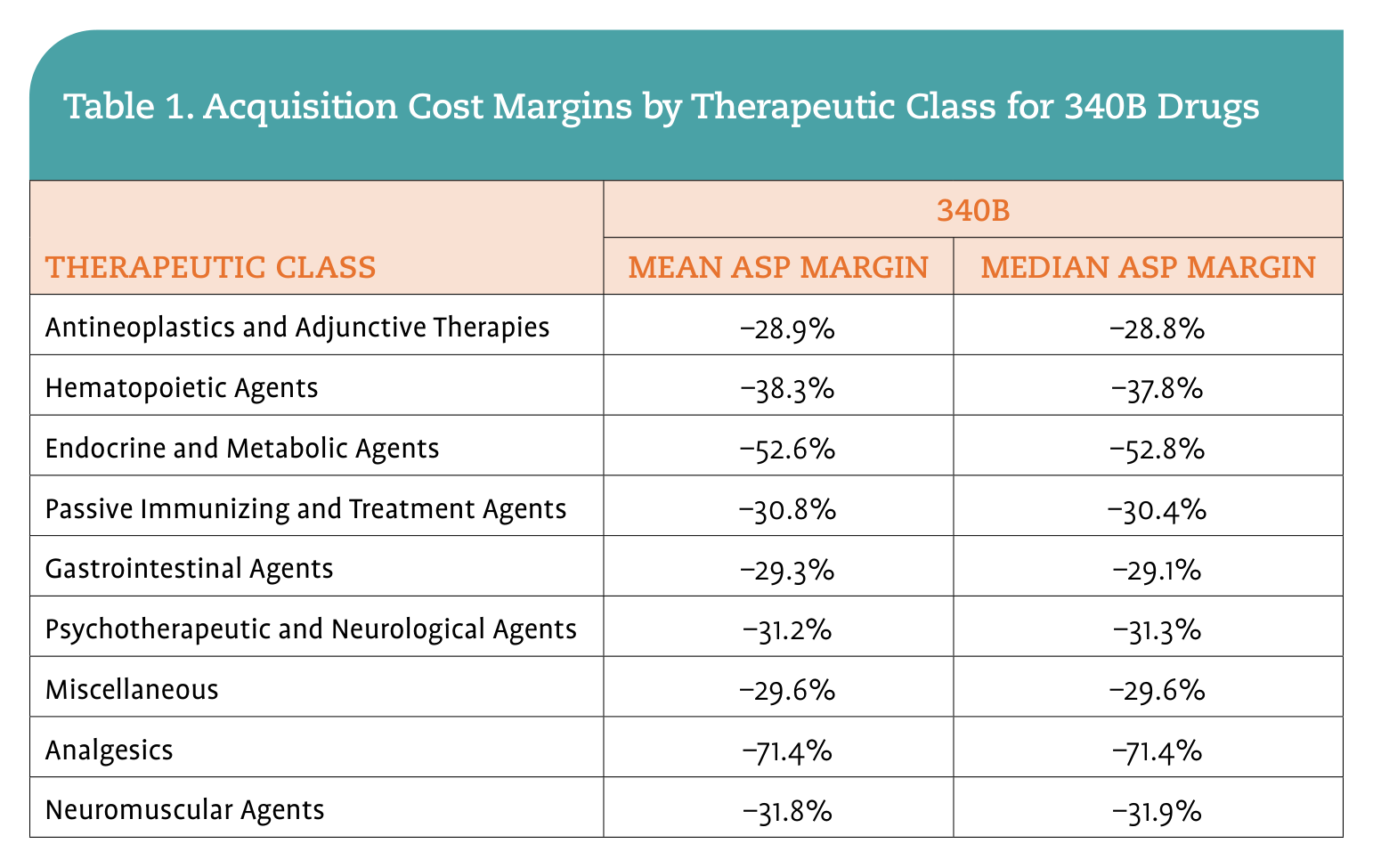
Based on these findings, CMS proposes a significant change beginning in CY 2027. Separately payable drugs purchased through the 340B Program by affected 340B hospitals would be paid at ASP minus 33.4%, with no additional add-on payment. The proposed methodology would also apply to 340B-acquired drugs furnished by nonexcepted off-campus provider-based departments.
For 340B drugs without available ASP data, CMS proposes payment at WAC minus 33.4%. If WAC is unavailable, payment would be based on 59.69% of AWP. Drugs for which payment is based on the mean unit cost would be paid at 100% of that cost.
The proposed 340B payment methodology would generally encompass separately payable drugs, biologicals, biosimilars, and radiopharmaceuticals purchased under the program. Vaccines, drugs with transitional pass-through payment status, and certain non-opioid pain management drugs would be excluded under the proposal, although CMS is seeking comments on these exclusions.
CMS is also soliciting comments on whether it should use a single discount factor for 340B-acquired drugs rather than calculate drug-specific acquisition costs and on a proposal to conduct acquisition cost surveys every four years.
Certain providers would remain exempt from the proposed 340B payment adjustment. These include rural sole community hospitals, children’s hospitals, PPS-exempt cancer hospitals, critical access hospitals, and rural emergency hospitals, which would continue to be paid at ASP plus 6%.
Separate from the proposed ASP-minus-33.4 % drug payment methodology, CMS is addressing the budget-neutrality adjustment associated with its remedy for 340B drug payments made between 2018 and 2022.
Under the 340B final remedy rule, CMS established a 0.5% annual reduction to the OPPS conversion factor for non-drug items and services, beginning in CY 2026, to recover approximately $7.8 billion in additional payments. The original approach was expected to continue through approximately CY 2041.
CMS subsequently reconsidered the length of that recovery period. For CY 2027, the agency proposes a 3% reduction to the conversion factor used to determine payment for non-drug items and services for affected hospitals. CMS expects the larger reduction to allow the remaining offset, approximately $7.769 billion, to be completed by the end of CY 2029. ASCs would not be affected by this 3% 340B remedy reduction.
CMS also proposes changes intended to improve its ability to distinguish between drugs purchased through the 340B Program and drugs acquired outside of the program.
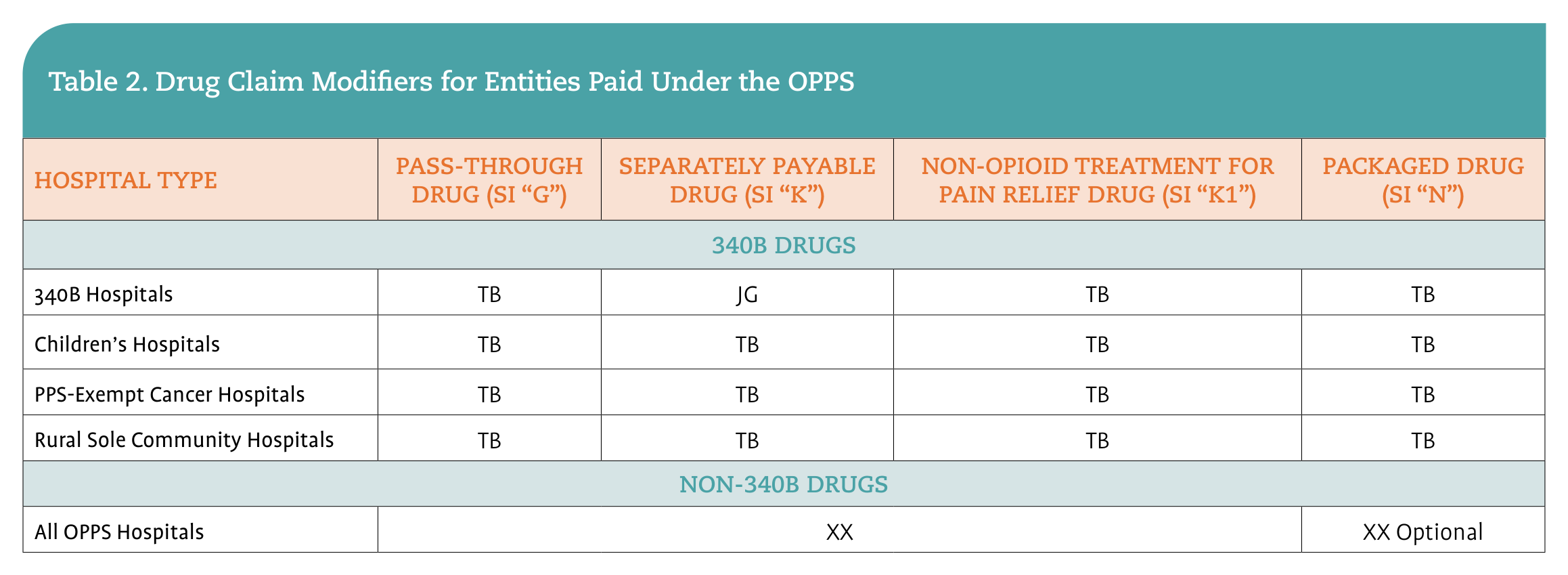
Beginning January 1, 2027, CMS proposes renewed use of the JG and TB modifiers. Modifier JG would identify a drug or biological acquired with a 340B discount for which the payment reduction applies. Modifier TB would identify 340B-acquired drugs reported for informational purposes, including drugs furnished by exempt entities or otherwise exempt from the 340B pricing policy.
CMS additionally proposes a new XX modifier to identify drugs and biologicals not acquired through the 340B Drug Pricing Program. All OPPS providers, including excepted and nonexcepted provider-based departments, would use the applicable JG, TB, or XX modifier so CMS can consistently distinguish between 340B-acquired and non–340B-acquired drugs. In the proposed rule, CMS provided Table 2 to assist in understanding which modifier would apply to which entity regarding the purchasing of drugs.

CMS, CY 2027 OPPS proposed rule (CMS-1850-P).
CMS’s acquisition cost survey also provided information about drugs not purchased through the 340B program. The data suggested that hospitals generally acquired these products for less than the current ASP plus 6% Medicare payment rate, with reported costs closer to ASP plus 2.7%.
CMS noted greater variation in the acquisition cost data for these products. However, given the variation and the relatively smaller difference between the surveyed costs and current payment, CMS proposes to maintain payment for non-340B drugs at ASP plus 6% for CY 2027. The agency indicated that it could revisit this methodology in future rulemaking.
The CY 2027 OPPS proposed rule contains several payment policies with implications for oncology providers, but the proposed changes to 340B reimbursement stand out in both scope and potential financial impact.
Affected 340B hospitals would face two distinct payment changes: a proposed ASP-minus-33.4% methodology for separately payable 340B-acquired drugs and a 3% conversion factor reduction for non-drug items and services associated with the 340B remedy offset. At the same time, CMS proposes new modifier requirements that would make identification of 340B and non-340B drug claims increasingly important.
Oncology programs should evaluate the potential financial and operational implications of these proposals, including the effects on drug reimbursement, hospital outpatient services, billing workflows, and the identification of 340B-acquired drugs.
Beginning in CY 2026, Medicare uses separate conversion factors for qualifying Alternative Payment Model (APM) participants and clinicians who are not qualifying APM participants.
For CY 2027, CMS proposes a qualifying APM conversion factor of $33.1693, a decrease of approximately 1.19% from CY 2026. The proposed conversion factor for nonqualifying APM participants is $32.8409, a decrease of approximately 1.68%. These amounts reflect the expiration of the temporary 2.5% statutory payment increase provided for CY 2026, along with the applicable CY 2027 update factors and a positive 0.53% budget neutrality adjustment.
Actual reimbursement impacts will vary by specialty and practice based on changes to relative value units (RVUs), practice expense methodology, individual code valuations, and other proposed policies.
CMS continues to express concern that the valuation of non–time-based physician services does not adequately account for efficiencies that may develop as clinicians perform services repeatedly over time. Beginning in CY 2026, CMS implemented a 2.5% efficiency adjustment to physician work RVUs and intraservice physician time for non–time-based services. CMS proposes to continue applying an efficiency adjustment in CY 2027 to include certain new and updated services valued through the AMA/Specialty Society Relative Value Scale Update Committee (RUC) process.
CMS proposes additional changes to the methodology used to calculate practice expense (PE) RVUs as part of a broader, multi-year effort to modernize physician payment. Among the proposals is a two-year phase-out of the Indirect Practice Cost Index (IPCI), which relies on historical specialty-level survey information. Fifty percent of the IPCI adjustment would remain in CY 2027 before the methodology is eliminated in the second year.
CMS also proposes a PE stabilization factor that would generally limit annual increases or decreases in PE RVUs to 5%. Certain new, revised, revalued, and previously contractor-priced services would be excluded from this policy.
CMS would also continue the facility-based payment policy implemented for CY 2026, under which indirect PEs allocated through physician work RVUs are reduced in the facility setting to account for PEs incurred by the facility rather than the practitioner.
CMS is seeking additional feedback on how PEs differ among independent, hospital-employed, and other physicians practicing in facility settings. The agency is also considering whether a new HCPCS modifier identifying employed physicians could help more accurately determine facility practice expense.
CMS did not propose changes to the valuation methodology for radiation oncology external beam treatment delivery services. Instead, it revealed the comments received regarding the expected utilization volumes for Current Procedural Terminology (CPT®) codes 77402, 77407, and 77412. It is expected that the total reported volumes for CY 2026 would align as follows:
Commenters requested that CMS adjust CPT code 77412 to 18%.
CMS continues to evaluate the utilization assumptions used to distribute PE and malpractice RVUs among these codes—specifically, to monitor utilization data for CPT code 77412. As volumes increase for the higher-level codes, the impact could mean reduced rates for the other codes to maintain budget neutrality.
CMS also proposes a new approach for proton beam treatment delivery codes 77520, 77522, 77523, and 77525, which are currently contractor-priced under the MPFS. Under the proposal, CMS would use total allowed charges paid by MACs to establish a pool of PE RVUs for the proton treatment delivery code family. Those RVUs would then be allocated among the individual services using relationships between the applicable OPPS Ambulatory Payment Classification (APC) relative weights.
CMS proposes several revisions to remote physiologic monitoring (RPM) and remote therapeutic monitoring (RTM). Among the proposed changes, RTM would also be limited to established patients only, the same as RPM. CMS would also require a separately reportable initiating face-to-face visit, to occur in person or through telehealth, by the billing practitioner of the RPM or RTM services prior to any services being rendered.
CMS further proposes that RPM and RTM services would be payable only when provided by clinical staff employed by the billing practice. If finalized, services performed by clinical staff contracted through a third party would no longer qualify for reimbursement beginning January 1, 2027.
CMS also proposes changes to the practice expense inputs for several existing RPM and RTM codes and is soliciting comments on the potential bundling of remote monitoring services. As an alternative, CMS is considering four new HCPCS G-codes that would describe initial setup and monthly monitoring and management for RPM and RTM:
One of the more notable proposed changes involves HCPCS code G2211, the evaluation and management (E/M) visit complexity add-on code Medicare began actively reimbursing in CY 2024. CMS now believes that many of the resources associated with G2211 are already inherent in the underlying E/M visit, and a modifier may more appropriately represent the longitudinal relationship between a practitioner and patient.
For CY 2027, CMS proposes deleting G2211 and replacing it with a new modifier, MOD1. The modifier would generally be used under the same circumstances as G2211. Rather than receiving a fixed value, MOD1 would be valued at 16% of the payment for the underlying E/M service. CMS believes this approach would better align the additional payment with the level of the E/M visit. This proposal may be particularly important for oncology practices because of the longitudinal nature and complexity of cancer care.
CMS also proposes a significant change to payment for separately identifiable E/M visits reported with modifier 25 on the same day as a procedure with an assigned surgical global period of 0, 10, or 90 days. Under the proposal, when an office/outpatient E/M service is furnished by the same physician, or a physician in the same group practice, on the same date as a procedure with a 0-, 10-, or 90-day global period, the highest-valued service would be paid at 100%, and the other applicable services would be paid at 50%.
CMS describes this approach as similar to the multiple-procedure payment reduction already used under the MPFS. The agency is seeking comments on whether the proposed 50% reduction is appropriate or whether a smaller reduction, such as 25%, should apply. For oncology practices that routinely provide separately identifiable E/M services in conjunction with other procedures, the proposal warrants close review.
CMS also addresses the new mechanical scalp cooling CPT codes 97007, 97008, and 97009, which became effective for CY 2026. CMS received a nomination requesting that the codes be reviewed for being potentially misvalued, with recommendations to increase the clinical staff time associated with each service based on an August 2024 time and motion study. The commenter(s) requested that the clinical staff time for code 97007 be increased from 36 minutes to 103 minutes, 97008 from 9 minutes to 52 minutes, and 97009 from 6 minutes to 23 minutes.
CMS did not agree with the nomination, noting that it considered the study when establishing the CY 2026 values. However, the agency is seeking comments and updated information that could support future changes to the valuation of these services.
The CY 2027 MPFS proposed rule includes several policies that could affect oncology practices beyond the annual conversion factor update. Changes to practice expense calculations, radiation treatment delivery valuation, E/M complexity payment, modifier 25, and remote monitoring could have different impacts depending on a practice’s specialty mix, service utilization, and site of care.
Oncology practices should pay particular attention to the proposed replacement of G2211 with MOD1, the payment reduction for certain E/M services reported with modifier 25, and changes affecting radiation oncology external beam and proton treatment delivery. If they are finalized, these proposals could influence both reimbursement and billing workflows.
Teri Bedard, BA, RT(R)(T)(ARRT), CPC, is Executive Director of Health Policy & Reimbursement at Revenue Cycle Coding Strategies in Des Moines, Iowa.