Author(s):
In this Q&A with WellSpan Cancer Institute, one of the six 2025 ACCC Innovator Award Winners, ACCCBuzz dives into the program's initiative that leverages machine learning-enabled decision support to improve end-of-life outcomes.
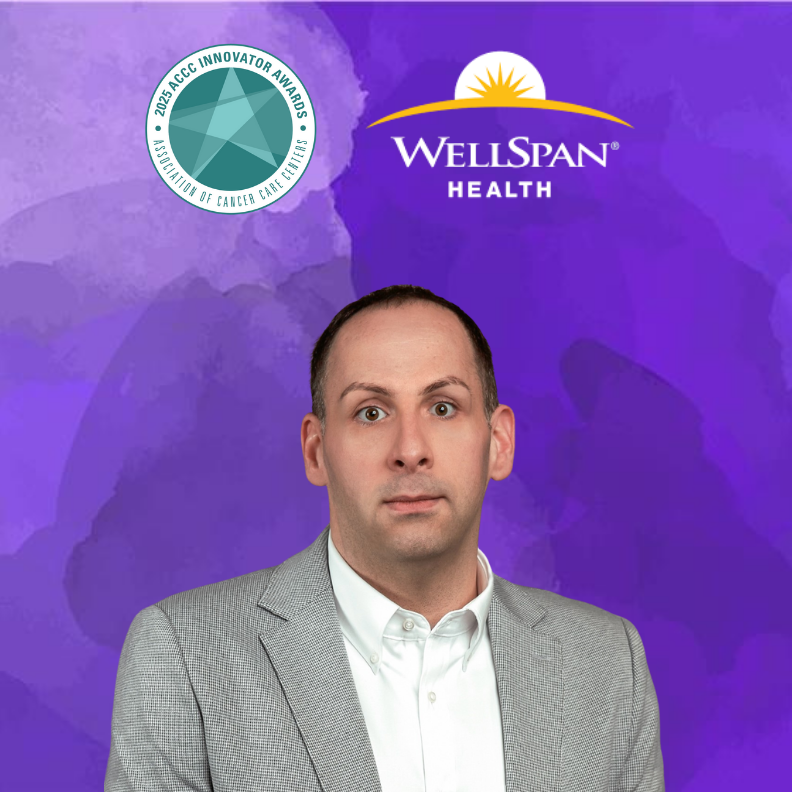
This is the second blog post in a 6-part series recognizing the achievements of the 2025 ACCC Innovator Award winners before their in-depth sessions at the ACCC 42nd National Oncology Conference. Learn more about the innovations being recognized this year and those who pioneered them by joining ACCC in Denver, Colorado from October 15–17, 2025.
Research highlights the potential of palliative care to improve patient outcomes and enhance cost-efficiency by reducing avoidable hospitalizations and optimizing the end-of-life experience. For patients with advanced cancer in particular, early palliative care in the outpatient setting has been shown to significantly improve their quality of life. Despite these benefits, a well-established gap still exists in the utilization of palliative care. This underuse, often driven by structural and socio-behavioral barriers, results in poor patient experiences, unnecessary hospitalizations, high health care costs, and preventable in-hospital deaths.
Driven by a desire to address the underutilization of palliative care, the team at WellSpan Cancer Institute implemented its electronic health record’s End-of-Life Care Index—a machine learning cognitive computing model that predicts 12-month mortality risk—into its clinical decision support tool, earning the cancer program a 2025 Association of Cancer Care Centers (ACCC) Innovator Award. In anticipation of the ACCC 42nd National Oncology Conference this fall, ACCCBuzz spoke to Andrew Munchel, MSN, RN, OCN, CPHQ, quality program administrator of the oncology service line at WellSpan Health, WellSpan Cancer Institute, to learn more about the program.
ACCCBuzz: How long has WellSpan Cancer Institute been an ACCC member?
Munchel: We have been a member since 2008.
ACCCBuzz: What do you enjoy most about being an ACCC member? Are there specific programs, resources, and/or tools that you use at your cancer program?
Munchel: I really enjoy the sense of community and collaboration with other members. ACCC encompasses cancer programs of all shapes and sizes—from large national centers to small community centers—which makes it unique from other associations. The sharing of resources among these different programs is incredibly valuable, especially on the ACCCeXchange. This platform is not just a place to ask questions, but a means of sharing practical solutions and insights from individuals who understand the complex nature of the work that we do. I enjoy being part of a network where everyone is open and willing to share generously in a noncompetitive way.
I’ve also had really positive experiences at the ACCC National Oncology Conference, because attendees leave with practical tools and strategies that they can implement in their programs right away. Just last year, I attended a session focused on expanding nutrition services, immediately brought what I learned back to my team, and it’s now one of our 2025 quality improvement goals. No one is hiding their challenges or successes at these meetings; the presenters are very upfront about what has and hasn’t worked for them when undertaking a new initiative, so attendees have a clear understanding of the barriers they may encounter if they are interested in replicating a process or an innovation.
ACCCBuzz: What makes your cancer center unique?
Munchel: The diversity of the communities we serve, along with our commitment to meeting patients where they are physically and culturally, makes WellSpan unique. Our network spans urban and suburban locations as well as very rural regions, each with its own distinct needs. With our wide footprint, we need to think creatively and stay highly responsive to serve these communities effectively. It’s not a one-size-fits-all approach; we frequently need to adjust how we deliver cancer care because what resonates in an urban environment won’t necessarily resonate with a rural environment. Whether it’s customizing our communication methods or coordinating transport, we strive to ensure every patient receives high-quality, compassionate care.
ACCCBuzz: It can be challenging for administrators and C-suite members to share a common language with clinicians and others who provide direct patient care. Can you share any tips you used to obtain buy-in and support for your innovation?
Munchel: My strength has always been my ability to translate between the clinical and administrative sides of cancer care. Having been a chemo nurse myself, I understand the pain points from both perspectives. For providers, it’s about improving outcomes and reducing burnout. For administrators, it’s more about cost stewardship, the patient experience, and improving efficiency. It’s important to balance these 2 perspectives and use the right language for each.
Projects are doomed to fail from the start if there’s no shared understanding, so having someone articulate why this initiative is important and what it will achieve is critical. There needs to be time in the beginning stages to lay the groundwork, hear feedback, and achieve that shared understanding, rather than charging in with a top-down approach.
ACCCBuzz: Una Hopkins, DNP, MSN, FNP-BC, NE-BC, RN, FACCC, centered her 2025-2026 ACCC President’s Theme on Designing Oncology Care to Meet the Needs of a Growing Patient Population. An integral component of that theme is Technology as a Workforce Multiplier, which was key to your innovation. Can you share any insights you’ve learned in this area?
Munchel: This idea is a natural fit with our innovation, because the predictive analytics we used were truly a workforce multiplier. Using a predictive model to proactively identify those who could most benefit from palliative care allowed our team to work far more strategically—and that’s always the goal. We shouldn’t have a singular approach for a low-risk stage IV patient and a high-risk stage IV patient. Using machine learning to identify patients in need has allowed our team to have the right high-value conversations with those who could most benefit from palliative care, given the limited time they have. Rather than expanding our workforce by hiring a whole new team to address this need, we expanded our impact significantly by embracing technology we already had but weren’t fully utilizing.


In recognition of Leukemia and Lymphoma Awareness Month, ACCC compiled a group of resources to help care teams navigate two of the most commonly diagnosed adult leukemias: acute myeloid leukemia and chronic lymphocytic leukemia.