ACCC association of cancer care centers
Join/Renew
Login
Join/Renew
Login
Education & Resources
ACCC eXchange LogInCorporate Member Sponsored ResourcesPresentations & AbstractsPresident's ThemeACCC Connect eLearning LogIn
Publications
Oncology IssuesPatient Assistance & Reimbursement GuideTrending Now in Cancer Care
Events
2026 ACCC Leadership SummitAnnual Meeting & Cancer Center Business SummitCapitol Hill DayNational Oncology ConferenceOncology Reimbursement MeetingsOncology State Society Meetings
Policy & Advocacy
2024 Policy Wrap-Up and ACCC 2025 Policy PrioritiesLetters & StatementsAccess, Payment & Reimbursement ReformWhite Bagging & Brown BaggingAdvocacy ResourcesCancer Moonshot
Membership
Join | RenewWho We AreMembership Types & BenefitsCorporate MembersACCC Member Portal FAQMember Directory
Partners
Oncology State SocietiesPartner OrganizationsCME
News
News ReleasesAdvocacy News ReleasesOncology News
About ACCC
Timeline / 50th Anniversary2025 Impact ReportACCC Innovator AwardsACCC FellowsACCC Senior Staff
Breast CancerMetastatic Breast Cancer
Gastrointestinal CancerBiliary Tract CancerColorectal CancerGastric CancerLiver Cancer
Genitourinary CancerBladder CancerProstate CancerRenal Cell Carcinoma
Gynecologic CancerOvarian Cancer
Head & Neck Cancer
Hematologic MalignanciesAcute Lymphocytic Leukemia (ALL)Acute Myeloid Leukemia (AML)Chronic Lymphocytic Leukemia (CLL)Mantle Cell Lymphoma (MCL)Multiple Myeloma (MM)Myelodysplastic Syndromes (MDS)
Lung CancerNon-Small Cell Lung Cancer (NSCLC)Small Cell Lung Cancer (SCLC)
Sarcoma
Skin CancerMelanomaNon-Melanoma Skin Cancers (NMSC)
Clinical Practice & TreatmentCancer DiagnosticsCare CoordinationEHR Integration for Biomarker TestingQuality Improvement Collaboration: Integration of Precision Medicine in Community OncologyTreatment
Financial NavigationFAN Boot CampFinancial Advocacy Network (FAN) Resource LibraryPatient Assistance & Reimbursement GuidePrior Authorization
Health Equity & Access3, 2, 1, Go! Practical Solutions for Addressing Cancer Care DisparitiesAppalachian Community Cancer AllianceOncology Advanced PractitionersPersonalizing Care for Patients of All BackgroundsSocial Drivers of Health
Patient-Centered CareAddressing Care Disparities for VeteransAdolescent and Young Adult (AYA)Care Action Plans for People with CancerDermatologic ToxicitiesEmpowering CaregiversGeriatric OncologyHealth LiteracyNutritionOncology PharmacyPatient NavigationPsychosocial Care in OncologyShared Decision-MakingSupportive CareSurvivorship Care
Practice Management & OperationsCancer Program FundamentalsLeadership Sustainment and Engagement VideosOncology Practice Transformation and Integration CenterOncology Team Resiliency
ResearchACCC Community Oncology Research Institute (ACORI)
Technology & InnovationTelehealth & Digital Medicine
ACCCBuzz Blog
CANCER BUZZ Podcast
Oncology Issues
Join/Renew
Login
Breast CancerMetastatic Breast Cancer
Gastrointestinal CancerBiliary Tract CancerColorectal CancerGastric CancerLiver Cancer
Genitourinary CancerBladder CancerProstate CancerRenal Cell Carcinoma
Gynecologic CancerOvarian Cancer
Head & Neck Cancer
Hematologic MalignanciesAcute Lymphocytic Leukemia (ALL)Acute Myeloid Leukemia (AML)Chronic Lymphocytic Leukemia (CLL)Mantle Cell Lymphoma (MCL)Multiple Myeloma (MM)Myelodysplastic Syndromes (MDS)
Lung CancerNon-Small Cell Lung Cancer (NSCLC)Small Cell Lung Cancer (SCLC)
Sarcoma
Skin CancerMelanomaNon-Melanoma Skin Cancers (NMSC)
Clinical Practice & TreatmentCancer DiagnosticsCare CoordinationEHR Integration for Biomarker TestingQuality Improvement Collaboration: Integration of Precision Medicine in Community OncologyTreatment
Financial NavigationFAN Boot CampFinancial Advocacy Network (FAN) Resource LibraryPatient Assistance & Reimbursement GuidePrior Authorization
Health Equity & Access3, 2, 1, Go! Practical Solutions for Addressing Cancer Care DisparitiesAppalachian Community Cancer AllianceOncology Advanced PractitionersPersonalizing Care for Patients of All BackgroundsSocial Drivers of Health
Patient-Centered CareAddressing Care Disparities for VeteransAdolescent and Young Adult (AYA)Care Action Plans for People with CancerDermatologic ToxicitiesEmpowering CaregiversGeriatric OncologyHealth LiteracyNutritionOncology PharmacyPatient NavigationPsychosocial Care in OncologyShared Decision-MakingSupportive CareSurvivorship Care
Practice Management & OperationsCancer Program FundamentalsLeadership Sustainment and Engagement VideosOncology Practice Transformation and Integration CenterOncology Team Resiliency
ResearchACCC Community Oncology Research Institute (ACORI)
Technology & InnovationTelehealth & Digital Medicine
ACCCBuzz Blog
CANCER BUZZ Podcast
Oncology Issues
    • Education & Resources
    • Publications
    • Events
    • Policy & Advocacy
    • Membership
    • Partners
    • News
    • About ACCC
ACCC association of cancer care centers
1801 Research Boulevard, Suite 400, Rockville, MD 20850
Tel: 301.984.9496 Fax: 301.770.1949 Email Us
Contact UsVolunteers
Advertise
Career Center
Terms and Conditions
Privacy Policy
ACCC Rebranding
Copyright © 2026 Association of Cancer Care Centers. All Rights Reserved.
Advertisement

Blog

Article

October 9, 2019

ACCC Metastatic Breast Cancer Summit Addresses Resource Disparities

ACCC Metastatic Breast Cancer Summit Addresses Resource Disparities

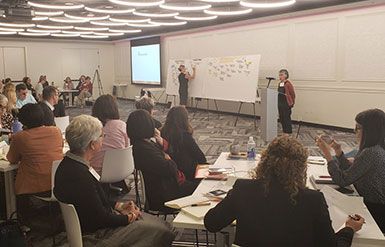
Upon opening ACCC’s first Metastatic Breast Cancer Summit in Washington, D.C., ACCC Executive Director Christian G. Downs, MHA, JD, remarked, “Everyone knows what we have to do; it’s more difficult to know how to do it. Today is the ‘how to’ part.” The summit was held on October 7, 2019.

The “what,” said Downs, are the largely agreed-upon goals that must be realized before all patients with metastatic breast cancer are able to access the full spectrum of clinical and supportive care services. These goals—such as equal access to psychosocial care, clinical trials, financial resources, and treatment options—will remain lofty ideals until the actions that can make them realities are widely adopted.

By bringing together a variety of stakeholders in the cancer care community, the day-long summit's aim was to identify practical action items that cancer programs and practices—large and small—can implement now to enhance and expand holistic care in their metastatic breast cancer patient population. Summit invitees included professionals from across the multidisciplinary cancer care team: social workers, program managers, nurse practitioners, oncologists, chaplains, nurse navigators, patient advocates, financial navigators, and others. A few of the most knowledgeable specialists—people who themselves have been diagnosed with metastatic breast cancer—were also present.

Unequal Access
The summit, a continuation of ACCC’s Metastatic Breast Cancer Project launched in 2016, centered around the recognition that there are significant disparities in the resources available to patients. These disparities may be a function of geography, racial inequities, lack of insurance, lack of personal finances, insufficient support systems, unequal access to clinical trials, or other factors outside the control of individual patients. Before the summit, participants were asked to prioritize the issues they think most need addressing in metastatic breast cancer care. Respondents gave the highest priority to patients’ inability to adequately access new and emerging treatments, followed by poor access to clinical trials and poor care coordination and communication.

Throughout the summit, participants emphasized the need to recognize that breast cancer is not a monolithic disease. The many ways in which the disease manifests itself and the diversity of treatments available—many still in the clinical trial phase—mean that patients with metastatic breast cancer will not necessarily be well-served by the “survivorship mantra” often embraced by patients diagnosed with early-stage breast cancer.

Rather, participants agreed, patients with metastatic breast cancer should have access to resources that are customized to their specific needs. Participants acknowledged that while many of these resources—such as clinical navigation services and peer support groups—are already well developed and available to some patients, many others lack access to them. As one participant noted, “The future is already here, but it is not evenly distributed.”

To address this inadequate distribution of resources, summit attendees participated in an exercise that resulted in six recommended action items that rank high in both feasibility and potential impact:

  • Develop comprehensive care models and pathways: This is the foundation on which all patient care needs are articulated and addressed. Develop a steering committee composed of people who are already serving patients with metastatic breast cancer and leverage what is working for them.
  • Create patient care plans: Leverage existing resources from cancer practices that are already creating care plans.
  • Create folders for metastatic breast cancer patients: Collect information on resources specifically tailored to the needs of your patients.
  • Build a resource warehouse: Keep a large, continually updated pool of materials that doctors, nurses, social workers, and others can draw from. (View ACCC's curated searchable MBC resource bank here.)
  • Leverage navigators: Seek out and use clinical, financial, and peer navigators to help create a more level “playing field” among patients.
  • Leverage telemedicine for supportive services: Reach more patients by identifying a “mothership” (large cancer care site) to provide virtual supportive care to less-well-resourced care sites.

A full executive summary of the main findings of ACCC’s Metastatic Breast Cancer Summit will soon be available online. For additional insight into the availability of supportive care services to metastatic breast cancer patients, view ACCC’s Multidisciplinary Team Communication in Metastatic Breast Cancer 2019 Survey Highlights. To learn more about ACCC’s Metastatic Breast Cancer project, contact Elana Plotkin, ACCC Provider Education.