ACCC association of cancer care centers
Join/Renew
Login
Join/Renew
Login
Education & Resources
ACCC eXchange LogInCorporate Member Sponsored ResourcesPresentations & AbstractsACCC Connect eLearning LogIn
Publications
Oncology IssuesPatient Assistance & Reimbursement GuideTrending Now in Cancer CareBusiness Case Studies for Hiring New Staff
Events
2026 ACCC Leadership SummitAnnual Meeting & Cancer Center Business SummitCapitol Hill DayNational Oncology ConferenceOncology Reimbursement MeetingsOncology State Society Meetings
Policy & Advocacy
2024 Policy Wrap-Up and ACCC 2025 Policy PrioritiesLetters & StatementsAccess, Payment & Reimbursement ReformWhite Bagging & Brown BaggingAdvocacy ResourcesCancer Moonshot
Membership
Join | RenewWho We AreMembership Types & BenefitsCorporate MembersACCC Member Portal FAQMember Directory
Partners
Oncology State SocietiesPartner OrganizationsCME
News
News ReleasesAdvocacy News ReleasesOncology News
About ACCC
Timeline / 50th Anniversary2025 Impact ReportPresident's ThemeACCC Innovator AwardsACCC FellowsACCC Senior Staff
Breast CancerMetastatic Breast Cancer
Gastrointestinal CancerBiliary Tract CancerColorectal CancerGastric CancerLiver Cancer
Genitourinary CancerBladder CancerProstate CancerRenal Cell Carcinoma
Gynecologic CancerOvarian Cancer
Head & Neck Cancer
Hematologic MalignanciesAcute Lymphocytic Leukemia (ALL)Acute Myeloid Leukemia (AML)Chronic Lymphocytic Leukemia (CLL)Mantle Cell Lymphoma (MCL)Multiple Myeloma (MM)Myelodysplastic Syndromes (MDS)
Lung CancerNon-Small Cell Lung Cancer (NSCLC)Small Cell Lung Cancer (SCLC)
Sarcoma
Skin CancerMelanomaNon-Melanoma Skin Cancers (NMSC)
Clinical Practice & TreatmentCancer DiagnosticsCare CoordinationEHR Integration for Biomarker TestingQuality Improvement Collaboration: Integration of Precision Medicine in Community OncologyTreatment
Financial NavigationFAN Boot CampFinancial Advocacy Network (FAN) Resource LibraryPatient Assistance & Reimbursement GuidePrior Authorization
Health Equity & Access3, 2, 1, Go! Practical Solutions for Addressing Cancer Care DisparitiesAppalachian Community Cancer AllianceOncology Advanced PractitionersPersonalizing Care for Patients of All BackgroundsSocial Drivers of Health
Patient-Centered CareAddressing Care Disparities for VeteransAdolescent and Young Adult (AYA)Care Action Plans for People with CancerDermatologic ToxicitiesEmpowering CaregiversGeriatric OncologyHealth LiteracyNutritionOncology PharmacyPatient NavigationPsychosocial Care in OncologyShared Decision-MakingSupportive CareSurvivorship Care
Practice Management & OperationsCancer Program FundamentalsLeadership Sustainment and Engagement VideosOncology Practice Transformation and Integration CenterOncology Team Resiliency
ResearchACCC Community Oncology Research Institute (ACORI)
Technology & InnovationTelehealth & Digital Medicine
ACCCBuzz Blog
CANCER BUZZ Podcast
Oncology Issues
Join/Renew
Login
Breast CancerMetastatic Breast Cancer
Gastrointestinal CancerBiliary Tract CancerColorectal CancerGastric CancerLiver Cancer
Genitourinary CancerBladder CancerProstate CancerRenal Cell Carcinoma
Gynecologic CancerOvarian Cancer
Head & Neck Cancer
Hematologic MalignanciesAcute Lymphocytic Leukemia (ALL)Acute Myeloid Leukemia (AML)Chronic Lymphocytic Leukemia (CLL)Mantle Cell Lymphoma (MCL)Multiple Myeloma (MM)Myelodysplastic Syndromes (MDS)
Lung CancerNon-Small Cell Lung Cancer (NSCLC)Small Cell Lung Cancer (SCLC)
Sarcoma
Skin CancerMelanomaNon-Melanoma Skin Cancers (NMSC)
Clinical Practice & TreatmentCancer DiagnosticsCare CoordinationEHR Integration for Biomarker TestingQuality Improvement Collaboration: Integration of Precision Medicine in Community OncologyTreatment
Financial NavigationFAN Boot CampFinancial Advocacy Network (FAN) Resource LibraryPatient Assistance & Reimbursement GuidePrior Authorization
Health Equity & Access3, 2, 1, Go! Practical Solutions for Addressing Cancer Care DisparitiesAppalachian Community Cancer AllianceOncology Advanced PractitionersPersonalizing Care for Patients of All BackgroundsSocial Drivers of Health
Patient-Centered CareAddressing Care Disparities for VeteransAdolescent and Young Adult (AYA)Care Action Plans for People with CancerDermatologic ToxicitiesEmpowering CaregiversGeriatric OncologyHealth LiteracyNutritionOncology PharmacyPatient NavigationPsychosocial Care in OncologyShared Decision-MakingSupportive CareSurvivorship Care
Practice Management & OperationsCancer Program FundamentalsLeadership Sustainment and Engagement VideosOncology Practice Transformation and Integration CenterOncology Team Resiliency
ResearchACCC Community Oncology Research Institute (ACORI)
Technology & InnovationTelehealth & Digital Medicine
ACCCBuzz Blog
CANCER BUZZ Podcast
Oncology Issues
    • Education & Resources
    • Publications
    • Events
    • Policy & Advocacy
    • Membership
    • Partners
    • News
    • About ACCC
ACCC association of cancer care centers
1801 Research Boulevard, Suite 400, Rockville, MD 20850
Tel: 301.984.9496 Fax: 301.770.1949 Email Us
Contact UsVolunteers
Advertise
Career Center
Terms and Conditions
Privacy Policy
ACCC Rebranding
Copyright © 2026 Association of Cancer Care Centers. All Rights Reserved.
Web Header
Home / Education And Resources / Patient Centered Care

PATIENT-CENTERED CARE

ACCC offers comprehensive cancer care resources that elevate the delivery of multidisciplinary treatment throughout all stages of the cancer care journey. Cancer care services that address the full spectrum of a patient’s needs—physical, nutritional, emotional, psychosocial, spiritual, and financial—have been found to greatly improve survivor’s quality of life and outcomes.

Empowering and providing support to family and caregivers can help relieve the stress and anxiety of a cancer diagnosis, which improves the physical and mental health of both patients and caregivers. Patient navigators can positively impact a patient’s overall treatment experience by making it more efficient, coordinated, and individually focused. And whether patients are recently diagnosed or have been undergoing cancer treatment for some time, those who create a comprehensive cancer care plan, are educated about their healthcare needs, and are involved in treatment decision-making have better outcomes.

Adolescent and Young Adult (AYA) Services

Oncology patients who are diagnosed between the ages of 15 to 39 often face delays in diagnosis, social and emotional issues, communication challenges with providers, and financial concerns.

Learn More

Survivorship Care

ACCC provides the latest resources to ensure providers are integrating survivorship care plans into the continuum of care. This important aspect of the cancer journey is designed to meet the lifelong needs of those who have been diagnosed with cancer.

Learn More

Care Action Plans for People with Cancer

4R Care Sequences® are guideline-based care plans providers can use with their patients as a framework to support equitable and comprehensive care from diagnosis through survivorship. They are available to members at no cost.


Learn More

The Collaborative Care Model: A Solution for Providing Psychosocial Care

Ongoing pressures on healthcare delivery systems in the US, such as high volumes of distressed patients and limited resources, puts additional strain on cancer centers who commonly struggle to provide adequate access to mental health services. The Collaborative Care Model (CoCM) offers a sustainable solution to increase access to effective psychosocial care and receive reimbursement for those services provided to Medicare patients.


Learn More

Geriatric Oncology

As the number of Americans age 65 and older continues to increase, researchers estimate that 70 percent of cancers will be diagnosed in older adults by 2030.

Learn More

Oncology Pharmacy

As oncology engages in value-based reimbursement, new payment models, and precision medicine, oncology pharmacists and pharmacy staff are integral to the successful delivery of quality, cost-effective patient care.

Learn More

Nutrition

Proactively integrating nutrition services into cancer care can improve patient outcomes and quality of life, both during and after treatment.

Learn More

Shared Decision-Making

ACCC seeks to enhance the patient experience by offering members valuable resources to incorporate shared-decision making tools and models across their programs and practices.

Learn More

Empowering Caregivers

People who care for family members or friends diagnosed with cancer often experience caregiver burden. To help alleviate this burden, caregivers should be considered as crucial members of the cancer care team.

Learn More

Psychosocial Care in Oncology

Although an important aspect of cancer care, a patient’s psychosocial health needs are often left unmet. ACCC is seeking to help establish guidelines and accreditation standards for distress screening programs so they can become more universally integrated into patient treatment plans.
Learn More

Dermatologic Toxicities

The Association of Cancer Care Centers (ACCC) provides resources to refine strategies for assessing, preventing, and managing dermatologic toxicities, emphasizing timely evaluation, clinical advancements, and overall care management to improve patient outcomes.

Learn More

Supportive Care

Supportive care encompasses symptom and adverse event management as well as support services for the emotional, social, and psychological needs of patients and caregivers.

Learn More

Health Literacy

Given the increasing complexity of cancer diagnosis, treatment, follow-up with survivorship care plans, health literacy is integral to delivery of patient-centered care.

Learn More

Addressing Care Disparities for Veterans

Explore practical strategies to better serve the nation’s Veterans and connect with like-minded professionals dedicated to delivering high-quality care for this unique patient population.

Learn More

Patient Navigation

ACCC offers member-driven resources, including blog posts and journal articles, to help implement, assess, and expand patient navigation services.

Learn More

From the ACCCBuzz Blog

Highlights From Volume 41, Number 1 Oncology Issues

Highlights From Volume 41, Number 1 Oncology Issues

Feb 18th 2026

The newest Oncology Issues is here, opening the year with a spotlight on the six 2025 ACCC Innovators: Fox Chase Cancer Center, Lifepoint Health, Penn Medicine Princeton Health, WellSpan Cancer Institute, Highlands Oncology, and Shaw Cancer Center.
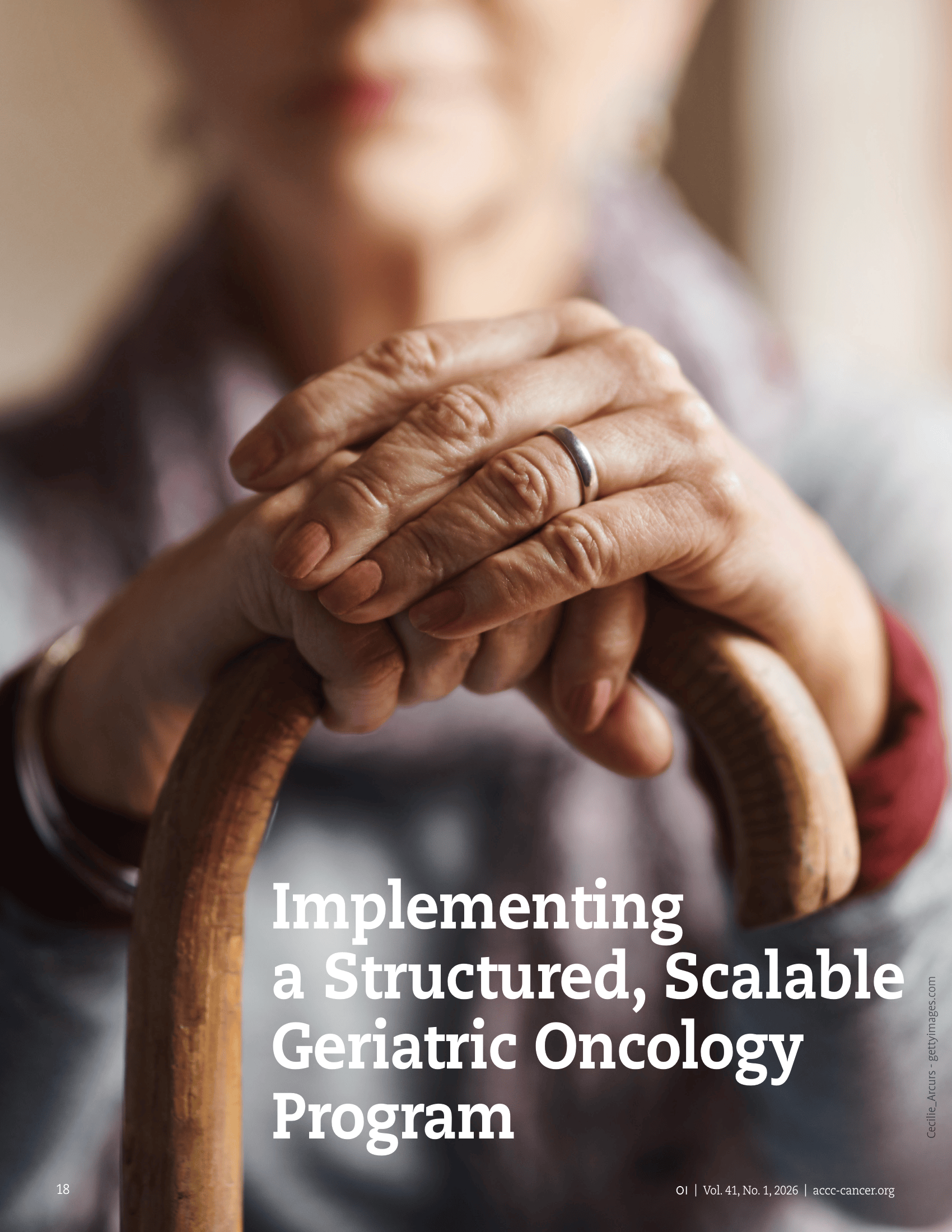

Implementing a Structured, Scalable Geriatric Oncology Program

Implementing a Structured, Scalable Geriatric Oncology Program

Feb 16th 2026
New Collaboration Between American Cancer Society and Brain Tumor Network Connects Patients With Brain Tumors to Free, Specialized Support

New Collaboration Between American Cancer Society and Brain Tumor Network Connects Patients With Brain Tumors to Free, Specialized Support

Jan 6th 2026

To broaden access to the specialized support and navigation that patients with primary brain tumors need, the Brain Tumor Network partnered with the American Cancer Society.

Cancer Care Tailored to Veterans and First Responders: An NCCN Patient Advocacy Summit

Cancer Care Tailored to Veterans and First Responders: An NCCN Patient Advocacy Summit

Dec 22nd 2025

The NCCN hosted a patient advocacy summit as a forum for providers, advocates, and industry members to discuss the varied and unique cancer care needs of Veterans and first responders.

More Patient-Centered Care Blog Posts

CANCER BUZZ Podcasts

Implementing a Structured, Scalable Geriatric Oncology Program [Mini Podcast] Ep 194

Jun 18th 2025

In this episode, CANCER BUZZ speaks with Ramy Sedhom, MD, section chief of medical oncology at Penn Medicine Princeton Health, Princeton Cancer Center about his program’s receipt of a 2025 ACCC Innovator Award. His team’s innovation, Implementing a Structured, Scalable Geriatric Oncology Program, paves the way for other programs to effectively integrate the use of geriatric assessments into routine clinical workflows, thus bridging a critical gap for older adults with cancer.

Understanding and Meeting the Unique Needs of Adolescents and Young Adults with Cancer – [Podcast] Ep 187

Apr 22nd 2025

Adolescents and young adults (AYAs) face poorer cancer outcomes and experiences compared with younger and older patients, and they historically have been lost between pediatric and adult models of oncology care. The Association of Cancer Care Centers (ACCC) is committed to providing up-to-date guidance on treating AYA patients with cancer to improve their outcomes. In this episode of CANCER BUZZ, a team from the University of North Carolina (UNC) AYA Oncology Program shares how it’s meeting the unique needs of this patient population by providing developmentally appropriate cancer care through a multidisciplinary approach, including clinical trial access and interactive infusion space; sharing resources where AYAs need additional support; and developing education about fertility and the short- and long-term impacts of cancer.

Supporting Skin Health in Patients With Breast Cancer - [Podcast] Ep. 181

Mar 20th 2025

Dermatologic toxicities associated with oncology treatment can significantly impact quality of life and treatment adherence for patients with breast cancer. The Association of Cancer Care Centers (ACCC) is committed to providing up-to-date guidance on managing these dermatologic side effects to enhance clinical outcomes. In this episode of CANCER BUZZ, Allison Gordon, MD, a supportive oncodermatologist at Memorial Sloan Kettering Cancer Center, discusses the dermatologic toxicities associated with breast cancer treatment. Dr Gordon explores preventive measures that oncologists can implement early in the treatment course and offers alternative resources for oncology clinicians when an oncodermatologist referral is not feasible. Additionally, she highlights capivasertib, a recently approved antineoplastic drug, and reviews its associated cutaneous adverse events, along with supportive care and management strategies.

A Practice Within a Practice: Integrating Oncodermatology into Comprehensive Cancer Care – [Video Podcast] Ep 49

Aug 15th 2024

Dr. Heberton sheds light on issues of access for patients with cancer seeking dermatologic expertise.

More Patient-Centered Care Podcasts

CANCER BUZZ TV

Bridging the AYA Survivorship Gap - [Video Podcast] Ep. 57

Oct 3rd 2025

Supportive Oncodermatology: Managing Skin, Hair, and Nail Toxicities in Cancer Care – [Video Podcast] Ep 53

Jan 22nd 2025

In this episode, CANCER BUZZ speaks with Julie Ryan Wolf, PhD, MPH and C.J.G. (Corina) van den Hurk, PhD, the chair and vice chair of the Oncodermatology Study Group at the Multinational Association of Supportive Care in Cancer (MASCC) about common oncodermatological toxicities including radiation dermatitis, hair loss, and nail changes unique to EGFR-inhibitors. Also discussed are strategies to increase provider collaboration to intervene at an early stage to improve quality of life for patients receiving cancer treatment.

Defining and Managing Erythropoietin Stimulating Agents (ESAs) Failure in Patients with Low-Risk MDS – [Video Podcast] Ep 44

Jul 11th 2024

In this episode, CANCER BUZZ speaks with Steven Gilmore, PharmD, BCOP, Senior Manager of Clinical Content in Pharmacy and Clinical Programs with McKesson Specialty Health, and Christopher Benton, MD, hematologist and medical oncologist at Rocky Mountain Cancer Centers, to review key considerations and emerging trends for the treatment of anemia in the low-risk MDS population.

Promoting Equitable Care through the 4R Oncology® Model - [Video Podcast] Ep 43

Jun 28th 2024

In this episode, CANCER BUZZ TV speaks with Tom Lycan, DO, MHS, assistant professor of Hematology & Oncology at the Wake Forest School of Medicine, about a practical tool that can provide a care plan roadmap for providers and patients to mitigate precision medicine disparities.

More Patient-Centered Care Videos

From Oncology Issues

Cancer Life reiMagined: The CaLM Model of Whole-Person Cancer Care

Cancer Life reiMagined: The CaLM Model of Whole-Person Cancer Care

Advocating for AYAs With Osteosarcoma

Advocating for AYAs With Osteosarcoma

Prehab Improves Outcomes for Oncology Patients

Prehab Improves Outcomes for Oncology Patients

Messina Corder, MBA, BSN, RN, and Kathryn Duval, MS, CCC-SLP

A focused prehabilitation (prehab) program couples physical therapy with holistic care that includes nutritional support, stress reduction strategies, and nurse navigator intervention. Integrating prehabilitation can not only improve patient outcomes post-surgery, it can also decrease hospital length of stay.

A Pathway for Identifying Women at Increased Risk for Breast Cancer and Providing Personalized Management

A Pathway for Identifying Women at Increased Risk for Breast Cancer and Providing Personalized Management

More Patient-Centered Care OI Articles

Abstracts and Presentations

[Abstract 236] Use of a Delphi Process to Develop a Guideline Based Geriatric Oncology Gap Assessment Tool

Sep 24th 2021

Presented at the 2021 ASCO Quality Care Symposium, September 24 - 25, 2021.

[Abstract #180] Shared Decision-Making Attitudes and Practices in Multidisciplinary Cancer Care Teams

Oct 9th 2020

Presented at the 2020 ASCO Quality Care Symposium

[Abstract] Geriatric Assessment Adoption in Community Cancer Centers: Trends, Barriers, and Recommendations

Jun 22nd 2019

Presented at 2019 Multinational Association of Supportive Cancer Care (MASCC) and International Society of Oral Oncology (ISOO) Annual Meeting in San Francisco, CA.

[Oral] Momentum Discussion: Multidisciplinary Approaches to Caring for Geriatric Patients with Cancer

Nov 17th 2018

Presented at GSA 2018 Annual Scientific Meeting in Boston, MA.

More Patient-Centered Care Abstracts & Presentations