Advancements in the delivery of chimeric antigen receptor (CAR) T-cell therapy have created growing urgency to expand access across diverse care settings. Since the FDA approved the first two CAR T-cell therapies in 2017 for acute lymphoblastic leukemia and non-Hodgkin lymphoma, the field has expanded to six approved therapies for certain hematologic malignancies.
These therapies have demonstrated the potential for durable remission and improved survival in patients with relapsed or refractory disease, while research continues to explore applications in solid tumors.
ACCC is supporting community cancer programs and practices by providing education and tools to strengthen care coordination, address implementation challenges, and help identify eligible patients for CAR T-cell therapy earlier in their treatment journey.
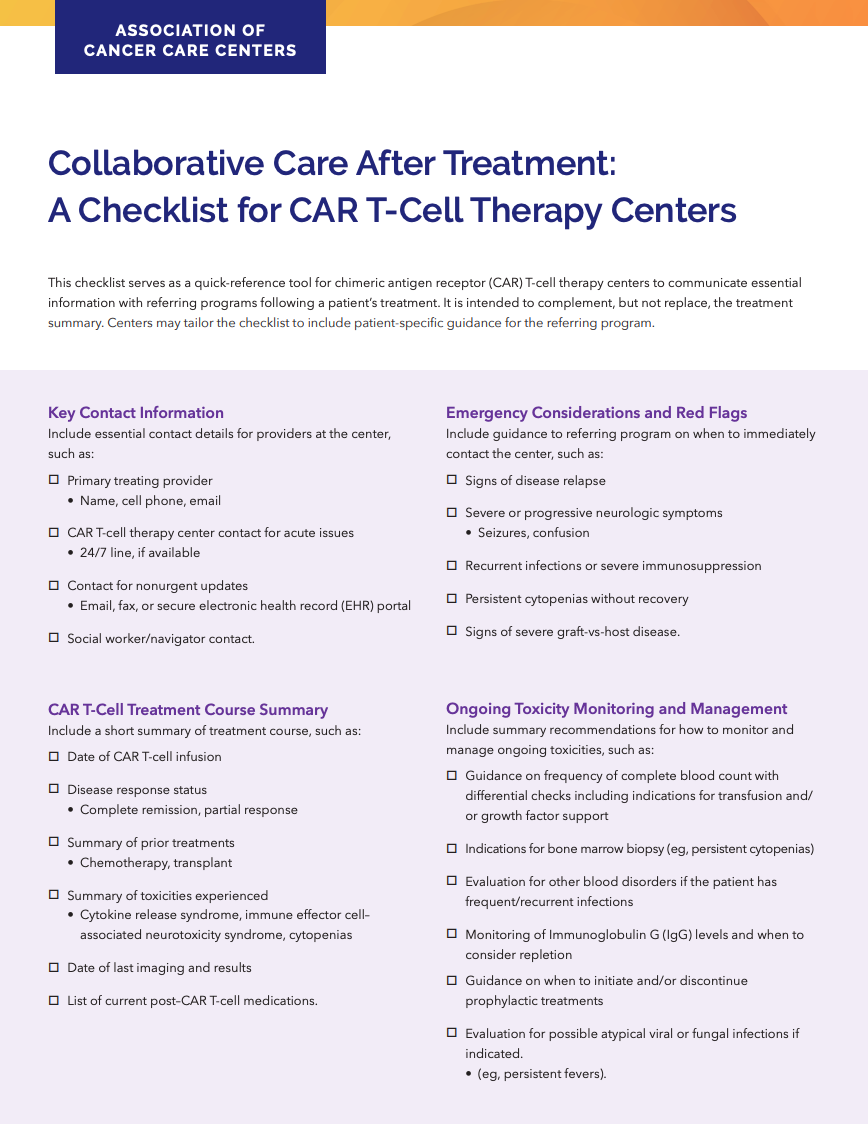
Discover the top barriers, facilitators, and opportunities shaping access to CAR T-cell therapy, including how programs can turn challenges into solutions.
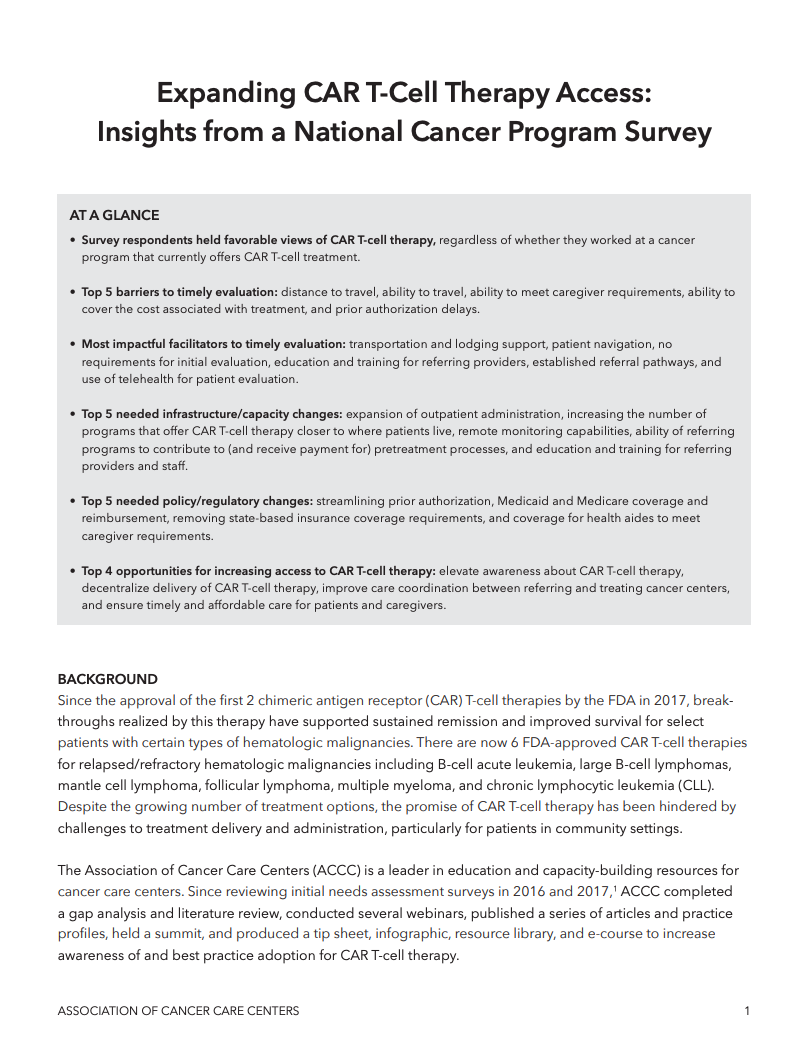
Utilize this quick-reference tool for CAR T-cell therapy centers to communicate essential information with referring program’s following a patient’s treatment.
Publication: American Journal of Managed Care (AJMC)
Explore how global experts are advancing reimbursement reforms to expand equitable access to CAR T-cell therapy. This cross-Atlantic perspective, co-authored by ACCC Executive Director Meagan O’Neill, outlines barriers facing oncology programs in the US and Europe. Highlights include value-based models that can help more eligible patients receive potentially curative treatment.
CAR T-cell therapy is a potentially life-saving treatment for patients with certain hematologic malignancies. Yet, the logistical challenges and the need for specialized management of adverse events have limited its availability in community settings. In this episode, CANCER BUZZ speaks with Jeremy M. Pantin, MD, FACP, clinical director of the Adult Transplant and Cellular Therapy Program at TriStar Centennial Medical Center, part of the Sarah Cannon Transplant and Cellular Therapy Network. Dr. Pantin discusses the cancer center’s community-based, outpatient model, impact on outcomes for patients with hematologic malignancies, and shares his perspective on future changes needed to help further expand access to CAR T-cell therapy.

This Community Oncologist Patient ID Roundtable brought together 3 professional societies: the Association of American Cancer Institutes, the Association of Community Cancer Centers, and the American Society for Transplantation and Cellular Therapy with the aim of developing a standardized framework to enable community oncologists to easily assess patients for CAR T-cell therapy, with a focus on large B cell lymphoma.
Discover actionable solutions to improve patient access to CAR T-Cell therapy and optimize care continuity between referring programs and CAR T-cell therapy centers.
This webinar provides an overview of the current insurance coverage landscape for CAR T-cell therapy. The discussion will focus on existing financial barriers and challenges that cancer programs face as they help patients and caregivers navigate CAR T-cell therapy.
Providing access to the latest CAR T-cell therapies is a key concern to professionals and patients in the community cancer setting. This webinar explores what resources are required for establishing CAR T-cell therapy services in the community setting and how cancer programs and practices can prepare and budget for successful implementation.
Explore the critical, multidisciplinary functions of the cancer care team in helping people to navigate complexities of CAR T-cell therapy. View this 1-hour webinar to receive practical strategies for strengthening care coordination, improving communication, and defining team roles.
This program is made possible by support from Arcellx, Johnson & Johnson Healthcare Inc., Kite Pharma, and Legend Biotech.