ACCC President Krista Nelson, MSW, LCSW, OSW-C, FAOSW, shares with us why she believes the theme of this year’s Social Work Month is important and how it ties into her own theme as ACCC’s new president.
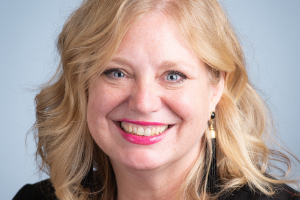
March is Social Work Month, and this year, the National Association of Social Workers announced that the theme is “Social Workers Are Essential.” That’s hardly surprising, given that COVID-19 essentially redefined the practice of medicine last year. Since the onset of the pandemic, healthcare workers, including those in oncology, have experienced new stresses and anxieties, changing preconceived ideas about the role of psychosocial support in cancer care.
To discuss the evolving role of social workers in cancer care, ACCCBuzz spoke with ACCC President Krista Nelson, MSW, LCSW, OSW-C, FAOSW, a senior oncology social worker and program manager at Providence Health & Services. Nelson recently announced that the theme of her 2021-2022 presidential year is “Real-World Lessons from COVID-19: Driving Oncology Care Forward.” She explained that the goals of this year-long initiative will focus on three key lessons:
Nelson shared with us why she believes the theme of this year’s Social Work Month is important and how it ties into her own theme as ACCC’s new president.
ACCCBuzz: Why do you think “Social Workers Are Essential” was chosen as the theme for this year’s Social Work Month?
Nelson: I would say, especially amid COVID, we've really seen and recognized the suffering in our communities, within our patients, and within our own lives. People and their mental health have been stretched more than ever before, and I think we're dealing with greater social isolation.
This is impacting the clinical work we provide because patients can't have their family members present for their treatments. So, the burden of providing support to patients is falling to all staff, not just social workers. I think more than ever, we've found that people need psychosocial support, and there's more of an awareness among all staff of the distress among our patients and our communities at large. What we are seeing in our communities, our patients, and in cancer care shows that social work is essential.
ACCCBuzz: How has the pandemic changed the practice of social work in oncology?
Nelson: There is more distress experienced by the people providing the care. I think we're coming from a place of more distress by what we're witnessing in either our communities or because of the pandemic. We now identify more with the stresses of our patients than we ever have before and the way we deliver care has changed. Another big change is that we are seeing patients with advanced cancers suffering in ways that we could not have previously imagined. For example, patients may be saying to us now, “With this quality life that I have now, I'm not willing to try a clinical trial that may or may not extend my life for four months because this is what I have, and I'm not interested in living for that.” If you can't do anything on your bucket list, you are at home by yourself, or maybe you’re not able to see your grandkids, is that how you define quality life? Our work has changed to address the issue of how to have these discussions with patients, their loved ones, and their providers.
ACCCBuzz: What role have social workers played in the care of clinicians and patient support staff during the pandemic?
Nelson: A huge part of my practice shifted initially with the pandemic to providing support to staff. I think everyone had so many changes happen because of the pandemic. So we did a lot of things at my program to offer individual support for caregivers. We also started these virtual connecting conversations as a way to have people talk about the emotional toll of the pandemic and how it impacts our work. These are Zoom meetings that we offer to units at Providence that have been particularly impacted by COVID-19. The meetings are professionally facilitated and are offered throughout the week to enable people to connect with one another. This was an opportunity to not only connect over what was happening with COVID-19, but really to talk about how people were dealing with it emotionally.
ACCC Buzz: What are the most pressing needs of social workers themselves at this time?
Nelson: Part of my president’s theme speaks to that. Everyone who works with people with cancer wants psychosocial support. But quite often oncology teams are stressed and stretched thin with their workload. So when you add on the burden of what they're dealing with personally day-to-day and what they're dealing with in their community and/or supporting their colleagues and other providers, it's too much.
Part of our training as social workers concerns resilience and self-care. That's the other reason I really wanted to bring this to the forefront with my theme this year. I want to promote well-being for ourselves. The truth is that if I'm really stressed, I can't provide good care for the people around me who are also stressed. I have to take care of myself, too. I like to encourage staff to do simple things to help alleviate their stress, like taking a mindful pause before going from one patient to the next or one task to the next. Using mindfulness and gratitude has really helped get me through this.
Then there is the issue of connection. I think a big part of what’s been hard with COVID-19 is the lack of connection people are experiencing. We need to find ways to foster connection. A lot of people have been sent home to work, but that is not necessarily the case for people in oncology. A lot of us are working where the patients are, so I think balancing the need for patient and staff safety while also being able to connect with others is important.
ACCCBuzz: You’ve supported your choice for your ACCC President’s Theme, “Real-World Lessons from COVID-19: Driving Oncology Care Forward” with three very distinct statements. Why is it important for ACCC to address these topics this year?
Nelson: ACCC represents the cancer community, and our community at large is dealing with issues of health equity and social justice. We're learning lessons every day because COVID-19 isn't over, and we don't know what the future holds. We need to show the value of our supportive services for our patients. They're suffering, and some cancer programs and practices are not able to provide those services because of cost limitations or staff shortages. Therefore, we need to figure out a way to demonstrate the value of making social work staff an essential part of cancer care. I would even argue that addressing patients’ anxiety and depression is just as important as taking their weight before giving them chemotherapy, because both things are going to impact how patients cope and get through their cancer treatment. One goal of my theme is help social work staff convey their value to their programs.
ACCCBuzz: Is there a message you would like to leave with readers regarding your theme?
Nelson: Being in direct patient care, I understand the stresses and nuances of all the work that the cancer care team does. I want to thank them for what they do and know that I am grateful for the difference they make in people's lives every day. I also feel it's important to thank the patients who allow us to be on this journey with them when they are so vulnerable. These patient experiences help shape how we do our work.
I am excited to work with ACCC members that are interested in any of these topics. I tried to not make my theme too short because I want everyone on the cancer care team to have a place. My hope is that everyone can find an element within this theme that is meaningful to them and their practice. My theme works as a lens to really look at all the different aspects of cancer care, health equity, and social justice. The goal is to give patients high-impact supportive care.
I’d like to leave people with one message: It doesn't matter where you are or who you are, every person has the right to acknowledge that it's okay to not be okay right now. Things are hard. Things were hard before COVID-19, too, but now we have a common voice to share our experiences and build well-being in our programs, practices, and communities.


An at-home option for cervical cancer screening breaks down barriers to care and offers the same level of precision as screening in the clinic.