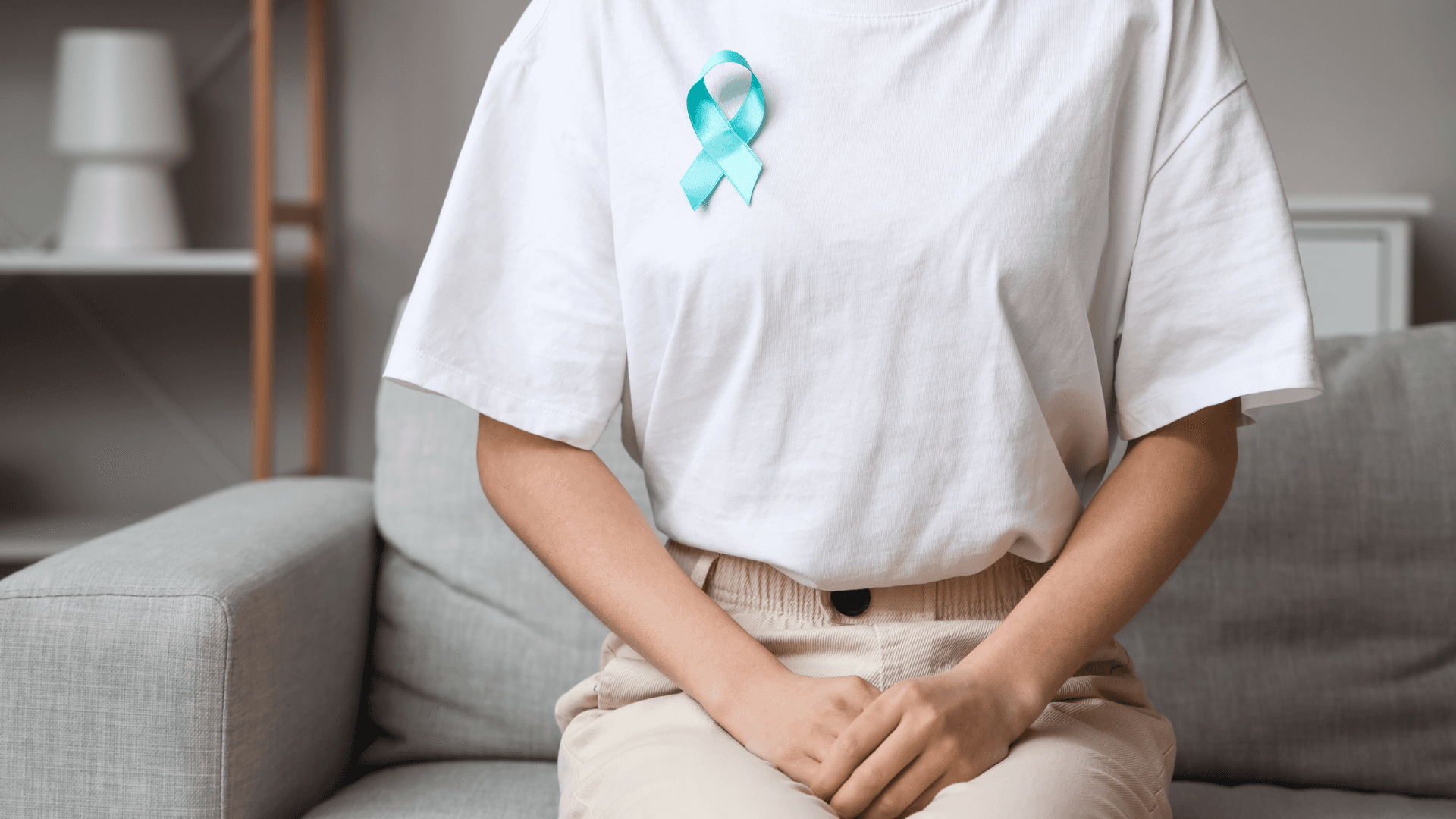
Navigating difficult conversations with patients facing advanced-stage cancer is an important part of shared decision making and ensuring patients feel engaged with their treatment plan.
Find the CANCER BUZZ podcast on Apple Podcasts, Spotify, or wherever you get your podcasts!
Understanding how to navigate difficult conversations with patients facing advanced-stage cancer is an important part of shared decision making and ensuring patients feel engaged with their treatment plan. In this episode, CANCER BUZZ speaks with Sunandana Chandra, MD, MS, and associate professor of Hematology and Oncology at Northwestern University in Chicago, Ill., on her approach to engaging patients in shared decision making and dispelling myths about palliative/supportive care, as well as Rachel Saks, MSS, LSW, OSW-C, and senior director of Education for Cancer Support Community on tips and resources they have developed to help patients have conversations with their care team members.
Guests


Sunandana Chandra, MD, MS
Associate Professor, Hematology and Oncology
Northwestern University
Chicago, IL
"If I introduce the idea of involving our supportive care oncology colleagues or palliative care colleagues, I preface it by trying to discuss with the patient what the goals are of involving them, so the patient understands clearly that the goals may be better symptom control, the goals may be trying to improve the patient’s well-being emotionally, the goals may be goals of care and end-of-life discussions, but [they do] not always have to be that. I think it’s important to dispel those myths early on, be very clear about how inclusion of these other team members can actually benefit their care and their journey, ultimately.”
– Sunandana Chandra, MD, MS

Rachel Saks, MSS, LSW, OSW-C
Senior Director, Education
Cancer Support Community
Philadelphia, PA
“We want to enrichen the patient’s experience and by doing so – we need to give those tools to our healthcare providers – so they know how to channel those conversations, how to gear those talks, and how to point our patients in the right direction.”
– Rachel Saks, MSS, LSW, OSW-C
Resources:
This is podcast has been created in connection with the education program “Advanced Non-Melanoma Skin Cancers: Effective Practices in Multidisciplinary Care.”
Rachel Saks, MSS, LSW, OSW-C: We want to enrichen the patient's experience, and by doing so, we need to give those tools to our healthcare providers so they know how to channel those conversations, how to gear those talks and how to point our patients in the right direction.
CANCER BUZZ: That's Rachel Saks from Cancer Support Community. She'll be back later in the show. Today having difficult conversations with patients facing advanced non-melanoma skin cancers.
Welcome back to CANCER BUZZ. I'm your host, Summer Johnson. We know shared decision making is critical to forming a care plan for patients diagnosed with advanced stage. But these conversations with patients and their loved ones can be tough for care professionals to navigate. Our guests today, walk us through these conversations so patients feel heard and engaged with their treatment plan.
Dr. Sunandana Chandra is a physician and associate professor of hematology and oncology at Northwestern University.
Sunandana Chandra, MD, MS: You know, unfortunately in our time, I don't think it was an official part of the curriculum in medical school. It was touched upon, but most medical schools, I would say didn't spend a lot of time actually teaching medical students on how to communicate.
I think that's certainly changing now. I do think it's part of the curriculum in most medical schools now. So that's a great change and a great evolution of understanding that this is an important part of a doctor's training. However, I will say that over the years, having been in, you know, numerous settings and situations where I've had these conversations, I've really kind of learned how to present the information in an informative and a compassionate way.
I'm still learning, to be honest, I think it's forever a process of improvement for all of us. I certainly, you know, look to my colleagues, and see how they handle things. I certainly, you know, after each interaction with a person or their family member, I always try to reflect and try to think of how I could have done things differently or if there instances where things did go very well.
You know, at the end of the day I understand that these conversations are very difficult for our patients and their family members. Not only do I want to give them as much information as I can, but I really want to deliver it as compassionately as I can so that they can look back and not have any regrets as to how the conversation went.
CANCER BUZZ: Can you explain to us the importance of palliative and supportive care?
Sunandana Chandra, MD, MS: Absolutely. So, you know, oftentimes, um, these patients when diagnosed with these cancers can, can develop pretty significant symptoms. Whether it's pain or bleeding, or just a sense of hopelessness, perhaps even an impact on their mood, depression, not to mention side effects from therapies that we may prescribe them.
And many times these patients have had a chance to already think about what they want for their own care; how aggressive they would like to be or not, to be their own goals of care. And so having our supportive oncology and or palliative care colleagues involved in the care of these patients – can really benefit the patients, ultimately.
CANCER BUZZ: How do you introduce this care and the use of the multidisciplinary team to patients?
Sunandana Chandra, MD, MS: Well, in general, I think the data has shown in other cancers, certainly, that when patient have a palliative care or supportive oncologist on their team, or a number of team members as part of their care team, their outcomes are actually better.
So I spend a lot of time with my patients trying to impart to them that having a palliative care or supportive oncology team member or members as part of their care team does not mean that they're giving up on them or their cancer. But often it just means that we're trying to deliver the best care possible.
CANCER BUZZ: How do you address stigma and misunderstandings of palliative care with patients?
Sunandana Chandra, MD, MS: Well, when I introduce, or if I introduce, the idea of involving our supportive care oncology colleagues or palliative care colleagues, I preface it by trying to discuss with the patient what the goals are of involving them so that patient clearly understands that, you know, perhaps the goals may be better symptom control. Perhaps the goals may be better, you know, trying to improve the patient's wellbeing emotionally. Perhaps the goals may be goals of care and end of life discussions, but not always have to be that. And so, I think it's important to dispel those myths early on.
Be very clear about how inclusion of these other team members can actually benefit their care and their journey, ultimately.
CANCER BUZZ: What advice do you have for your colleagues to make sure patients receive the best possible care?
Sunandana Chandra, MD, MS: Specifically in non-melanoma skin cancers, it's really evident that is it very much a multidisciplinary approach.
So you have dermatologists, surgeons, pathologists, perhaps dermatopathologists, if they're available, medical oncologists, radiologists who read the imaging, radiation oncologists who deliver radiation beams to treat cancers. All of these team members, and then of course, including our palliative care and support of oncology team members that we've previously discussed, is necessary in treating our patients.
It's truly a multidisciplinary approach that I think will ultimately result in the best care possible. And to be honest, non-melanoma skin cancer is just one of them. I think most cancers these days require a multidisciplinary approach to really deliver the best care possible.
So I would urge our patients to be open to that approach. And if they feel like they're not receiving that, for them to talk to their doctors, express their concerns, and really seek out a team with whom they feel comfortable.
CANCER BUZZ: Our next guest is here to tell us how they've prepared resources to help support patients and care teams when having these conversations. Rachel Saks is the Senior Director of Education at Cancer Support Community.
Rachel, can you explain why palliative and supportive care is an important part of the patient's cancer treatment?
Rachel Saks, MSS, LSW, OSW-C: It's extraordinarily important for patients of all types of cancers, including non-melanoma skin cancer, to make sure that they are receiving the most appropriate care as possible. Our job, particular as a healthcare team and my profession as a social worker, is to make sure that patients are aware of the questions that they need to be asking.
Know that we want to empower them to be their own advocates as well as their caregivers. Always having somebody by their side to help facilitate asking those questions and key information and really finding out what the appropriate treatment is for them at the time.
And particularly with advanced non-melanoma skin cancer, there's various different types of treatment. Including palliative care as well, but figuring out what is the most appropriate type of care at the time. Should I be seeking, you know, immunotherapy, radiation? Should I be looking into a clinical trial? Or has my cancer advanced at such a stage that we need to be talking about palliation?
CANCER BUZZ: How is the care team's approach to implementing this type of care evolved?
Rachel Saks, MSS, LSW, OSW-C: I've been in the field for a really long time, and I've seen healthcare change over time. I think that when I started back, um, years ago, that there was a notion of always treating into the last minute and that palliation and hospice were really taboo topics, and it was hard for physicians to say that they wanted to pursue that level of care for patients. They felt that that was kind of letting go.
I think that there's been a real turn in change in the healthcare field, and that palliation can happen at various stages because a big part of palliation and palliative care – is pain management and making sure that we're treating the patient holistically, we're making sure that the patient is not in any pain, and we're really honoring where they want to be at in their treatment process.
CANCER BUZZ: What do patients need from care providers to improve their treatment journey?
Rachel Saks, MSS, LSW, OSW-C: Sure. The first thing that they need from the care team is they need to understand what each care member of the care team does.
That can be extraordinarily confusing, particularly with a non-melanoma skin cancer diagnosis, because you're going to have various different care providers and they all do different things. So we want to give our patients the time to understand what each one does and who to refer to.
For example, the social worker and the nurse. The dermatologist, the oncologist, the radiation specialist… So we want to have them understand who they can come to. They can always come to their nurse navigator and their social worker, and truly anybody on the healthcare team because they'll point them in the right direction. But we want to educate our patients about who is on their healthcare team.
That's first and primary. And we also want to focus. Our patients because patients come in with different level of knowledge, different backgrounds, and have a different, wherewithal, in terms of where they might be at, in terms of where they are in terms of knowing what their diagnosis is. So we really try to make sure that our patients have the resources, whether that's, you know, written, we at Cancer Support Community do various different types of videos because people learn in different ways.
But what are the types of questions you should be asking your healthcare provider? And we have various tools that we give to our patients and offer as resources. So they have those questions right in front of them, like discussion tools in terms of what they should be asking their care provider, what they should be advocating for, and how they want to convey what they want for their treatment and what their treatment goals are.
CANCER BUZZ: Can you explain why it's so important for providers to have resources that help them deliver this?
Rachel Saks, MSS, LSW, OSW-C: Absolutely. So these tools really are offered for patients and geared for patients and caregivers, but they're really for the entire healthcare team, and it's essential that our healthcare providers know of these resources.
There's so many different advocacy organizations out there for patients, for non-melanoma, skin cancer and other chronic diseases in other cancers, and we want our healthcare providers to have those resources at the tips of their hands because like I indicated earlier, their time is limited. You know, they're seeing multiple patients in a day, and sometimes they only have 15-20 minutes or less to be able to spend the time for their patients and their loved ones.
So we want them to have a reference point that they can say to their patients, this is what's happening. This is what you're going through. Let me give you some resources to use tandem to what we're talking about, and then you can call me, email me, talk to the navigator, talk to the nurses about what some questions might be coming up for you.
We want to enrich the patient's experience and by doing so, we need to give those tools. To our healthcare providers so they know how to channel those conversations, how to gear those talks and how to point our patients in the right direction.
CANCER BUZZ: Do you offer resources to healthcare teams navigate these difficult conversations?
Rachel Saks, MSS, LSW, OSW-C: All of our resources, we have extensive resources, particularly on advanced non-melanoma skin cancer, we have radio podcasts, Facebook Live webinar, and e-learning, which is a quick guide to what non-melanoma advanced skin cancer is, it's an eight-minute overview. We have a very thorough book that's geared towards the patient and caregiver, but absolutely appropriate for the healthcare provider as well.
And then, like I had indicated earlier, we have discussion tools, which are tools that are geared for the patient and caregiver to bring into the healthcare office, but for sure the healthcare team can use as well. So we have numerous resources. That can help support the healthcare team and providers to have those conversations.
And I think our healthcare providers are doing a really good job these days when they feel that they might not have the time or that they have additional questions. The healthcare team, if it's the right healthcare team, has a plethora of providers on the teams, from social workers to financial navigators, to pharmacists, to dieticians, to physical therapists, to the radiation oncologists.
So I think that if one healthcare team member isn't feeling confident in a particular area, we all know that we can go to one another where somebody else can support us and have that information.
CANCER BUZZ: What do care providers need to know to better treat this patient population?
Rachel Saks, MSS, LSW, OSW-C: Sure. First of all, we appreciate our healthcare providers, and the team is a whole because of each unit on it, and that makes just the care for our patients stronger and it makes us stronger as individual healthcare providers.
I think what's really important to inform our healthcare providers about is that patients are just needing the time they want to be heard, they want to be able to ask their questions. They have uncertainty, they're scared, they have anxiety, and we want to give them the time and the wherewithal, just like we would want to have from our own healthcare provider, should something come up in our life medically, we want our patients to know that they have that same love, care, and time from our healthcare providers.
And the other thing we want our healthcare providers to know is that they're not in it alone. They know that they have an extensive team supported around them, but they also have advocacy organizations like, Cancer Support Community out there to help support them, to help support their patients and to help support the caregivers because they are very key and important, particularly in an advanced non-melanoma skin cancer patient's life.
CANCER BUZZ: So thank you, Dr. Chandra and Ms. Saks. You can learn more about the work of today's guests in the show notes. Stay tuned to the CANCER BUZZ channel this week for more uncaring for patients with non-melanoma skin cancers. Until next time, for the CANCER BUZZ team, this is Summer Johnson.
CANCER BUZZ is a resource of the Association of Cancer Care Centers (ACCC).
The views and opinions expressed herein are those of the author(s)/faculty member(s) and do not reflect the official policy or position of their employer(s) or the Association of Cancer Care Centers.
September 10, 2026




In recognition of Leukemia and Lymphoma Awareness Month, ACCC compiled a group of resources to help care teams navigate two of the most commonly diagnosed adult leukemias: acute myeloid leukemia and chronic lymphocytic leukemia.