In the second of a three-part series on “changing the culture of oncology,” Dr. Sanjay Juneja shares three technologies he’s excited about and why.




In the second of a three-part series on “changing the culture of oncology,” Dr. Sanjay Juneja shares three technologies he’s excited about and why—technology that detects circulating tumor DNA to reveal if cancer is present, technology that facilitates real-time testing of a specific treatment on a patient’s tumor cells before initiation of the anti-cancer regimen, and more.
Guests:
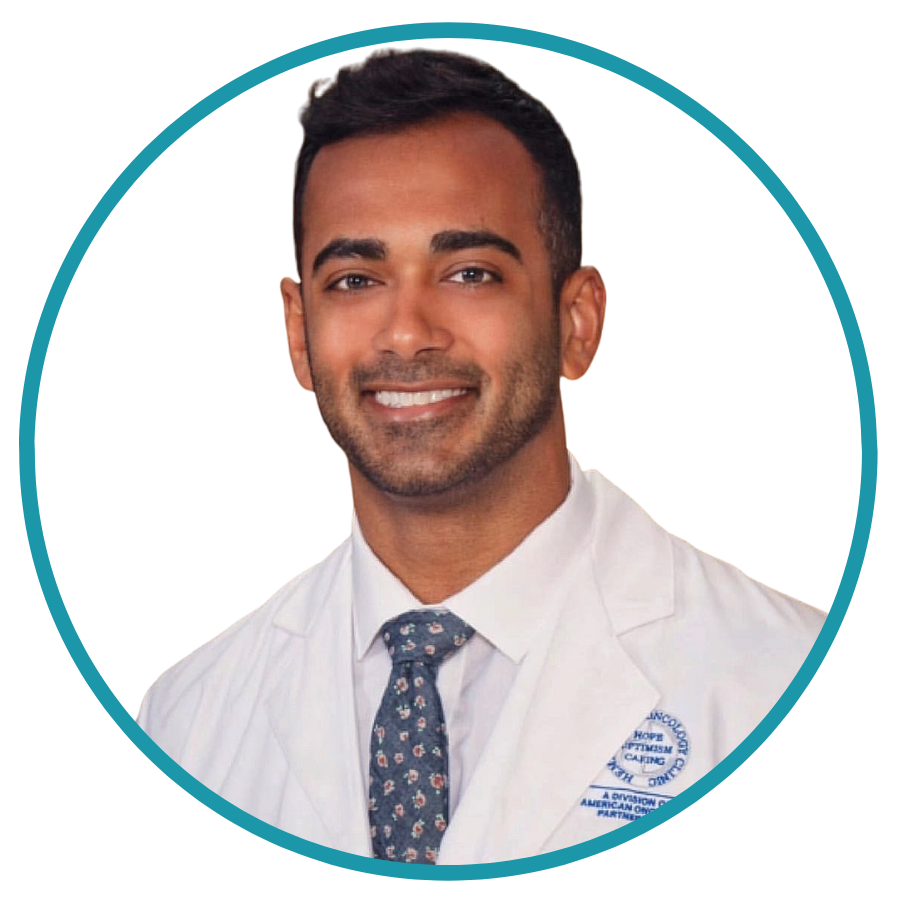
Sanjay Juneja, MD
Chief of Oncology Service
Baton Rouge Medical Center
Baton Rouge, LA
Board Member of the Louisiana Oncology Society
“Always lean on what you know. And we know the immune system has protected all of us. If you are listening to this, you have beat cancer. And your immune system did it for you.”

Resources:
CANCER BUZZ: Welcome back to CANCER BUZZ TV. I'm your host, Summer Johnson. Today we're looking at the changing landscape of cancer care delivery due in large part to technology and what those advances mean for clinicians. This is the second episode of a three-part series with Dr. Sanjay Juneja, a Medical Oncologist and Hematologist and Chief of Oncology Service at Baton Rouge Medical Center. He's also board member of the Louisiana Oncology Society.
Welcome back Dr. Juneja. Can you explain what treatment technologies you are most excited about and how they are addressing challenges in cancer care?
Sanjay Juneja, MD: So when people talk about finding a cure, the cures for cancer types, when you can appreciate, you know, that it may be multiple things, there's a whole bunch of stuff, for lack of a better term, that's really helping some of the biggest problems with cancer. So number one, finding it early enough. Theoretically, almost maybe glioblastoma and anaplastic thyroid, those are very aggressive tumors. Unfortunately, those are pretty much stage four, no matter how small it is because they're very severe. But short of that colon, breast and, renal cell and kidney and bladder, all of these things, theoretically more or less are curative if you catch it early enough, right?
So you have to have about 600-800,000 of those cancer cells in one place to see it on a CT scan. What if you were able to catch it way before, way before started invading the tissues and through them or going into the lymph nodes or going to other places? That by far is going to help in the quickest way on getting cancers cured and, and people cancer free. So one of the things that a lot of places in the world are looking at is basically checking circulating tumor DNA. So if you're in a house and you know somebody's living in there, you'll see dust, right?
If they didn't dust because people shed skin cells and hair cells. Well the same concept applies to cancer cells. They're shedding things and that's the basically the remnants of like there was some construction here. Now they're looking at ways to be able to see that and pick up on that. That's that they're saying this is specific to the cancer cell, not irregular cell. And that way you can get it much sooner. And then, so we're talking about stage one, you know, everyone's like, I hope I'm stage one if I have to be something; imagine a stage 0.5 like that would be that concept. So getting cancers with crazy technology on doing a blood test just like you check your hemoglobin A1C is awesome.
And that's not at all unrealistic to see even in the next year or two. The second thing is that I think is really mean, and I only just learned about—from a guest on my on my podcast in California—he develops a whole bunch of, you know, novel therapies and what people are doing, him and others is, can I see if the treatment is going to work before I start it? And, and sub, you know, subject a patient for four to six weeks and then restage and hope it's working. What if you could find out before you start the treatment?
And so people are looking at taking your actual active alive cancer cell, still overnight shipping, and then you can basically put them into tubes and put the potential treatments you're going to use. Have a control group where you don't put anything and you can measure certain things. In this company's case, it's they measure the density, they notice that a little bit of a change in the density or the mass of that cell actually suggested that it would respond because of the calamity and the damage that's happening inside the cell. And it's upwards of 95% accurate in solid tumors.
So imagine instead of having three or four lines with that, you know, downtime of progressing, if you don't respond when you find out later, if you knew beforehand. So now you go from four to five lines to 12 to 15 lines. So that is, like I said, under development in multiple places around the country. Often like out of pocket, they want it affordably. So 500 bucks a thousand because they want the data. And then the third thing that's really exciting is just this immune system thing, right? Our parents, or at least mine did, just would always tell you like, just go back to the basics.
You know, always, always, lean on what you know, we know the immune system has protected all of us. If you're listening to this, you have beat cancer not a small number of times because your immune system did it for you. Cancer escapes that. Well now everything's kind of circling back to, hey, why don't we just go back to the building blocks? Let's figure out how we can re-enable the immune system to do what it would've done and maybe isolate or remove the one thing that made that cancer cell escape. And so that is a whole bunch of things.
CAR-T therapy, basically they take out lymphocytes, which are immune cells, put a target on it, put it back in you and say, go find this target. And then, then it starts killing the cells. That's amazing. That's like pseudoscience stuff and we're already doing it in, in lymphomas and looking into it with all kinds of other things. And then other things also involve immunotherapy that you've heard of, but we can find all the different stop signs that protect the cancer. So those are just three of many examples on how, you know, cancer is managed differently, but also how people living with cancer, like with diabetes or a heart disease, it hopefully becomes, before everything is cured it becomes more like that and less of a, you know, harder process to go through.
CANCER BUZZ: What do these advances mean for your fellow clinicians?
Sanjay Juneja, MD: Unfortunately, to some degree, I mean very fortunately, but unfortunately to a degree is everyone just needs to be aware best they can of one the side effects of treatments. Because when before, you know, and it's still this way, but cancer patient assumes the care of someone because of stage four may have at two to three year survival. Well people are able to live five or six years. Especially with immunotherapy for example. It can be so enigmatic or just hard to tell that something is from the immunotherapy, it can just cause diabetes. But if a primary care doctor doesn't think this diabetes could be from this immune therapy that's kind of in the back of the mind because they haven't had any problems for two years and immunotherapy can cause problem anytime.
Then you go down this whole other route, right where you can turn it around or diabetes is, is difficult to turn around with immunotherapy. But immunotherapy causes a lot of things you can turn around so that suddenly everyone's going to have to be aware to some degree on what kind of things to look for with certain treatments. And then the other thing is, even oncologists, like it's hard, and myself and my wife are both community oncologists. If you're practicing really good oncologic care, every single, you know, weaker month, something's coming out that we've learned, which is amazing.
So I said unfortunately unfortunate, it's like kind of the Gemini of both, but it makes it very challenging. I mean we were using HER2 targeted therapy, right? For breast cancer forever. And if you were one plus, not forever, somebody say it's not forever, but it's been a while, it's been decades. If you were one plus, right on our slide it's like, oh, I just see one plus on the IHG score. You were negative and that's just the way it was. That's what's copied in all the charts of patients living years and years. All of a sudden this summer we found out, oh wait a second, hold on…actually, if you're one plus with this drug, it works.
So now everybody has to go back and think and know, which will take years unfortunately, for every oncologist to check every patient that's marked as negative says, oh by the new criteria is positive. Like that's one example of a gazillion. Don't call me on that number where that's what is required. But hopefully with you know, AI technology not to substitute but to help and all of these different metrics people are looking to see how can we make this easier?
CANCER BUZZ: Thank you, Dr. Juneja.CANCER BUZZ TV is a resource of the Association of Community Cancer Centers (ACCC) developed to bring busy oncology professionals, the latest news in cancer care. You can learn more about advancing opportunities with technology by checking out ACCC'S President's Theme for this year; that's entitled Leveraging Technology to Transform Cancer Care Delivery and the Patient Experience. You can look for a link to that in the show notes.
Stay tuned for the third episode in this series with Dr. Juneja. On behalf of all of us here at CANCER BUZZ TV, thank you for watching. I'm Summer Johnson.
The views and opinions expressed herein are those of the author(s)/faculty member(s) and do not reflect the official policy or position of their employer(s) or the Association of Cancer Care Centers.
September 10, 2026


An at-home option for cervical cancer screening breaks down barriers to care and offers the same level of precision as screening in the clinic.