ACCC association of cancer care centers
Join/Renew
Login
Join/Renew
Login
Education & Resources
ACCC eXchange LogInCorporate Member Sponsored ResourcesACCC eLearning LogInPresentations & Abstracts
Publications
Oncology IssuesPatient Assistance & Reimbursement GuideTrending Now in Cancer CareBusiness Case Studies for Hiring New Staff
Events
2026 ACCC Leadership SummitAnnual Meeting & Cancer Center Business SummitCapitol Hill DayNational Oncology ConferenceOncology Reimbursement MeetingsOncology State Society Meetings
Policy & Advocacy
ACCC 2026 Policy PrioritiesLetters & StatementsAccess, Payment & Reimbursement ReformWhite Bagging & Brown BaggingAdvocacy ResourcesCancer Moonshot
Membership
Join | RenewWho We AreMembership Types & BenefitsCorporate MembersACCC Member Portal FAQMember Directory
Partners
Oncology State SocietiesPartner OrganizationsCME
News
News ReleasesAdvocacy News ReleasesOncology News
About ACCC
Timeline / 50th Anniversary2025 Impact ReportPresident's ThemeACCC Innovator AwardsACCC FellowsBoard of TrusteesACCC Senior Staff
Breast CancerMetastatic Breast Cancer
Gastrointestinal CancerBiliary Tract CancerColorectal CancerGastric CancerLiver Cancer
Genitourinary CancerBladder CancerProstate CancerRenal Cell Carcinoma
Gynecologic CancerOvarian Cancer
Head & Neck Cancer
Hematologic MalignanciesAcute Lymphocytic Leukemia (ALL)Acute Myeloid Leukemia (AML)Chronic Lymphocytic Leukemia (CLL)Mantle Cell Lymphoma (MCL)Multiple Myeloma (MM)Myelodysplastic Syndromes (MDS)
Lung CancerNon-Small Cell Lung Cancer (NSCLC)Small Cell Lung Cancer (SCLC)
Sarcoma
Skin CancerMelanomaNon-Melanoma Skin Cancers (NMSC)
Clinical Practice & TreatmentCancer DiagnosticsCare CoordinationEHR Integration for Biomarker TestingQuality Improvement Collaboration: Integration of Precision Medicine in Community OncologyTreatment
Financial NavigationFAN Boot CampFinancial Advocacy Network (FAN) Resource LibraryPatient Assistance & Reimbursement GuidePrior Authorization
Health Equity & Access3, 2, 1, Go! Practical Solutions for Addressing Cancer Care DisparitiesAppalachian Community Cancer AllianceOncology Advanced PractitionersPersonalizing Care for Patients of All BackgroundsSocial Drivers of Health
Patient-Centered CareAddressing Care Disparities for VeteransAdolescent and Young Adult (AYA)Care Action Plans for People with CancerDermatologic ToxicitiesEmpowering CaregiversGeriatric OncologyHealth LiteracyNutritionOncology PharmacyPatient NavigationPsychosocial Care in OncologyShared Decision-MakingSupportive CareSurvivorship Care
Practice Management & OperationsCancer Program FundamentalsLeadership Sustainment and Engagement VideosOncology Practice Transformation and Integration CenterOncology Team Resiliency
ResearchACCC Community Oncology Research Institute (ACORI)
Technology & InnovationTelehealth & Digital Medicine
ACCCBuzz Blog
CANCER BUZZ Podcast
Oncology Issues
Join/Renew
Login
Breast CancerMetastatic Breast Cancer
Gastrointestinal CancerBiliary Tract CancerColorectal CancerGastric CancerLiver Cancer
Genitourinary CancerBladder CancerProstate CancerRenal Cell Carcinoma
Gynecologic CancerOvarian Cancer
Head & Neck Cancer
Hematologic MalignanciesAcute Lymphocytic Leukemia (ALL)Acute Myeloid Leukemia (AML)Chronic Lymphocytic Leukemia (CLL)Mantle Cell Lymphoma (MCL)Multiple Myeloma (MM)Myelodysplastic Syndromes (MDS)
Lung CancerNon-Small Cell Lung Cancer (NSCLC)Small Cell Lung Cancer (SCLC)
Sarcoma
Skin CancerMelanomaNon-Melanoma Skin Cancers (NMSC)
Clinical Practice & TreatmentCancer DiagnosticsCare CoordinationEHR Integration for Biomarker TestingQuality Improvement Collaboration: Integration of Precision Medicine in Community OncologyTreatment
Financial NavigationFAN Boot CampFinancial Advocacy Network (FAN) Resource LibraryPatient Assistance & Reimbursement GuidePrior Authorization
Health Equity & Access3, 2, 1, Go! Practical Solutions for Addressing Cancer Care DisparitiesAppalachian Community Cancer AllianceOncology Advanced PractitionersPersonalizing Care for Patients of All BackgroundsSocial Drivers of Health
Patient-Centered CareAddressing Care Disparities for VeteransAdolescent and Young Adult (AYA)Care Action Plans for People with CancerDermatologic ToxicitiesEmpowering CaregiversGeriatric OncologyHealth LiteracyNutritionOncology PharmacyPatient NavigationPsychosocial Care in OncologyShared Decision-MakingSupportive CareSurvivorship Care
Practice Management & OperationsCancer Program FundamentalsLeadership Sustainment and Engagement VideosOncology Practice Transformation and Integration CenterOncology Team Resiliency
ResearchACCC Community Oncology Research Institute (ACORI)
Technology & InnovationTelehealth & Digital Medicine
ACCCBuzz Blog
CANCER BUZZ Podcast
Oncology Issues
    • Education & Resources
    • Publications
    • Events
    • Policy & Advocacy
    • Membership
    • Partners
    • News
    • About ACCC
ACCC association of cancer care centers
5425 Wisconsin Ave #600, Chevy Chase, MD 20815
Tel: 301.984.9496 Email Us
Contact UsVolunteers
Advertise
Career Center
Terms and Conditions
Privacy Policy
ACCC Rebranding
Copyright © 2026 Association of Cancer Care Centers. All Rights Reserved.
HomeACCCBuzz Blog

SDOH Symposium Speakers Discuss Health Equity Best Practices

September 13, 2022

Disparities in healthcare due to social determinants of health should prompt healthcare organizations to incorporate health equity in their care delivery.

SDOH Symposium Speakers Discuss Health Equity Best Practices

This is the first post of a three-part series covering Modern Healthcare’s Social Determinants of Health Symposium, which was held virtually on August 11, 2022.

While delivering her opening remarks to symposium attendees, Fawn Lopez, publisher and vice president at Modern Healthcare, called on all healthcare organizations to increase their efforts in addressing social determinants of health (SDOH). “The highest quality of care is not enough to help those who cannot access or afford it,” she shared. “It is a sobering fact that in this country some communities face a greater risk of adverse health effects than others, largely due to social disparities.”

According to a 2021 report by CancerCare, the breast cancer mortality rate in the United States is disproportionately higher among Black women compared to White women. Black Americans also have the highest incidence and mortality rates for lung, colorectal, and prostate cancers. Hispanic men and women experience a higher incidence of stomach and liver cancers than their White counterparts, while American Samoan men are eight times more likely to develop liver cancer compared to non-Hispanic White people. Additionally, lung, colorectal, liver, kidney, and stomach cancer incidence are higher among American Indian and Alaska Native peoples compared to the rest of the U.S. population. “Disparities in healthcare have been thoroughly studied and researched for decades,” said Bobby Mukkamala, MD, immediate past chair, American Medical Association (AMA). “Despite this information being available for long periods of time, most have gone unaddressed.”

Ana McKee, MD, FACP, chief medical officer, executive vice president, and chief diversity, equity, and inclusion officer at The Joint Commission, believes healthcare leaders bear some culpability to unaddressed SDOH. “They have not been held accountable for what turns out to be a very costly disengagement with these communities,” McKee explained. “The costs are huge to the society … [and] the organizations who participate in risk contracting and bundle payments.”

Building Community Partnerships

Following the identification and analysis of SDOH in healthcare, speakers noted that strategies for mitigating health disparities are key to improving patient outcomes. “Moral imperative needs to be in line with a strategic imperative,” said Rebecca Winokur, MD, MPH, lead physician executive and medical director of Health Equity at Oracle Cerner. And community partnerships are an effective strategy for healthcare organizations that are looking to advance health equity. “Engaging communities has to be a part of how we move forward in healthcare,” confirmed Garth Graham, MD, MPH, director and global head of Healthcare and Public Health at Google.

Recognizing this, Andrea Ducas, MPH, senior program officer at the Robert Wood Johnson Foundation, shared with attendees what her organization is doing with its Raising the Bar initiative, outlining the principles that embody their ethos. “We aim to be fair, just, treat all people with dignity and respect, and to rectify past harms while preventing future ones,” she said. Rectifying past transgressions is a strategy Dr. McKee also shared with symposium attendees. “It is important to acknowledge all the mistakes of the past, prior to embarking on the journey of health equity,” she said. “If the goal is to increase awareness and sensitivity within a community, it is important to build that bridge.”

In 2020, West Side United launched a six-million-dollar initiative aimed at closing health gaps in West Chicago over the next five years. The program is in collaboration with the AMA, Rush University Medical Center, Ann & Robert H. Lurie Children’s Hospital of Chicago, AMITA Health, Cook County Health, Sinai Health System, and University of Illinois Hospital & Health Sciences System and Illinois Medical District, with Northern Trust serving as a financial partner. “Those dollars went to support affordable housing across the west side. They [those dollars] provided start-up capital for businesses who exist in corridors that, in some cases, have not been rebuilt since the riots in 1968 when Dr. King was assassinated,” said Ayesha Jaco, executive director at West Side United. “It is about going back to retool and to support communities that have been historically disinvested due to structural racism and other factors.”

Therefore, with the unique history of the U.S., it is irresponsible for healthcare organizations to ignore the impact SDOH have had on populations across the nation. And, as speakers confirmed throughout the day’s sessions, care must be analyzed within the context of a patient’s environment. “For all our quality methods, we are really pushing to make sure we can stratify everything, using race, ethnicity, language, gender, and age, among many others,” said Karen Fiumara, vice president of Patient Safety at Brigham and Women’s Hospital. “I struggle with the fact that we were not using a health equity lens before 2019.”

Looking to the Future

Healthcare can be a catalyst for achieving equity on a societal level, and the current lack of accountability that exists within the space is something that healthcare organizations cannot afford to continue. Cancer is currently the second leading cause of death in the U.S., as 1 in every 2 men and 1 in every 3 women are estimated to be diagnosed with cancer at some point during their lifetime. To optimize patient satisfaction and care, developing effective practices that advance health equity is important to ensuring moral and strategic imperatives remain in lockstep.


Related Content

Transforming Access to Care Through Pre-Intake NavigationACCCBuzz Blog

Transforming Access to Care Through Pre-Intake Navigation

Rachel Radwan

August 6, 2026

An APP-Led Outpatient Bispecific Antibody ClinicACCCBuzz Blog

An APP-Led Outpatient Bispecific Antibody Clinic

Rachel Radwan

August 4, 2026

Advancing Critical Priorities at the State Level: Louisiana, Iowa, and Washington Awarded for Their Efforts at 2026 ASCO Annual Meeting

Upcoming Events

ACCC 43rd National Oncology Conference

ACCC 43rd National Oncology Conference

In Person October 21, 2026 at 8:00 AM EDT450 Summer St, Boston, MA 02210, USAOmni Boston Hotel at the Seaport, Boston
Register Now!
ACCC Oncology Reimbursement Meeting | Reno

ACCC Oncology Reimbursement Meeting | Reno

In Person November 4, 2026 at 8:00 AM EST255 North Virginia Street, Reno, NV, USAWhitney Peak Hotel Reno, Tapestry Collection by Hilton,
Register Now!
ACCC Oncology Reimbursement Meeting | Providence

ACCC Oncology Reimbursement Meeting | Providence

In Person November 10, 2026 at 8:00 AM EST5 Avenue of the Arts, Providence, RI, USARenaissance Providence Downtown Hotel,
Register Now!
IOS Evansville Meeting
Oncology

IOS Evansville Meeting

In Person Conference & ConventionAugust 18, 2026 at 5:30 PM CDT4011 Gateway Blvd, Newburgh, IN 47630, USADeaconess Gateway Hospital , Newburgh
Register Now!
2026 Carolinas Cancer Conference
Oncology

2026 Carolinas Cancer Conference

In Person Conference & ConventionAugust 22, 2026 at 7:00 AM EDT5757 Palm Blvd, Isle of Palms, SC, USAWild Dunes, Isle of Palms
Register Now!
IOS 2026 Best of ASCO
Oncology

IOS 2026 Best of ASCO

In Person Conference & ConventionAugust 22, 2026 at 6:30 AM CDT300 East 9th Street, Coralville, IA, USAHyatt Regency Coralville Hotel & Conference Center, Coralville
Register Now!
NMSCO 2026 Fall Conference
Oncology

NMSCO 2026 Fall Conference

In Person Conference & ConventionSeptember 12, 2026 at 7:30 AM MDT2101 Louisiana Boulevard NE Albuquerque, NM, 87110Marriott Albuquerque, Albuquerque
Register Now!
TxSCO 2026 Annual Conference
Oncology

TxSCO 2026 Annual Conference

In Person Conference & ConventionSeptember 18, 2026 at 6:00 PM CDT501 Gaylord Trail, Grapevine, TX, USAGaylord Texan Resort & Convention Center, Grapevine
Register Now!
KYSCO 2026 Fall Oncology Review
Oncology

KYSCO 2026 Fall Oncology Review

In Person Conference & ConventionSeptember 19, 2026 at 7:00 AM EDT500 S 4th St, Louisville, KY, USAThe Seelbach Hilton Louisville, Louisville
Register Now!
ESHOS Horizons 2026
Oncology

ESHOS Horizons 2026

In Person Conference & ConventionSeptember 19, 2026 at 7:30 AM EDT1 Liberty Street, New York, NY, USAConvene at One Liberty Plaza, New York
Register Now!
Advertisement
Advertisement

Trending Now on
ACCCBuzz Blog

Transforming Access to Care Through Pre-Intake Navigation

Transforming Access to Care Through Pre-Intake Navigation

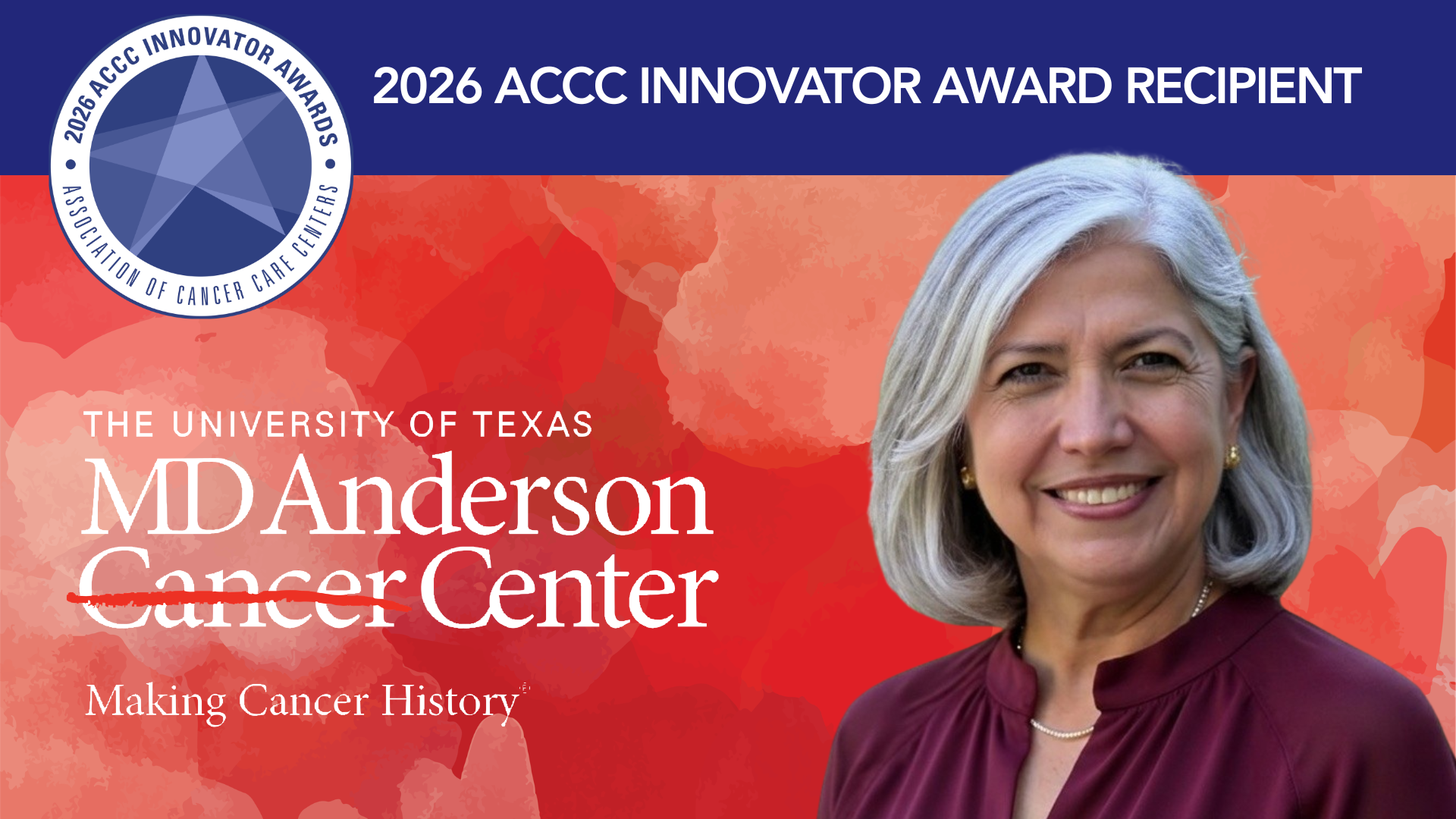
The University of Texas MD Anderson Cancer Center in Houston, Texas, developed a novel Pre-Intake Navigation (PIN) program, which identifies and resolves early financial and insurance barriers, enabling patients to access timely, high-quality cancer care with less anxiety and fewer delays. PIN shifts financial navigation from a late-stage, reactive task to an early, standardized, patient‑centered process embedded in the call center workflow.

An APP-Led Outpatient Bispecific Antibody Clinic

An APP-Led Outpatient Bispecific Antibody Clinic

Understanding both the benefits to be had from offering BsAb therapy to its community and the scope of this undertaking, Vanderbilt-Ingram Cancer Center took a novel approach with its APP-led BsAb step-up dosing clinic, which won the program a 2026 ACCC Innovator Award.

ACCCBuzz Blog

Advancing Critical Priorities at the State Level: Louisiana, Iowa, and Washington Awarded for Their Efforts at 2026 ASCO Annual Meeting

Rachel Radwan

July 29, 2026

Designing a Safe, Fully Outpatient CAR T-Cell Program in the CommunityACCCBuzz Blog

Designing a Safe, Fully Outpatient CAR T-Cell Program in the Community

Rachel Radwan

July 27, 2026

Local Staff, Lasting Impact: A New Model for Rural Cancer PreventionACCCBuzz Blog

Local Staff, Lasting Impact: A New Model for Rural Cancer Prevention

Rachel Radwan

July 16, 2026

A Pharmacist-Led Strategy to Improve Care With Oncolytic Virus TreatmentsACCCBuzz Blog

A Pharmacist-Led Strategy to Improve Care With Oncolytic Virus Treatments

Rachel Radwan

July 14, 2026

Extending Patient-Centered Cancer Care to Transgender and Nonbinary IndividualsACCCBuzz Blog

Extending Patient-Centered Cancer Care to Transgender and Nonbinary Individuals

Gabrielle Stearns

June 30, 2026

Transforming Oncology Authorization Through Clinical and Revenue Cycle CollaborationACCCBuzz Blog

Transforming Oncology Authorization Through Clinical and Revenue Cycle Collaboration

Rachel Radwan

June 29, 2026

Advancing Critical Priorities at the State Level: Louisiana, Iowa, and Washington Awarded for Their Efforts at 2026 ASCO Annual Meeting

Advancing Critical Priorities at the State Level: Louisiana, Iowa, and Washington Awarded for Their Efforts at 2026 ASCO Annual Meeting

At the 2026 ASCO Annual Meeting, the Louisiana Oncology Society received the ASCO Jeffrey C Ward Affiliate Advocacy Award for advancing critical advocacy priorities that have translated into meaningful legislative victories. The Iowa Oncology Society and Washington State Medical Oncology Society were also recognized for their advocacy efforts in 2025 at the meeting, receiving second place awards.

Designing a Safe, Fully Outpatient CAR T-Cell Program in the Community

Designing a Safe, Fully Outpatient CAR T-Cell Program in the Community

Nationally, approximately 1 in 5 patients who qualify for CAR T-cell therapy never receive it due to geographic distance, travel burden, or limited availability at specialized inpatient centers. Recognizing a critical need in its community, Mary Bird Perkins Cancer Center in Baton Rouge, Louisiana, launched the region’s first fully outpatient CAR T-cell therapy program for select blood cancers, fundamentally redefining how advanced cellular therapies can be delivered safely outside of a hospital setting and earning the program a 2026 ACCC Innovator Award.

View All ACCCBuzz Blogs

Recently Heard on
CANCER BUZZ Podcast

Utilizing APPs to Deliver Bispecific Antibodies in the Outpatient Setting - [Mini Podcast] Ep. 238

Between the Orders and the Infusion: The Patient Experience of Bispecific Antibodies - [Podcast] Ep. 237

Centering Compassion in Cancer Care – [Video Podcast] Ep. 64

A Pharmacist-Led Care Model for Oncolytic Virus Treatment Delivery - [Mini Podcast] Ep. 236

View All Podcasts

Latest from Oncology Issues

August 2026
August 2026
June 2026
April 2026
February 2026
December 2025
View All Oncology Issues

Join the Conversation

ACCC eXchange Digital Banner
Login