ACCC association of cancer care centers
Join/Renew
Login
Join/Renew
Login
Education & Resources
ACCC eXchange LogInCorporate Member Sponsored ResourcesPresentations & AbstractsPresident's ThemeACCC Connect eLearning LogIn
Publications
Oncology IssuesPatient Assistance & Reimbursement GuideTrending Now in Cancer Care
Events
2026 ACCC Leadership SummitAnnual Meeting & Cancer Center Business SummitCapitol Hill DayNational Oncology ConferenceOncology Reimbursement MeetingsOncology State Society Meetings
Policy & Advocacy
2024 Policy Wrap-Up and ACCC 2025 Policy PrioritiesLetters & StatementsAccess, Payment & Reimbursement ReformWhite Bagging & Brown BaggingAdvocacy ResourcesCancer Moonshot
Membership
Join | RenewWho We AreMembership Types & BenefitsCorporate MembersACCC Member Portal FAQMember Directory
Partners
Oncology State SocietiesPartner OrganizationsCME
News
News ReleasesAdvocacy News ReleasesOncology News
About ACCC
Timeline / 50th Anniversary2025 Impact ReportACCC Innovator AwardsACCC FellowsACCC Senior Staff
Breast CancerMetastatic Breast Cancer
Gastrointestinal CancerBiliary Tract CancerColorectal CancerGastric CancerLiver Cancer
Genitourinary CancerBladder CancerProstate CancerRenal Cell Carcinoma
Gynecologic CancerOvarian Cancer
Head & Neck Cancer
Hematologic MalignanciesAcute Lymphocytic Leukemia (ALL)Acute Myeloid Leukemia (AML)Chronic Lymphocytic Leukemia (CLL)Mantle Cell Lymphoma (MCL)Multiple Myeloma (MM)Myelodysplastic Syndromes (MDS)
Lung CancerNon-Small Cell Lung Cancer (NSCLC)Small Cell Lung Cancer (SCLC)
Sarcoma
Skin CancerMelanomaNon-Melanoma Skin Cancers (NMSC)
Clinical Practice & TreatmentCancer DiagnosticsCare CoordinationEHR Integration for Biomarker TestingQuality Improvement Collaboration: Integration of Precision Medicine in Community OncologyTreatment
Financial NavigationFAN Boot CampFinancial Advocacy Network (FAN) Resource LibraryPatient Assistance & Reimbursement GuidePrior Authorization
Health Equity & Access3, 2, 1, Go! Practical Solutions for Addressing Cancer Care DisparitiesAppalachian Community Cancer AllianceOncology Advanced PractitionersPersonalizing Care for Patients of All BackgroundsSocial Drivers of Health
Patient-Centered CareAddressing Care Disparities for VeteransAdolescent and Young Adult (AYA)Care Action Plans for People with CancerDermatologic ToxicitiesEmpowering CaregiversGeriatric OncologyHealth LiteracyNutritionOncology PharmacyPatient NavigationPsychosocial Care in OncologyShared Decision-MakingSupportive CareSurvivorship Care
Practice Management & OperationsCancer Program FundamentalsLeadership Sustainment and Engagement VideosOncology Practice Transformation and Integration CenterOncology Team Resiliency
ResearchACCC Community Oncology Research Institute (ACORI)
Technology & InnovationTelehealth & Digital Medicine
ACCCBuzz Blog
CANCER BUZZ Podcast
Oncology Issues
Join/Renew
Login
Breast CancerMetastatic Breast Cancer
Gastrointestinal CancerBiliary Tract CancerColorectal CancerGastric CancerLiver Cancer
Genitourinary CancerBladder CancerProstate CancerRenal Cell Carcinoma
Gynecologic CancerOvarian Cancer
Head & Neck Cancer
Hematologic MalignanciesAcute Lymphocytic Leukemia (ALL)Acute Myeloid Leukemia (AML)Chronic Lymphocytic Leukemia (CLL)Mantle Cell Lymphoma (MCL)Multiple Myeloma (MM)Myelodysplastic Syndromes (MDS)
Lung CancerNon-Small Cell Lung Cancer (NSCLC)Small Cell Lung Cancer (SCLC)
Sarcoma
Skin CancerMelanomaNon-Melanoma Skin Cancers (NMSC)
Clinical Practice & TreatmentCancer DiagnosticsCare CoordinationEHR Integration for Biomarker TestingQuality Improvement Collaboration: Integration of Precision Medicine in Community OncologyTreatment
Financial NavigationFAN Boot CampFinancial Advocacy Network (FAN) Resource LibraryPatient Assistance & Reimbursement GuidePrior Authorization
Health Equity & Access3, 2, 1, Go! Practical Solutions for Addressing Cancer Care DisparitiesAppalachian Community Cancer AllianceOncology Advanced PractitionersPersonalizing Care for Patients of All BackgroundsSocial Drivers of Health
Patient-Centered CareAddressing Care Disparities for VeteransAdolescent and Young Adult (AYA)Care Action Plans for People with CancerDermatologic ToxicitiesEmpowering CaregiversGeriatric OncologyHealth LiteracyNutritionOncology PharmacyPatient NavigationPsychosocial Care in OncologyShared Decision-MakingSupportive CareSurvivorship Care
Practice Management & OperationsCancer Program FundamentalsLeadership Sustainment and Engagement VideosOncology Practice Transformation and Integration CenterOncology Team Resiliency
ResearchACCC Community Oncology Research Institute (ACORI)
Technology & InnovationTelehealth & Digital Medicine
ACCCBuzz Blog
CANCER BUZZ Podcast
Oncology Issues
    • Education & Resources
    • Publications
    • Events
    • Policy & Advocacy
    • Membership
    • Partners
    • News
    • About ACCC
ACCC association of cancer care centers
1801 Research Boulevard, Suite 400, Rockville, MD 20850
Tel: 301.984.9496 Fax: 301.770.1949 Email Us
Contact UsVolunteers
Advertise
Career Center
Terms and Conditions
Privacy Policy
ACCC Rebranding
Copyright © 2026 Association of Cancer Care Centers. All Rights Reserved.
Advertisement

Blog

Article

October 20, 2016

OPEN Pre-Conference Highlights

By Amanda Patton, ACCC Communications

OPEN Pre-Conference Highlights

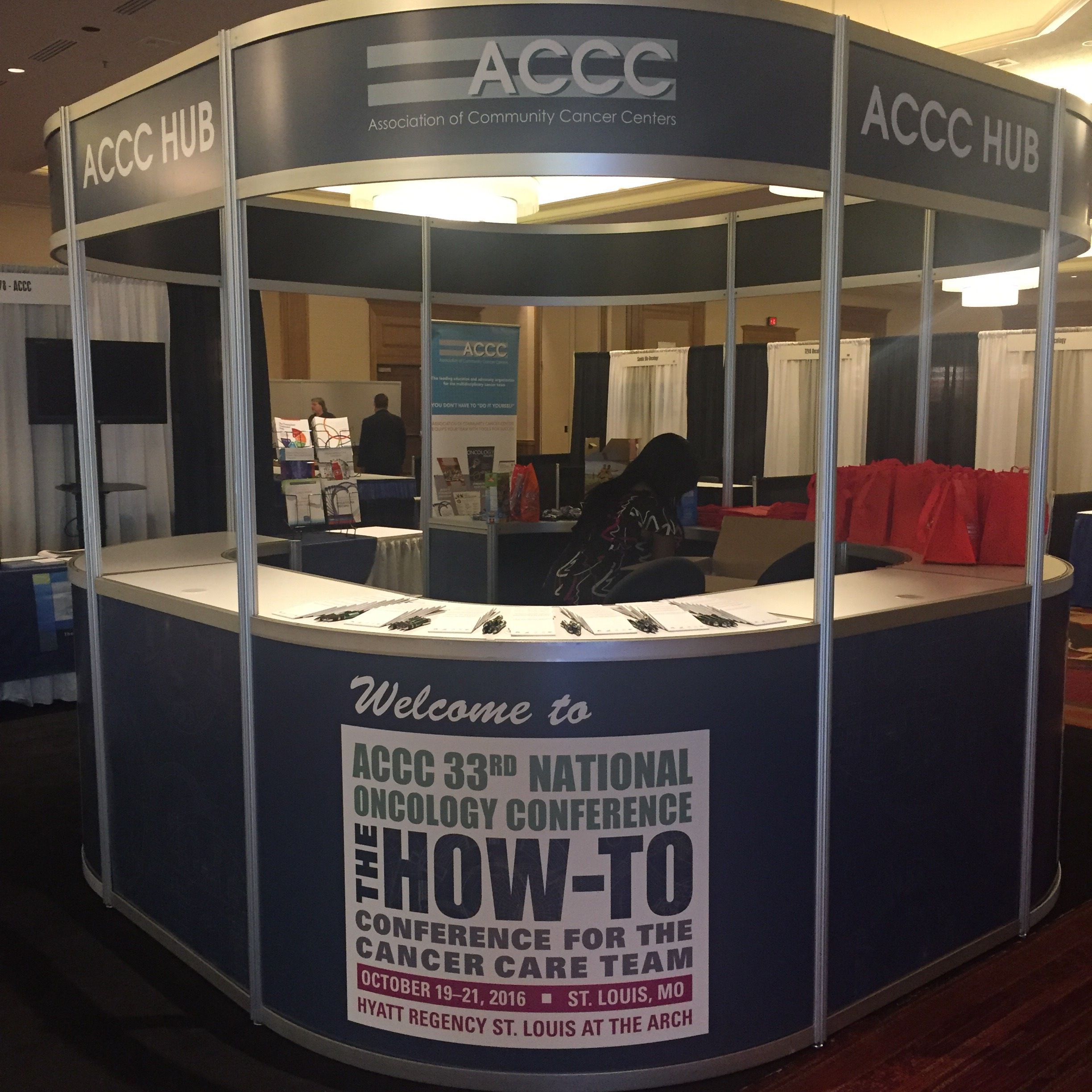
ACCC “Hub” in the Exhibit Hall welcomes conference attendees with a central source for resources and information on everything ACCC.

We’re in St. Louis for the ACCC 33rd National Oncology Conference this week. Events got underway on Wednesday, October 19, with dynamic pre-conference sessions focused on some of the most challenging and rapidly evolving areas in cancer care delivery. Read on for highlights from the Oncology Pharmacy Education Network (OPEN) pre-conference.

A morning panel discussion during the OPEN Pre-Conference focused on strategic planning for the oncology pharmacy. Zaven Norigian, PharmD, BCOP, Beth Israel Deaconess Medical Center, moderated a discussion with Steve D’Amato, BSPharm, New England Cancer Specialists, and Ali McBride, PharmD, MS, BCPS, BCOP, University of Arizona Cancer Center, that touched on some of the toughest challenges for oncology pharmacy today. Among these:

Cost of drugs. Pharmacy budgets continue to increase, the value of inventories in clinics is escalating, and if programs are not paid in a timely manner, cash flow problems will result. With the increase in immunotherapies and new oral agents, programs are wrestling with how to afford of these therapies and provide access to these for all of their patients. “The bank is going to break eventually,” said D’Amato.

Implementing genomic testing. Operationalizing this in the community setting is creating big challenges for the oncology pharmacy, panelists agreed. It requires a multidisciplinary approach providing integration and education for clinical pharmacists and nurses. There must be buy-in from everyone.

EHR and data issues. Programs need to be able to mine their data, understand their data, and reduce the staff time needed to collect and report data. Pharmacy is looking to technology to solve some of these important issues—without being “nickel and dimed to death” by their EHR vendors, panelists said.

USP 800. This is top-of-mind if you work in pharmacy, panelists agreed. Among the pressing challenges: How do you explain issues related to USP 800 compliance to the C-suite? Attendees were urged to act now—if they haven’t already—and at a minimum bring in a consultant to determine what it will cost to be compliant by 2018. “We know it’s going to be costly…it’s not something you can flip the switch one day and start it,” said Norigian.

Succeeding with Oral Oncolytics

An OPEN Pre-conference session tackling a critical current day challenge highlighted ACCC’s education initiative, Steps to Success: Implementing Oral Oncolytics. (The session was broadcast live, and will be available on the ACCC website on-demand soon.)

“One of the biggest challenges with oral oncolytics is that we put so much responsibility on the patient,” said presenter Niesha Griffith, RPh, MS, FASHP, West Virginia University Health System. Pharmacists need to be “on the frontlines” of taking care of oncology patients, she said.

Calling attention to the Steps to Success white paper developed as part of this ACCC initiative, Griffith focused on the project’s key programmatic recommendations for successful integration of oral oncolytics:

  • Take a multidisciplinary approach

  • Assign responsibilities; clearly identify who is responsible for what

  • Work collaboratively with specialty pharmacy (as needed)

  • Provide financial advocacy services

  • Develop a robust patient education program

  • Put in place effective processes for monitoring for adherence and toxicity

  • Maximize the use of technology

Griffith stressed the importance of developing robust case management platforms so that all providers can document information from patient visits. Where possible, develop methods to streamline processes. For example, devising a streamlined process for prior authorizations can help avoid pulling staff away from frontline care for this time-consuming task. Access more resources from ACCC on successful integration of oral oncolytics here.

Stay tuned for more from the ACCC 33rd National Oncology Conference from ACCCBuzz. Follow the conference highlights on Twitter #ACCCNOC.