Learn how state oncology societies have the power to mobilize larger groups of providers across the state to make their voices heard on behalf of their patients—and how you can get involved.
Find the CANCER BUZZ podcast on Apple Podcasts, Spotify, Amazon Music, Google Podcasts, or wherever you get your podcasts!
Because cancer treatment is rapidly evolving and complex, state-level advocacy is critical to help legislators understand the nuances of oncology. From issues like pharmacy benefit managers to white bagging and copay accumulators, the cancer care team knows firsthand the impact of policy decisions on the lived experiences of patients, including access to care, financial toxicity, and quality of life. Hear how state oncology societies have the power to mobilize larger groups of providers across the state to make their voices heard on behalf of their patients—and how you can get involved.<
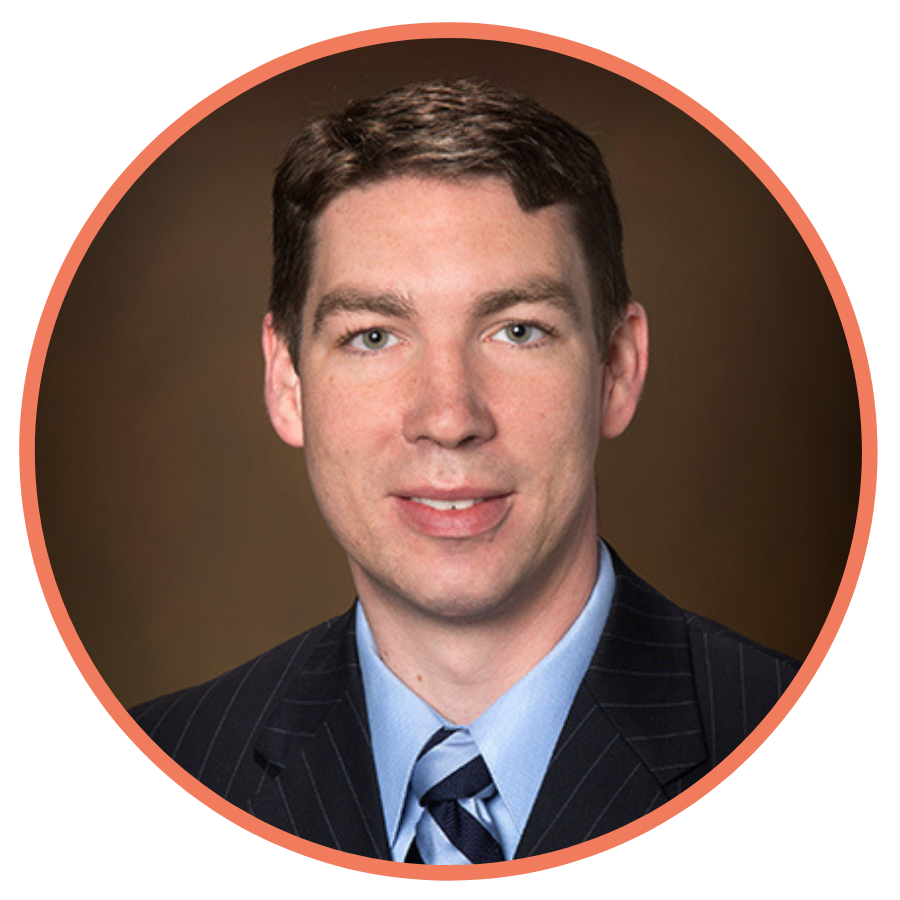
Benjamin M. Parsons, DO
Medical Oncologist/Hematologist
Gundersen Health Care System, La Crosse Clinic;
President, Wisconsin Association of Hematology and Oncology (WAHO)
"...knowing that our voices need to be heard and that we need to be able to represent the needs of both our practices, as well as our patient's needs and really having a role in that—has been meaningful for me."
WAHO is a Chapter Member of the Association of Cancer Care Centers (ACCC) through the Oncology State Societies at ACCC.

Related Content:
CANCER BUZZ: Welcome back to CANCER BUZZ. I'm your host Summer Johnson. On this mini episode, oncology team member involvement in advocacy. Dr. Ben Parsons is a medical oncologist and hematologist at the Lacrosse Clinic at Gundersen Health Care System in Lacrosse, Wisconsin. And he's the president of the Wisconsin Society of Hematology and Oncology.
Ben Parsons, DO: Yeah, I got involved with WAHO based on its mission statement. WAHO is the Wisconsin Association of Hematology Oncology. We are the state society for both ASH and ASCO for the Wisconsin chapters. We're a ACCC member state society, so ACCC helps to coordinate and help us kind of be as effective as possible as a state society. The main mission for the organization is to provide educational opportunities for our physician members to represent our both patients and physicians at the legislative table at both the state and federal levels.
And also, we collaborate with the Wisconsin Oncology Network, which is a research organization in the state of Wisconsin. And we try to further research for oncology and hematology in our state through efforts supporting that group, as well as just collaborative efforts from our different member organizations.
CANCER BUZZ: What has been the personal impact of your involvement in advocacy?
Ben Parsons, DO: I mean, it's really the multiple different aspects of being involved in an organization like this. So, it really allows for a lot of networking across the state, really knowing my colleagues at different institutions, which is really beneficial for actually your own patient population, as well as your colleagues at your individual institution; having access to individuals and actually knowing them on a personal level allows really understanding what their practices look like. And when clinical trial needs arise, having contact information for those providers and being able to seamlessly get them into their clinics at other institutions across the state, as well as really the advocacy piece, really being able to champion causes that are near and dear to both my heart and for my patients.
And it wasn't necessarily one specific kind of legislative agenda item, but just knowing that our voices need to be heard and that we need to be able to represent the needs of both our practices, as well as our patient's needs and really having a role in that—has been meaningful for me.
CANCER BUZZ: What are some of the issues that you've been working on at the state level?
Ben Parsons, DO: That's a great question. So, thank you for asking the most recent issues that have been rising. So white bagging has been a big problem in our own hospital and health system. We've just recently supported legislation that was basically trying to prohibit white bagging at the state level. We also just recently supported some legislation that was a about copay accumulators, which is a big problem for our patients. We have a lot of foundation funding and other mechanisms to try to mitigate some of the copays for patients with, especially terminal illnesses, co-pays just, don't make sense.
It's not a choice, whether you're going to take these medications that are lifesaving her life, prolonging, you know, it's something that they really need to do. So, getting rid of things like copay accumulators, and then also, you know, we've been at the federal level with Medicare, kind of essentially the physician payment cuts, we've written letters of support for multiple different agenda items like those in the last six months. And so, it's just been nice to be at the forefront of those efforts. And it's really a collaborative effort. You know, these things are both homegrown talking to our patients and getting patients stories.
CANCER BUZZ: Dr. Parsons, what would you say to colleagues who maybe don't think that being involved in advocacy is part of the job description?
Ben Parsons, DO: I mean, it's easy to go through your day-to-day and vent at the peer-to-peer or something like that—that you have to deal with—to get through your day and support your patients in that way. But it does have value. It does have meaning to try to change the actual system. And so, you know, I think the more people who are willing to lend their voice to that kind of a process of change, the more successful that will be, and it's better to be at the table because if you're not at the table, your food is likely going to be eaten. So, you know, knowing that and being willing to give a little bit of your time to help is, is definitely something that I would encourage other people to do.
And, you know, being involved in, in your state societies in general is—it does have value. It seems like it's just another meeting, but honestly, there's a lot of networking that happens here in Wisconsin, at least, and having both an educational venue, a networking venue, a research venue, and a legislative venue, kind of all-in-one organization has had quite a bit of value for me and for—I think—for our state. And I would encourage people to continue to participate and be part of the process.
CANCER BUZZ: Down in the show notes. You can find more information to connect you to your oncology state society. Next week on CANCER BUZZ, the purpose and significance of testing for measurable residual disease. Until then, this is Summer Johnson.
CANCER BUZZ: CANCER BUZZ is a resource of the Association of Cancer Care Centers (ACCC).
The views and opinions expressed herein are those of the author(s)/faculty member(s) and do not reflect the official policy or position of their employer(s) or the Association of Cancer Care Centers.
September 10, 2026


In recognition of Leukemia and Lymphoma Awareness Month, ACCC compiled a group of resources to help care teams navigate two of the most commonly diagnosed adult leukemias: acute myeloid leukemia and chronic lymphocytic leukemia.