ACCC association of cancer care centers
Join/Renew
Login
Join/Renew
Login
Education & Resources
ACCC eXchange LogInCorporate Member Sponsored ResourcesPresentations & AbstractsPresident's ThemeACCC Connect eLearning LogIn
Publications
Oncology IssuesPatient Assistance & Reimbursement GuideTrending Now in Cancer Care
Events
2026 ACCC Leadership SummitAnnual Meeting & Cancer Center Business SummitCapitol Hill DayNational Oncology ConferenceOncology Reimbursement MeetingsOncology State Society Meetings
Policy & Advocacy
2024 Policy Wrap-Up and ACCC 2025 Policy PrioritiesLetters & StatementsAccess, Payment & Reimbursement ReformWhite Bagging & Brown BaggingAdvocacy ResourcesCancer Moonshot
Membership
Join | RenewWho We AreMembership Types & BenefitsCorporate MembersACCC Member Portal FAQMember Directory
Partners
Oncology State SocietiesPartner OrganizationsCME
News
News ReleasesAdvocacy News ReleasesOncology News
About ACCC
Timeline / 50th Anniversary2025 Impact ReportACCC Innovator AwardsACCC FellowsACCC Senior Staff
Breast CancerMetastatic Breast Cancer
Gastrointestinal CancerBiliary Tract CancerColorectal CancerGastric CancerLiver Cancer
Genitourinary CancerBladder CancerProstate CancerRenal Cell Carcinoma
Gynecologic CancerOvarian Cancer
Head & Neck Cancer
Hematologic MalignanciesAcute Lymphocytic Leukemia (ALL)Acute Myeloid Leukemia (AML)Chronic Lymphocytic Leukemia (CLL)Mantle Cell Lymphoma (MCL)Multiple Myeloma (MM)Myelodysplastic Syndromes (MDS)
Lung CancerNon-Small Cell Lung Cancer (NSCLC)Small Cell Lung Cancer (SCLC)
Sarcoma
Skin CancerMelanomaNon-Melanoma Skin Cancers (NMSC)
Clinical Practice & TreatmentCancer DiagnosticsCare CoordinationEHR Integration for Biomarker TestingQuality Improvement Collaboration: Integration of Precision Medicine in Community OncologyTreatment
Financial NavigationFAN Boot CampFinancial Advocacy Network (FAN) Resource LibraryPatient Assistance & Reimbursement GuidePrior Authorization
Health Equity & Access3, 2, 1, Go! Practical Solutions for Addressing Cancer Care DisparitiesAppalachian Community Cancer AllianceOncology Advanced PractitionersPersonalizing Care for Patients of All BackgroundsSocial Drivers of Health
Patient-Centered CareAddressing Care Disparities for VeteransAdolescent and Young Adult (AYA)Care Action Plans for People with CancerDermatologic ToxicitiesEmpowering CaregiversGeriatric OncologyHealth LiteracyNutritionOncology PharmacyPatient NavigationPsychosocial Care in OncologyShared Decision-MakingSupportive CareSurvivorship Care
Practice Management & OperationsCancer Program FundamentalsLeadership Sustainment and Engagement VideosOncology Practice Transformation and Integration CenterOncology Team Resiliency
ResearchACCC Community Oncology Research Institute (ACORI)
Technology & InnovationTelehealth & Digital Medicine
ACCCBuzz Blog
CANCER BUZZ Podcast
Oncology Issues
Join/Renew
Login
Breast CancerMetastatic Breast Cancer
Gastrointestinal CancerBiliary Tract CancerColorectal CancerGastric CancerLiver Cancer
Genitourinary CancerBladder CancerProstate CancerRenal Cell Carcinoma
Gynecologic CancerOvarian Cancer
Head & Neck Cancer
Hematologic MalignanciesAcute Lymphocytic Leukemia (ALL)Acute Myeloid Leukemia (AML)Chronic Lymphocytic Leukemia (CLL)Mantle Cell Lymphoma (MCL)Multiple Myeloma (MM)Myelodysplastic Syndromes (MDS)
Lung CancerNon-Small Cell Lung Cancer (NSCLC)Small Cell Lung Cancer (SCLC)
Sarcoma
Skin CancerMelanomaNon-Melanoma Skin Cancers (NMSC)
Clinical Practice & TreatmentCancer DiagnosticsCare CoordinationEHR Integration for Biomarker TestingQuality Improvement Collaboration: Integration of Precision Medicine in Community OncologyTreatment
Financial NavigationFAN Boot CampFinancial Advocacy Network (FAN) Resource LibraryPatient Assistance & Reimbursement GuidePrior Authorization
Health Equity & Access3, 2, 1, Go! Practical Solutions for Addressing Cancer Care DisparitiesAppalachian Community Cancer AllianceOncology Advanced PractitionersPersonalizing Care for Patients of All BackgroundsSocial Drivers of Health
Patient-Centered CareAddressing Care Disparities for VeteransAdolescent and Young Adult (AYA)Care Action Plans for People with CancerDermatologic ToxicitiesEmpowering CaregiversGeriatric OncologyHealth LiteracyNutritionOncology PharmacyPatient NavigationPsychosocial Care in OncologyShared Decision-MakingSupportive CareSurvivorship Care
Practice Management & OperationsCancer Program FundamentalsLeadership Sustainment and Engagement VideosOncology Practice Transformation and Integration CenterOncology Team Resiliency
ResearchACCC Community Oncology Research Institute (ACORI)
Technology & InnovationTelehealth & Digital Medicine
ACCCBuzz Blog
CANCER BUZZ Podcast
Oncology Issues
    • Education & Resources
    • Publications
    • Events
    • Policy & Advocacy
    • Membership
    • Partners
    • News
    • About ACCC
ACCC association of cancer care centers
1801 Research Boulevard, Suite 400, Rockville, MD 20850
Tel: 301.984.9496 Fax: 301.770.1949 Email Us
Contact UsVolunteers
Advertise
Career Center
Terms and Conditions
Privacy Policy
ACCC Rebranding
Copyright © 2026 Association of Cancer Care Centers. All Rights Reserved.
Advertisement

Blog

Article

April 26, 2024

Head and Neck Cancer: Understanding Gaps in Insurance Coverage

In recognition of April as Head and Neck Cancer Awareness Month, ACCCBuzz analyzes insurance coverage for patients with head and neck cancers.

Head and Neck Cancer: Understanding Gaps in Insurance Coverage

As April draws to a close, it remains crucial to acknowledge the significance of ensuring patients with head and neck cancer receive equitable care. Improving access to insurance coverage is an important step. According to the American Dental Association, nearly a quarter of adults aged 19-64 lack dental insurance. That figure skyrockets to 47% among Medicare beneficiaries. This stark contract in coverage disproportionately impacts marginalized communities, including Black, Hispanic, and lower-income individuals, further exacerbating health inequities.

Despite the widely recognized importance of dental care, its critical role in the treatment journey of patients with head and neck cancers is often underemphasized. As advancements in cancer therapy—particularly radiotherapy—continue to evolve, so too does the reliance on multidisciplinary teams, where dental professionals play an indispensable role. From pre-radiotherapy evaluations to post-treatment rehabilitation, dental care encompasses a spectrum of interventions crucial for optimizing treatment outcomes and preserving quality of life for patients with head and neck cancer.

However, the lack of insurance coverage poses a significant barrier as it impedes patient access to essential dental services which ultimately hinders treatment outcomes. As a result, understanding the essential dental services patients with head and neck cancer require is key. They include, but are not limited to:

  • Pre-radiotherapy Dental Evaluation and Clearance: Prior to starting radiotherapy, patients with head and neck cancers undergo a thorough dental evaluation to assess their oral health status. This evaluation includes dental extractions for teeth with poor prognosis and measures to maintain good oral hygiene, aiming to minimize the risk of treatment-related complications and ensure optimal oral health before initiating cancer therapy.
  • Management of Treatment-Related Complications: Radiotherapy for head and neck cancers can lead to various acute and chronic side effects, including oral mucositis, xerostomia (dry mouth), taste disturbances, and trismus (muscle spasms in temporomandibular joint). Dental care providers play a crucial role in managing these complications through pharmacological and non-pharmacological treatments.
  • Radiation Caries and Osteoradionecrosis Management: Patients undergoing radiotherapy are at risk of developing radiation caries and osteoradionecrosis. Dental restorative treatments for caries in irradiated teeth require careful management to prevent tooth loss. Advanced adhesive techniques and minimal invasive dentistry are employed to provide dental treatment for patients with radiation caries.
  • Prosthetic and Restorative Dentistry: Post-radiotherapy, patients with head and neck cancer may require oral rehabilitation to address missing teeth and restore oral function. Treatment options include removable partial dentures, fixed prosthesis, and dental implants with or without retained fixed or removable prostheses.
  • Regular Post-radiotherapy Review and Follow-up: After completing radiotherapy, patients with head and neck cancers require regular dental review appointments to monitor their oral health status and address any treatment-related complications. Patients are assessed for oral rehabilitation options, and decisions are made in their best interest.

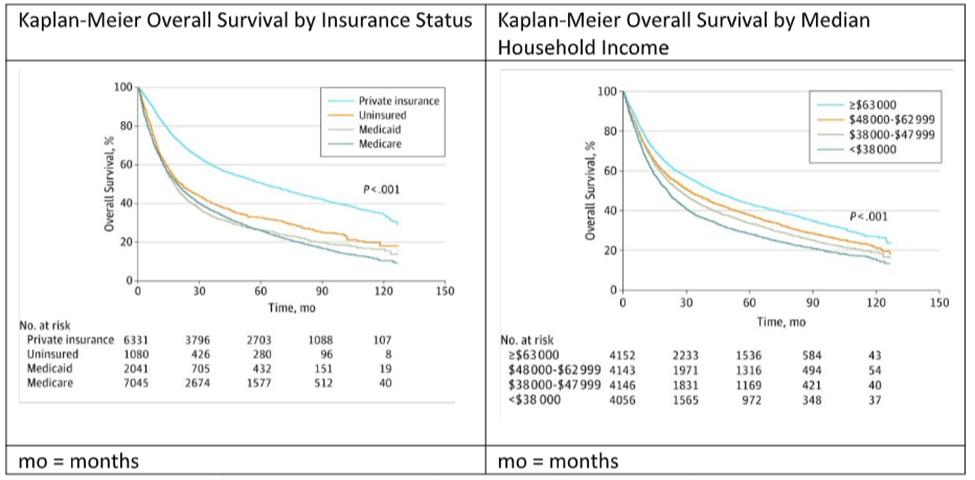
Not only are these dental care needs vital for patients with head and neck cancer, but studies reveal higher survival rates from head and neck cancer when care is provided by a dedicated team that meets regularly. However, the logistical challenges of assembling such teams can be daunting, and the lack of insurance coverage can exacerbate these difficulties. These factors have created a positive correlation between the level of insurance coverage and patient survival rates. The image below illustrates this relationship:

Source

The same factors influencing overall survival post-head and neck cancer diagnosis—insurance coverage and socioeconomic status—are also linked to a lack of dental coverage. While policymakers have previously endeavored to extend dental coverage to new patient populations, including Medicare, there is an urgent need for patients with head and neck cancer. Consequently, policymakers and advocates must collaborate to devise solutions to this access crisis. For developing initiatives to fix this problem is a major part of why the Association of Cancer Care Centers (ACCC) and other organizations continue to recognize April as Head and Neck Cancer Awareness Month.

To find more tools and resources related to head and neck cancer, visit the head and neck cancer page.

ACCC’s Multidisciplinary Approaches to Head & Neck Cancer education program is made possible with support by EMD Serono.