ACCC association of cancer care centers
Join/Renew
Login
Join/Renew
Login
Education & Resources
ACCC eXchange LogInCorporate Member Sponsored ResourcesPresentations & AbstractsPresident's ThemeACCC Connect eLearning LogIn
Publications
Oncology IssuesPatient Assistance & Reimbursement GuideTrending Now in Cancer Care
Events
2026 ACCC Leadership SummitAnnual Meeting & Cancer Center Business SummitCapitol Hill DayNational Oncology ConferenceOncology Reimbursement MeetingsOncology State Society Meetings
Policy & Advocacy
2024 Policy Wrap-Up and ACCC 2025 Policy PrioritiesLetters & StatementsAccess, Payment & Reimbursement ReformWhite Bagging & Brown BaggingAdvocacy ResourcesCancer Moonshot
Membership
Join | RenewWho We AreMembership Types & BenefitsCorporate MembersACCC Member Portal FAQMember Directory
Partners
Oncology State SocietiesPartner OrganizationsCME
News
News ReleasesAdvocacy News ReleasesOncology News
About ACCC
Timeline / 50th Anniversary2025 Impact ReportACCC Innovator AwardsACCC FellowsACCC Senior Staff
Breast CancerMetastatic Breast Cancer
Gastrointestinal CancerBiliary Tract CancerColorectal CancerGastric CancerLiver Cancer
Genitourinary CancerBladder CancerProstate CancerRenal Cell Carcinoma
Gynecologic CancerOvarian Cancer
Head & Neck Cancer
Hematologic MalignanciesAcute Lymphocytic Leukemia (ALL)Acute Myeloid Leukemia (AML)Chronic Lymphocytic Leukemia (CLL)Mantle Cell Lymphoma (MCL)Multiple Myeloma (MM)Myelodysplastic Syndromes (MDS)
Lung CancerNon-Small Cell Lung Cancer (NSCLC)Small Cell Lung Cancer (SCLC)
Sarcoma
Skin CancerMelanomaNon-Melanoma Skin Cancers (NMSC)
Clinical Practice & TreatmentCancer DiagnosticsCare CoordinationEHR Integration for Biomarker TestingQuality Improvement Collaboration: Integration of Precision Medicine in Community OncologyTreatment
Financial NavigationFAN Boot CampFinancial Advocacy Network (FAN) Resource LibraryPatient Assistance & Reimbursement GuidePrior Authorization
Health Equity & Access3, 2, 1, Go! Practical Solutions for Addressing Cancer Care DisparitiesAppalachian Community Cancer AllianceOncology Advanced PractitionersPersonalizing Care for Patients of All BackgroundsSocial Drivers of Health
Patient-Centered CareAddressing Care Disparities for VeteransAdolescent and Young Adult (AYA)Care Action Plans for People with CancerDermatologic ToxicitiesEmpowering CaregiversGeriatric OncologyHealth LiteracyNutritionOncology PharmacyPatient NavigationPsychosocial Care in OncologyShared Decision-MakingSupportive CareSurvivorship Care
Practice Management & OperationsCancer Program FundamentalsLeadership Sustainment and Engagement VideosOncology Practice Transformation and Integration CenterOncology Team Resiliency
ResearchACCC Community Oncology Research Institute (ACORI)
Technology & InnovationTelehealth & Digital Medicine
ACCCBuzz Blog
CANCER BUZZ Podcast
Oncology Issues
Join/Renew
Login
Breast CancerMetastatic Breast Cancer
Gastrointestinal CancerBiliary Tract CancerColorectal CancerGastric CancerLiver Cancer
Genitourinary CancerBladder CancerProstate CancerRenal Cell Carcinoma
Gynecologic CancerOvarian Cancer
Head & Neck Cancer
Hematologic MalignanciesAcute Lymphocytic Leukemia (ALL)Acute Myeloid Leukemia (AML)Chronic Lymphocytic Leukemia (CLL)Mantle Cell Lymphoma (MCL)Multiple Myeloma (MM)Myelodysplastic Syndromes (MDS)
Lung CancerNon-Small Cell Lung Cancer (NSCLC)Small Cell Lung Cancer (SCLC)
Sarcoma
Skin CancerMelanomaNon-Melanoma Skin Cancers (NMSC)
Clinical Practice & TreatmentCancer DiagnosticsCare CoordinationEHR Integration for Biomarker TestingQuality Improvement Collaboration: Integration of Precision Medicine in Community OncologyTreatment
Financial NavigationFAN Boot CampFinancial Advocacy Network (FAN) Resource LibraryPatient Assistance & Reimbursement GuidePrior Authorization
Health Equity & Access3, 2, 1, Go! Practical Solutions for Addressing Cancer Care DisparitiesAppalachian Community Cancer AllianceOncology Advanced PractitionersPersonalizing Care for Patients of All BackgroundsSocial Drivers of Health
Patient-Centered CareAddressing Care Disparities for VeteransAdolescent and Young Adult (AYA)Care Action Plans for People with CancerDermatologic ToxicitiesEmpowering CaregiversGeriatric OncologyHealth LiteracyNutritionOncology PharmacyPatient NavigationPsychosocial Care in OncologyShared Decision-MakingSupportive CareSurvivorship Care
Practice Management & OperationsCancer Program FundamentalsLeadership Sustainment and Engagement VideosOncology Practice Transformation and Integration CenterOncology Team Resiliency
ResearchACCC Community Oncology Research Institute (ACORI)
Technology & InnovationTelehealth & Digital Medicine
ACCCBuzz Blog
CANCER BUZZ Podcast
Oncology Issues
    • Education & Resources
    • Publications
    • Events
    • Policy & Advocacy
    • Membership
    • Partners
    • News
    • About ACCC
ACCC association of cancer care centers
1801 Research Boulevard, Suite 400, Rockville, MD 20850
Tel: 301.984.9496 Fax: 301.770.1949 Email Us
Contact UsVolunteers
Advertise
Career Center
Terms and Conditions
Privacy Policy
ACCC Rebranding
Copyright © 2026 Association of Cancer Care Centers. All Rights Reserved.
Advertisement

Blog

Article

March 6, 2020

Delivery System Evolution for 21st Century Cancer Care

Delivery System Evolution for 21st Century Cancer Care

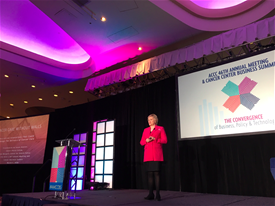
Keynote speaker Susan Dentzer, Senior Policy Fellow at the Duke-Margolis Center for Health Policy, challenged attendees to envision cancer care “without walls” in the opening address at ACCC 46th Annual Meeting & Cancer Center Business Summit on March 5. “Healthcare doesn’t have to be disruptive, but it does need to evolve,” she said, quoting Daniel Ek, founder of Spotify. “Healthcare without walls is a movement to more distributed care.” Moving the components of healthcare that do not require the “laying on of hands” out of brick-and-mortar clinics and hospitals and into the virtual space of telemedicine, said Dentzer, is an evolutionary step that could help solve the current challenges facing the oncology community: provider shortages, unequal workforce distribution, and increasing patient volumes.

Dentzer called healthcare without walls both doable and desirable, as it would improve quality of care for patients and work satisfaction for the cancer care team. Dentzer said much care delivery between patients and providers consists of information exchanges. But outside of healthcare, to a great extent, transactions of this kind take place in virtual space via email, text, videoconferencing, and online platforms. Why not move the applicable aspects of healthcare delivery—those involving simple exchanges of information—to the same platforms?

Noting how advanced medicine has become, Dentzer observed, “We have Star Wars medicine, but we are delivering it on a Flintstones platform.” While the future in healthcare as we imagined it has in many cases arrived in terms of our ability to treat and heal, our outdated delivery platforms mean that such advanced care is not yet available to everyone.

Dentzer shared examples of cutting-edge telehealth models—including Huntsman at Home (a telemedicine program at the University of Arizona), a telegenetics program at Penn Medicine, and a symptom management web-based program at the Seattle Cancer Care Alliance network—that are already successfully delivering care and improving access for patients with cancer. “Studies show high satisfaction with telemedicine in cancer care,” observed Dentzer. “These programs are proof of concept that telemedicine works and is popular with patients.”

Telemedicine delivery platforms also expedite knowledge distribution for the multidisciplinary care team. Dentzer highlighted virtual programs that connect providers across time and space, including asynchronous virtual tumor boards, second opinion programs, and clinical trial matching applications. Telehealth platforms also have the potential to make palliative care services accessible to patients in their homes.

Dentzer noted that current obstacles that have thus far prevented telehealth from gaining a stronger foothold (e.g., privacy and security concerns, potential disruption of existing business models, existing payment models, lack of broadband access in rural areas, and a workforce that would need retraining) have nothing to do with optimizing patient care.

In response to an attendee comment on the still-critical importance of the in-person physical exam, Dentzer agreed that cyber care will never completely replace the face-to-face clinic visit. “I think we will evolve hybrid models,” she said. “Some kind of balance for when you need an in-person consult and when it can be virtual. Thinking through that balance is the way we will evolve it.”

Given the persistent cancer health disparities among the U.S. population, one attendee raised health equity concerns. “How do we start to create a framework around health equity?" she asked. "When we think of disparities in terms of race and ethnicities, where do you see opportunities?”

“We have to be conscious of getting these technologies into underserved communities,” Dentzer agreed. “We will have to be intentional to put that at the forefront, rather than creating the technology and then going back and trying to address it.”
______________________
Stay tuned for more takeaways from the ACCC 46th Annual Meeting & Cancer Center Business Summit.