ACCC association of cancer care centers
Join/Renew
Login
Join/Renew
Login
Education & Resources
ACCC eXchange LogInCorporate Member Sponsored ResourcesPresentations & AbstractsACCC Connect eLearning LogIn
Publications
Oncology IssuesPatient Assistance & Reimbursement GuideTrending Now in Cancer CareBusiness Case Studies for Hiring New Staff
Events
2026 ACCC Leadership SummitAnnual Meeting & Cancer Center Business SummitCapitol Hill DayNational Oncology ConferenceOncology Reimbursement MeetingsOncology State Society Meetings
Policy & Advocacy
ACCC 2026 Policy PrioritiesLetters & StatementsAccess, Payment & Reimbursement ReformWhite Bagging & Brown BaggingAdvocacy ResourcesCancer Moonshot
Membership
Join | RenewWho We AreMembership Types & BenefitsCorporate MembersACCC Member Portal FAQMember Directory
Partners
Oncology State SocietiesPartner OrganizationsCME
News
News ReleasesAdvocacy News ReleasesOncology News
About ACCC
Timeline / 50th Anniversary2025 Impact ReportPresident's ThemeACCC Innovator AwardsACCC FellowsBoard of TrusteesACCC Senior Staff
Breast CancerMetastatic Breast Cancer
Gastrointestinal CancerBiliary Tract CancerColorectal CancerGastric CancerLiver Cancer
Genitourinary CancerBladder CancerProstate CancerRenal Cell Carcinoma
Gynecologic CancerOvarian Cancer
Head & Neck Cancer
Hematologic MalignanciesAcute Lymphocytic Leukemia (ALL)Acute Myeloid Leukemia (AML)Chronic Lymphocytic Leukemia (CLL)Mantle Cell Lymphoma (MCL)Multiple Myeloma (MM)Myelodysplastic Syndromes (MDS)
Lung CancerNon-Small Cell Lung Cancer (NSCLC)Small Cell Lung Cancer (SCLC)
Sarcoma
Skin CancerMelanomaNon-Melanoma Skin Cancers (NMSC)
Clinical Practice & TreatmentCancer DiagnosticsCare CoordinationEHR Integration for Biomarker TestingQuality Improvement Collaboration: Integration of Precision Medicine in Community OncologyTreatment
Financial NavigationFAN Boot CampFinancial Advocacy Network (FAN) Resource LibraryPatient Assistance & Reimbursement GuidePrior Authorization
Health Equity & Access3, 2, 1, Go! Practical Solutions for Addressing Cancer Care DisparitiesAppalachian Community Cancer AllianceOncology Advanced PractitionersPersonalizing Care for Patients of All BackgroundsSocial Drivers of Health
Patient-Centered CareAddressing Care Disparities for VeteransAdolescent and Young Adult (AYA)Care Action Plans for People with CancerDermatologic ToxicitiesEmpowering CaregiversGeriatric OncologyHealth LiteracyNutritionOncology PharmacyPatient NavigationPsychosocial Care in OncologyShared Decision-MakingSupportive CareSurvivorship Care
Practice Management & OperationsCancer Program FundamentalsLeadership Sustainment and Engagement VideosOncology Practice Transformation and Integration CenterOncology Team Resiliency
ResearchACCC Community Oncology Research Institute (ACORI)
Technology & InnovationTelehealth & Digital Medicine
ACCCBuzz Blog
CANCER BUZZ Podcast
Oncology Issues
Join/Renew
Login
Breast CancerMetastatic Breast Cancer
Gastrointestinal CancerBiliary Tract CancerColorectal CancerGastric CancerLiver Cancer
Genitourinary CancerBladder CancerProstate CancerRenal Cell Carcinoma
Gynecologic CancerOvarian Cancer
Head & Neck Cancer
Hematologic MalignanciesAcute Lymphocytic Leukemia (ALL)Acute Myeloid Leukemia (AML)Chronic Lymphocytic Leukemia (CLL)Mantle Cell Lymphoma (MCL)Multiple Myeloma (MM)Myelodysplastic Syndromes (MDS)
Lung CancerNon-Small Cell Lung Cancer (NSCLC)Small Cell Lung Cancer (SCLC)
Sarcoma
Skin CancerMelanomaNon-Melanoma Skin Cancers (NMSC)
Clinical Practice & TreatmentCancer DiagnosticsCare CoordinationEHR Integration for Biomarker TestingQuality Improvement Collaboration: Integration of Precision Medicine in Community OncologyTreatment
Financial NavigationFAN Boot CampFinancial Advocacy Network (FAN) Resource LibraryPatient Assistance & Reimbursement GuidePrior Authorization
Health Equity & Access3, 2, 1, Go! Practical Solutions for Addressing Cancer Care DisparitiesAppalachian Community Cancer AllianceOncology Advanced PractitionersPersonalizing Care for Patients of All BackgroundsSocial Drivers of Health
Patient-Centered CareAddressing Care Disparities for VeteransAdolescent and Young Adult (AYA)Care Action Plans for People with CancerDermatologic ToxicitiesEmpowering CaregiversGeriatric OncologyHealth LiteracyNutritionOncology PharmacyPatient NavigationPsychosocial Care in OncologyShared Decision-MakingSupportive CareSurvivorship Care
Practice Management & OperationsCancer Program FundamentalsLeadership Sustainment and Engagement VideosOncology Practice Transformation and Integration CenterOncology Team Resiliency
ResearchACCC Community Oncology Research Institute (ACORI)
Technology & InnovationTelehealth & Digital Medicine
ACCCBuzz Blog
CANCER BUZZ Podcast
Oncology Issues
    • Education & Resources
    • Publications
    • Events
    • Policy & Advocacy
    • Membership
    • Partners
    • News
    • About ACCC
ACCC association of cancer care centers
1801 Research Boulevard, Suite 400, Rockville, MD 20850
Tel: 301.984.9496 Email Us
Contact UsVolunteers
Advertise
Career Center
Terms and Conditions
Privacy Policy
ACCC Rebranding
Copyright © 2026 Association of Cancer Care Centers. All Rights Reserved.
HomeACCCBuzz Blog

#BlackFamCan: The Role of Family and Faith

June 27, 2024
By Rachel Radwan

The panel at the FDA OCE 4th Annual National Black Family Cancer Awareness Week, Engaging the Generations Conversation on Cancer, forum, explores family and faith in cancer care.

#BlackFamCan: The Role of Family and Faith

This is the second blog post on the 4th Annual National Black Family Cancer Awareness Week, Engaging the Generations Conversation on Cancer public panel discussion. This event was held virtually on Thursday, June 13, as part of the FDA's #BlackFamCan campaign. Read the first one here.

To conclude a compelling discussion, the panel at the US Food and Drug Administration (FDA) Oncology Center of Excellence (OCE) 4th Annual National Black Family Cancer Awareness Week, Engaging the Generations Conversation on Cancer, forum, centered their conversation on the importance of family and faith.

As mentioned in the event's opening remarks, the family unit plays a critical role in the cancer care discussions, from diagnosis, treatment, and inclusion in clinical trials. Richard Pazdur, MD, director, OCE, FDA, highlighted the difficulty patients face whilst trying to absorb the complex information they receive from their providers. According to Dr. Pazdur, having family members present to listen, participate, and ask questions can take some of the burden off the patient.

“For many Black Americans, they make important decisions—such as whether or not to participate in a clinical trial—as a family unit, so it is key to have their relatives present during conversations with their provider to ensure everyone is as informed as possible,” Dr. Pazdur said. “Ultimately, it is the individual’s decision to make, but very rarely do people make it alone, without having discussed this with multiple members of their family.”

The panel's moderator, Rea Blakey, then posed the question of what the multidisciplinary cancer care team can do to encourage families and communities to participate in #BlackFamCan Week. Charlene Le Fauve, PhD, MA, inaugural senior advisor for Health Equity, FDA Center for Tobacco Products, highlighted the importance of fixtures in Black communities like churches and barber shops that serve as focal points of social interaction. She then discussed an initiative from the National Institutes of Health (NIH) that allows communities to drive research agendas. “We get focus groups and draw upon people from the community as we develop our educational outreach and our campaign messages to educate, motivate, and inspire people to change their behavior,” Dr. Le Fauve said.

Brenda Adjei, associate director, Office of Healthcare Delivery and Equity Research at the National Cancer Institute Center for Cancer Research, echoed the importance of researchers and clinicians garnering community input as this facilitates an understanding of important community values. “It’s so important to ensure that the lived experience is brought to bear. We may have these grandiose research questions, but they may not have relevance to the community,” she said.

Dialogue Within Families

Family members can also impart life-saving information by sharing family disease history. Otis Brawley, MD, medical oncologist and epidemiologist, Johns Hopkins Medicine, emphasized the importance of women knowing their family history of cancer. This is because understanding their risk for a disease like breast cancer, would necessitate earlier screening that could lead to early detection.

Richard Ginyard, former chair of the board of directors for Zero the End of Prostate Cancer and founder of Building Generation Health, agreed with the need for families to talk about their health, both mental and physical. He recalled his own experience of his father and brother both being reluctant to share with their families that they had been diagnosed with prostate cancer and lung cancer, respectively. Ginyard acknowledged that this reticence to disclose their health conditions could be a generational divide, coupled with a desire not to burden their loved ones. He noted the same pattern with mental illness as well, stating that his experience growing up was to keep any and all mental health issues on the inside.

Laura Crandon, founder and president of Touch 4 Life, also spoke to the deadly consequences of families not discussing mental and physical health conditions. “The silence is killing us. We cannot keep silent about what runs in our families. We have to normalize it,” she said. “We talk about handing down recipes, handing down advice, handing down property…Health should be a black family business.”

Patient Faith

In many Black families and communities, faith plays a role in cancer diagnosis and treatment as well. As a pediatric cancer survivor, Adjei relayed her mother’s experience as a recent immigrant to the US from Ghana while caring for a young child with cancer. Luckily, she had the support of a community of African women praying for her and her child, helping her through such a difficult period in her life.

Adjei went on to point out that patients often try to protect their family members and save them from suffering by not talking about their diagnosis. But the reality is that relatives want to be there for their loved ones and support them, and do not see it as a burden to do so. “The mental health around trying to protect someone else makes us suffer more,” said Adjei. “For some reason as adults, it’s hard to move beyond that, but we have to do better because the silence is isolating us.”

The convergence of faith and cancer resonated with Ginyard as well, as he started to question his faith when he received his diagnosis. He knew seeking medical attention was crucial for him, but at the same time wondered, “If I’m a believer, do I even need medical treatment?”

Crandon echoed this sentiment, saying that many patients have a similar experience to Ginyard. She articulated that religion comes up frequently in her conversations with community members about cancer diagnosis and treatment, and that many people want to rely on prayer and faith alone to cure their cancer. “If you broke your arm or had a rotting tooth, you would seek medical attention,” said Crandon. “Faith is not the enemy of science. They go together.” Her experiences underscore the need for providers to truly engage with their communities and commit to educating them about life-saving treatment.

To close out the panel discussion, Blakey brought the conversation back to the need to overcome the stigmas that exist around talking about physical and mental health in Black communities. Dr. Le Fauve weighed in on how these stigmas are related to discriminatory practices and bias in the American medical and mental health system. “People don’t want to disclose vulnerabilities because they have been neglected, misdiagnosed, or assumed not to have pain,” she explained. “Our system is built in a way that perpetuates the fears people have because they’ve personally experienced it themselves or know someone who has.”

ACCC President’s Theme

These microaggressions all contribute to people not feeling safe to talk about a disease that disproportionately impacts their community. It also demonstrates the need for meaningful community engagement on the part of health care providers, so that community members feel seen and are willing to seek the medical attention they need.

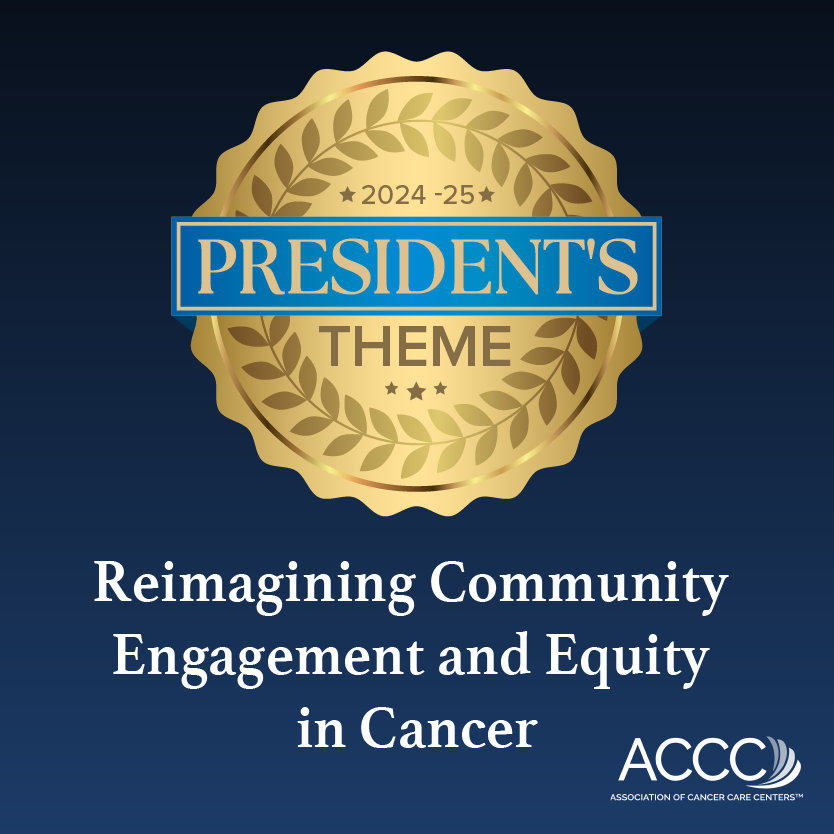
Understanding this, Association of Cancer Care Centers (ACCC) president, Nadine J. Barrett, PhD, MA, MS, senior associate dean for Community Engagement and Equity in Research at the Wake Forest University School of Medicine and Atrium Health, centered her President’s Theme on Reimagining Community Engagement and Equity in Cancer. Through her theme, Dr. Barrett aims to recognize the value of building relationships in the community to advance health equity. Her theme serves as a reminder of the value of listening to and appreciating the patient experience, while elevating their voices in the community.

Rachel Radwan is an editorial coordinator at the Association of Cancer Care Centers (ACCC).

Related Content

Extending Patient-Centered Cancer Care to Transgender and Nonbinary IndividualsACCCBuzz Blog

Extending Patient-Centered Cancer Care to Transgender and Nonbinary Individuals

Gabrielle Stearns

June 30, 2026

Transforming Oncology Authorization Through Clinical and Revenue Cycle CollaborationACCCBuzz Blog

Transforming Oncology Authorization Through Clinical and Revenue Cycle Collaboration

Rachel Radwan

June 29, 2026

Building a Blueprint for Precision Medicine: Lessons from TriHealthACCCBuzz Blog

Building a Blueprint for Precision Medicine: Lessons from TriHealth

June 25, 2026

Exploring a Bispecific Antibody for Relapsed or Refractory Multiple MyelomaACCCBuzz Blog

Exploring a Bispecific Antibody for Relapsed or Refractory Multiple Myeloma

June 22, 2026

15 Years Strong: The NCCN State Oncology Society Forum Annual MeetingACCCBuzz Blog

15 Years Strong: The NCCN State Oncology Society Forum Annual Meeting

Sean T. McCarson, MPA

June 16, 2026

Highlights from Volume 41, Number 3 Oncology IssuesACCCBuzz Blog

Highlights from Volume 41, Number 3 Oncology Issues

Gabrielle Stearns

June 15, 2026

ACCC Roundtable Series to Build a CAR T Multiple Myeloma Referral FrameworkACCCBuzz Blog

ACCC Roundtable Series to Build a CAR T Multiple Myeloma Referral Framework

Gabrielle Stearns

June 11, 2026

Precision Medicine Stewardship: Turning Complexity Into Coordinated Cancer CareACCCBuzz Blog

Precision Medicine Stewardship: Turning Complexity Into Coordinated Cancer Care

June 9, 2026

Upcoming Events

ACCC 43rd National Oncology Conference
Oncology

ACCC 43rd National Oncology Conference

In Person Conference & ConventionOctober 21, 2026 at 8:00 AM MDT450 Summer St, Boston, MA 02210Omni Boston Hotel at the Seaport, Boston
Register Now!
KaSCO 2026 Fellows Dinner
Oncology

KaSCO 2026 Fellows Dinner

In Person Conference & ConventionJuly 16, 2026 at 6:00 PM CDT101 West 22nd Street, Kansas City, MO, USALidia's Kansas City, Kansas City
Register Now!
MSCO 2026 Professional Development Workshop
Oncology

MSCO 2026 Professional Development Workshop

In Person Conference & ConventionJuly 18, 2026 at 3:30 PM CDT5005 Glumack Drive, Minneapolis, MN, USAInterContinental Hotel Minneapolis – St. Paul Airport, Minneapolis
Register Now!
NOS 2026 Dinner at the Las Vegas Best of ASCO
Oncology

NOS 2026 Dinner at the Las Vegas Best of ASCO

In Person Conference & ConventionJuly 24, 2026 at 5:30 PM PDT101 Montelago Blvd, Henderson, NV 89011, USAThe Westin Lake Las Vegas Resort & Spa , Henderson
Register Now!
WSMOS 2026 Dinner at the Seattle Best of ASCO
Oncology

WSMOS 2026 Dinner at the Seattle Best of ASCO

In Person Conference & ConventionJuly 24, 2026 at 5:30 PM PDT1415 5th Ave, Seattle, WA, USAHilton Motif Seattle, Seattle
Register Now!
KYSCO 2026 Tri-State Multi-Disciplinary Cancer Care Summit
Oncology

KYSCO 2026 Tri-State Multi-Disciplinary Cancer Care Summit

In Person Conference & ConventionJuly 25, 2026 at 7:30 AM EDT638 Madison Ave, Covington, Kentucky 41011, USAHotel Covington, Covington
Register Now!
HSCO 2026 August Dinner Symposium
Oncology

HSCO 2026 August Dinner Symposium

In Person Conference & ConventionAugust 12, 2026 at 5:30 PM HST6600 Kalanianaʻole Highway suite 110, Honolulu, HI 96825, USARoy's Restaurants – Hawaii Kai, Honolulu
Register Now!
LOS 2026 Cancer Congress - National Oncology Updates
Oncology

LOS 2026 Cancer Congress - National Oncology Updates

In Person Conference & ConventionAugust 14, 2026 at 11:00 AM CDT859 Convention Center Blvd, New Orleans, LA, USANew Orleans Marriott Warehouse Art District, New Orleans
Register Now!
Advertisement
Advertisement

Trending Now on
ACCCBuzz Blog

Extending Patient-Centered Cancer Care to Transgender and Nonbinary Individuals

Extending Patient-Centered Cancer Care to Transgender and Nonbinary Individuals

In a recent article from Oncology Issues, authors conducted a systematic literature review and found that two main drivers of care disparities exist for transgender and nonbinary individuals with cancer: rigid binary gender frameworks and gaps in mental health care.

Transforming Oncology Authorization Through Clinical and Revenue Cycle Collaboration

Transforming Oncology Authorization Through Clinical and Revenue Cycle Collaboration

2026 ACCC Innovator Award Winner St. Luke's Cancer Institute noticed a significant administrative burden being placed on providers to review medical necessity validation for complex oncology therapies. To address the resulting rise in peer-to-peer requirements, delays in care, and pre-service denials, the team designed and implemented a new Clinical Documentation Integrity Registered Nurse role.

Building a Blueprint for Precision Medicine: Lessons from TriHealth

Building a Blueprint for Precision Medicine: Lessons from TriHealth

ACCC launched its Precision Medicine Stewardship Program to highlight institutions that have successfully built the infrastructure, workflows, and leadership models needed to deliver precision medicine at scale. TriHealth Cancer and Blood Institute in Cincinnati, Ohio, offers a compelling example of what it takes to move from aspiration to execution.

Exploring a Bispecific Antibody for Relapsed or Refractory Multiple Myeloma

Exploring a Bispecific Antibody for Relapsed or Refractory Multiple Myeloma

Although patients with relapsed or refractory multiple myeloma now have more treatment options than ever, their journeys are often complex. As clinicians consider when to introduce newer therapies such as bispecific antibodies, they must account for prior treatments, treatment-related toxicities, and comorbidities that may impact treatment decisions.

View All ACCCBuzz Blogs

Recently Heard on
CANCER BUZZ Podcast

MDS: Low Risk Isn’t No Risk - [Podcast] Ep. 239

Beyond Body Art: Restoring Wholeness Through Paramedical Tattooing - [Podcast] Ep. 238

Bridging Radiation and Oncology in SCLC Care - [Podcast] Ep. 237

Championing Bispecific Antibodies in the VA - [Podcast] Ep. 236

View All Podcasts

Latest from Oncology Issues

June 2026
June 2026
April 2026
February 2026
December 2025
October 2025
View All Oncology Issues

Join the Conversation

ACCC eXchange Digital Banner
Login