ACCC association of cancer care centers
Join/Renew
Login
Join/Renew
Login
Education & Resources
ACCC eXchange LogInCorporate Member Sponsored ResourcesPresentations & AbstractsACCC Connect eLearning LogIn
Publications
Oncology IssuesPatient Assistance & Reimbursement GuideTrending Now in Cancer CareBusiness Case Studies for Hiring New Staff
Events
2026 ACCC Leadership SummitAnnual Meeting & Cancer Center Business SummitCapitol Hill DayNational Oncology ConferenceOncology Reimbursement MeetingsOncology State Society Meetings
Policy & Advocacy
2024 Policy Wrap-Up and ACCC 2025 Policy PrioritiesLetters & StatementsAccess, Payment & Reimbursement ReformWhite Bagging & Brown BaggingAdvocacy ResourcesCancer Moonshot
Membership
Join | RenewWho We AreMembership Types & BenefitsCorporate MembersACCC Member Portal FAQMember Directory
Partners
Oncology State SocietiesPartner OrganizationsCME
News
News ReleasesAdvocacy News ReleasesOncology News
About ACCC
Timeline / 50th Anniversary2025 Impact ReportPresident's ThemeACCC Innovator AwardsACCC FellowsACCC Senior Staff
Breast CancerMetastatic Breast Cancer
Gastrointestinal CancerBiliary Tract CancerColorectal CancerGastric CancerLiver Cancer
Genitourinary CancerBladder CancerProstate CancerRenal Cell Carcinoma
Gynecologic CancerOvarian Cancer
Head & Neck Cancer
Hematologic MalignanciesAcute Lymphocytic Leukemia (ALL)Acute Myeloid Leukemia (AML)Chronic Lymphocytic Leukemia (CLL)Mantle Cell Lymphoma (MCL)Multiple Myeloma (MM)Myelodysplastic Syndromes (MDS)
Lung CancerNon-Small Cell Lung Cancer (NSCLC)Small Cell Lung Cancer (SCLC)
Sarcoma
Skin CancerMelanomaNon-Melanoma Skin Cancers (NMSC)
Clinical Practice & TreatmentCancer DiagnosticsCare CoordinationEHR Integration for Biomarker TestingQuality Improvement Collaboration: Integration of Precision Medicine in Community OncologyTreatment
Financial NavigationFAN Boot CampFinancial Advocacy Network (FAN) Resource LibraryPatient Assistance & Reimbursement GuidePrior Authorization
Health Equity & Access3, 2, 1, Go! Practical Solutions for Addressing Cancer Care DisparitiesAppalachian Community Cancer AllianceOncology Advanced PractitionersPersonalizing Care for Patients of All BackgroundsSocial Drivers of Health
Patient-Centered CareAddressing Care Disparities for VeteransAdolescent and Young Adult (AYA)Care Action Plans for People with CancerDermatologic ToxicitiesEmpowering CaregiversGeriatric OncologyHealth LiteracyNutritionOncology PharmacyPatient NavigationPsychosocial Care in OncologyShared Decision-MakingSupportive CareSurvivorship Care
Practice Management & OperationsCancer Program FundamentalsLeadership Sustainment and Engagement VideosOncology Practice Transformation and Integration CenterOncology Team Resiliency
ResearchACCC Community Oncology Research Institute (ACORI)
Technology & InnovationTelehealth & Digital Medicine
ACCCBuzz Blog
CANCER BUZZ Podcast
Oncology Issues
Join/Renew
Login
Breast CancerMetastatic Breast Cancer
Gastrointestinal CancerBiliary Tract CancerColorectal CancerGastric CancerLiver Cancer
Genitourinary CancerBladder CancerProstate CancerRenal Cell Carcinoma
Gynecologic CancerOvarian Cancer
Head & Neck Cancer
Hematologic MalignanciesAcute Lymphocytic Leukemia (ALL)Acute Myeloid Leukemia (AML)Chronic Lymphocytic Leukemia (CLL)Mantle Cell Lymphoma (MCL)Multiple Myeloma (MM)Myelodysplastic Syndromes (MDS)
Lung CancerNon-Small Cell Lung Cancer (NSCLC)Small Cell Lung Cancer (SCLC)
Sarcoma
Skin CancerMelanomaNon-Melanoma Skin Cancers (NMSC)
Clinical Practice & TreatmentCancer DiagnosticsCare CoordinationEHR Integration for Biomarker TestingQuality Improvement Collaboration: Integration of Precision Medicine in Community OncologyTreatment
Financial NavigationFAN Boot CampFinancial Advocacy Network (FAN) Resource LibraryPatient Assistance & Reimbursement GuidePrior Authorization
Health Equity & Access3, 2, 1, Go! Practical Solutions for Addressing Cancer Care DisparitiesAppalachian Community Cancer AllianceOncology Advanced PractitionersPersonalizing Care for Patients of All BackgroundsSocial Drivers of Health
Patient-Centered CareAddressing Care Disparities for VeteransAdolescent and Young Adult (AYA)Care Action Plans for People with CancerDermatologic ToxicitiesEmpowering CaregiversGeriatric OncologyHealth LiteracyNutritionOncology PharmacyPatient NavigationPsychosocial Care in OncologyShared Decision-MakingSupportive CareSurvivorship Care
Practice Management & OperationsCancer Program FundamentalsLeadership Sustainment and Engagement VideosOncology Practice Transformation and Integration CenterOncology Team Resiliency
ResearchACCC Community Oncology Research Institute (ACORI)
Technology & InnovationTelehealth & Digital Medicine
ACCCBuzz Blog
CANCER BUZZ Podcast
Oncology Issues
    • Education & Resources
    • Publications
    • Events
    • Policy & Advocacy
    • Membership
    • Partners
    • News
    • About ACCC
ACCC association of cancer care centers
1801 Research Boulevard, Suite 400, Rockville, MD 20850
Tel: 301.984.9496 Fax: 301.770.1949 Email Us
Contact UsVolunteers
Advertise
Career Center
Terms and Conditions
Privacy Policy
ACCC Rebranding
Copyright © 2026 Association of Cancer Care Centers. All Rights Reserved.
Advertisement

Publication

Article

Tools

December 15, 2025
Oncology Issues
December 2025
Volume 40
Issue 6

Tools: Vol. 40, No. 6

Tools: Vol. 40, No. 6
Download Issue PDFDownload PDF

Approved Drugs

  • On September 10, the FDA approved Koselugo® (selumetinib) (AstraZeneca Pharmaceuticals) granules and capsules for pediatric patients 1 year of age and older with neurofibromatosis type 1 who have symptomatic, inoperable plexiform neurofibromas.
  • On September 19, the FDA approved Keytruda Qlex™ (pembrolizumab and berahyaluronidase alfa-pmph) (Merck) for subcutaneous injection for adult and pediatric (12 years and older) solid tumor indications approved for the intravenous formulation of Keytruda® (pembrolizumab) (Merck).
  • On September 25, the FDA approved Inluriyo® (imlunestrant) (Eli Lilly and Company), an estrogen receptor antagonist, for adults with estrogen receptor-positive, human epidermal growth factor 2-negative, estrogen receptor-1-mutated advanced or metastatic breast cancer with disease progression following at least 1 line of endocrine therapy.
  • On October 2, the FDA approved Zepzelca® (lurbinectedin) (Jazz Pharmaceuticals) in combination with Tecentriq® (atezolizumab) (Genentech) or Tecentriq Hybreza® (atezolizumab and hyaluronidase-tqjs) (Genentech) for the maintenance treatment of adult patients with extensive-stage small cell lung cancer whose disease has not progressed after first-line induction therapy with atezolizumab or atezolizumab and hyaluronidase-tqjs, carboplatin, and etoposide.
  • On October 8, the FDA approved Libtayo® (cemiplimab-rwlc) (Regeneron Pharmaceuticals) for the adjuvant treatment of adults with cutaneous squamous cell carcinoma at high risk of recurrence after surgery and radiation.
  • On October 23, the FDA approved Blenrep (belantamab mafodotin-blmf) (GlaxoSmithKline), a B-cell maturation antigen-directed antibody and microtubule inhibitor conjugate, with bortezomib and dexamethasone for adults with relapsed or refractory multiple myeloma who have received at least 2 prior lines of therapy, including a proteasome inhibitor and an immunomodulatory agent.
  • On October 24, the FDA approved Revuforj® (revumenib) (Syndax Pharmaceuticals), a menin inhibitor, for relapsed or refractory acute myeloid leukemia with a susceptible nucleophosmin 1 mutation in adult and pediatric patients 1 year and older who have no satisfactory alternative treatment options.

Drugs in the News

  • The FDA granted fast track designation to PQ203 (ProteinQure) for the treatment of patients with triplenegative breast cancer.
  • The FDA granted fast track designation to HLD-0915 (Halda Therapeutics), a small molecule therapy, for the treatment of patients with metastatic castration-resistant prostate cancer.
  • The FDA granted breakthrough therapy designation to ifinatamab deruxtecan (Merck), a B7-H3-directed DXd antibodydrug conjugate, for the treatment of adult patients with extensive-stage small cell lung cancer who have progression on or after platinum-based chemotherapy.
  • The FDA granted breakthrough therapy designation to BL-B01D1 (izalontamab brengitecan) (SystImmune Inc), an antibody-drug conjugate, for the treatment of patients with locally advanced or metastatic non-small cell lung cancer with EGFR exon 19 deletions or exon 21 L858R mutations who progressed on or after EGFR tyrosine kinase inhibitor therapy and platinumbased chemotherapy.
  • The FDA granted breakthrough therapy designation to Rina-S® (rinatabart sesutecan) (Genmab), an investigational antibody-drug conjugate, for the treatment of adult patients with recurrent or progressive endometrial cancer who have progressed on or after receiving platinumcontaining therapy and PD-(L)1 treatment.
  • The FDA granted fast track designation to TT125-802 (TOLREMO therapeutics) for the treatment of patients with locally advanced or metastatic non-small cell lung cancer with an EGFR exon 19 deletion or exon 21 L858R substitution who have disease progression after at least 1 prior line of therapy that included an EGFR inhibitor.
  • The FDA granted breakthrough therapy designation to D3S-001 (D3 Bio Inc) for the treatment of adult patients with KRAS G12C-mutated locally advanced or metastatic non-small cell lung cancer who have received chemotherapy and immunotherapy but have not received a KRAS G12C inhibitor.
  • The FDA granted breakthrough therapy designation to Hernexeos® (zongertinib tablets) (Boehringer Ingelheim) for first-line treatment of adult patients with unresectable or metastatic non-squamous non-small cell lung cancer whose tumors have HER2 tyrosine kinase domain activating mutations.
  • The FDA granted breakthrough therapy designation to olomorasib (Eli Lilly and Company), in combination with anti-PD-1 therapy Keytruda, for the first-line treatment of patients with unresectable advanced or metastatic non-small cell lung cancer with a KRAS G12C mutation and PD-L1 expression ≥ 50%, as determined by FDA approved tests.
  • The FDA granted fast track designation to CER-1236 (CERo Therapeutics) for acute myeloid leukemia.
  • The FDA granted orphan drug designation to BA-101 (NeuroNOS) for the treatment of glioblastoma.
  • The FDA granted fast track designation for GLSI-100 (Greenwich LifeSciences), an immunotherapy to prevent breast cancer recurrences.
  • The FDA granted breakthrough therapy designation to raludotatug deruxtecan (Daiichi Sankyo and Merck) for the treatment of adult patients with platinum-resistant epithelial ovarian, primary peritoneal, or fallopian tube cancers expressing CDH6 who have received prior treatment with bevacizumab.
  • The FDA granted orphan drug designation to ligufalimab (AK117) (Akeso), a humanized IgG4 monoclonal antibody targeting CD47, for the treatment of acute myeloid leukemia.
  • The FDA granted fast track designation to CRB-701 (Corbus Pharmaceuticals) for the treatment of recurrent or metastatic head and neck squamous cell carcinoma previously treated with platinum-based chemotherapy and an anti-PD(L)-1 therapy.
  • The FDA granted fast track designation to MNV-201 (Minovia Therapeutics) for the treatment of myelodysplastic syndrome.
  • The FDA granted orphan drug designation to RGT-61159 (Rgenta Therapeutics) for the treatment of adenoid cystic carcinoma.
  • The FDA granted fast track designation to alnodesertib (Artios), an ATR inhibitor, in combination with a low dose of chemotherapeutic agent irinotecan, for the treatment of adult patients with ATM-negative metastatic colorectal cancer in the third-line setting.
  • The FDA granted priority review to the supplemental biologics license application for Enhertu (trastuzumab deruxtecan) (AstraZeneca and Daiichi Sankyo) in combination with pertuzumab for the 1st-line treatment of adult patients with unresectable or metastatic HER2-positive breast cancer.
  • The FDA granted orphan drug designation to Utidelone (Biostar) for the treatment of pancreatic cancer.
  • The FDA granted fast track designation to UB-VV111 (Umoja Biopharma) for the treatment of relapsed/refractory large B-cell lymphoma following 2 or more lines of prior therapy and relapsed/refractory chronic lymphocytic leukemia following 2 or more lines of prior therapy.
  • The FDA granted fast track designation to ETX-636 (Ensem Therapeutics), a clinical stage pan mutant-specific allosteric PI3Kα inhibitor and degrader, for the treatment of adult patients with PIK3CA-mutant, hormone receptor positive/human epidermal growth factor negative advanced breast cancer.
  • The FDA granted orphan drug designation to AMXT 1501 (Aminex Therapeutics) in combination with difluoromethylornithine for the treatment of patients with neuroblastoma.
  • The FDA accepted for priority review the biologics license application for Orca-T (Orca Bio), an investigational allogeneic T-cell immunotherapy, for the treatment of hematological malignancies including acute myeloid leukemia, acute lymphoblastic leukemia, and myelodysplastic syndromes.
  • The FDA granted orphan drug designation to IL13-PE38QQR (cintredekin besudotox) (Precision NeuroMed), an investigational therapy for glioblastoma.
  • The FDA granted fast track designation to WTX-124 (Werewolf Therapeutics), a conditionally activated interleukin 2 INDUKINE therapy, for the treatment of patients with locally advanced or metastatic cutaneous melanoma after standard of care immunotherapy.
  • The FDA granted fast track designation to ADCE-D01 (Adcendo ApS) for the treatment of soft tissue sarcoma.
  • The FDA granted breakthrough therapy designation to ficerafusp alfa (Bicara Therapeutics) in combination with pembrolizumab for the first line treatment of patients with metastatic or unresectable, recurrent head and neck squamous cell carcinoma whose tumors express programmed death-ligand 1 with a combined positive score ≥1, excluding human papillomavirus-positive oropharyngeal squamous cell carcinoma.
  • The FDA granted breakthrough therapy designation for sonrotoclax (BeOne Medicines), an investigational BCL2 inhibitor, for the treatment of adult patients with relapsed or refractory mantle cell lymphoma.
  • The FDA granted fast track designation to NG-350A (Akamis Bio) for the treatment of mismatch repair-proficient locally advanced rectal cancer.
  • The FDA granted fast track designation to EO2463 (Enterome), an OncoMimics™ immunotherapy, for follicular lymphoma in the low tumor burden “watch-and-wait” setting.
  • The FDA granted fast track designation to NBM-BMX (NovelWise Pharmaceutical), a selective HDAC8 inhibitor, for the treatment of metastatic uveal melanoma.
  • The FDA granted orphan drug designation to HT-KIT (Hoth Therapeutics), a precision antisense oligonucleotide targeting KIT mRNA.
  • The FDA accepted for priority review a supplemental biologics license application for Padcev™ (enfortumab vedotin-ejfv) (Astellas) in combination with Keytruda as a neoadjuvant treatment and then continued after radical cystectomy as adjuvant treatment for patients with muscle-invasive bladder cancer who are ineligible for cisplatin-containing chemotherapy.
  • The FDA granted fast track designation to HDP-101 (pamlectabart tismanitin) (Heidelberg Pharma), an amanitin-based antibody drug conjugate candidate, for the treatment of patients with relapsed or refractory multiple myeloma.
  • The FDA granted fast track designation to MT-125 (Myosin Therapeutics) for the treatment of glioblastoma.
  • The FDA granted orphan drug designation to HT-6184 (ofirnoflast) (Halia Therapeutics) for the treatment of myelodysplastic syndromes.
  • The FDA granted breakthrough therapy designation to zenocutuzumab-zbco (Partner Therapeutics) for the treatment of adults with advanced unresectable or metastatic cholangiocarcinoma harboring a neuregulin 1 gene fusion.
  • The FDA granted fast track designation to JSKN003 (Alphamab Oncology), a biparatopic HER2-targeting antibody-drug conjugate, for the treatment of advanced or metastatic platinum-resistant recurrent epithelial ovarian cancer, primary peritoneal cancer, or fallopian tube cancer, not restricted by HER2 expression.
  • The FDA granted orphan drug designation to ZEN-3694 (Zenith Epigenetics) for treatment of NUT carcinoma.

Devices and Assays

  • The FDA approved Inlexzo™ (gemcitabine intravesical system) (Johnson & Johnson) for adults with Bacillus Calmette-Guérinunresponsive, non-muscle invasive bladder cancer with carcinoma in situ, with or without papillary tumors.
  • The FDA granted breakthrough device designation to the Virtuoso Surgical Robotic System (Virtuoso Surgical) for bladder lesion removal via en bloc excision.
Articles in this issue

Building Better Systems That Honor the Human Experience of Cancer Care
A Call to Collaborate: Designing Smarter, Stronger Oncology Systems
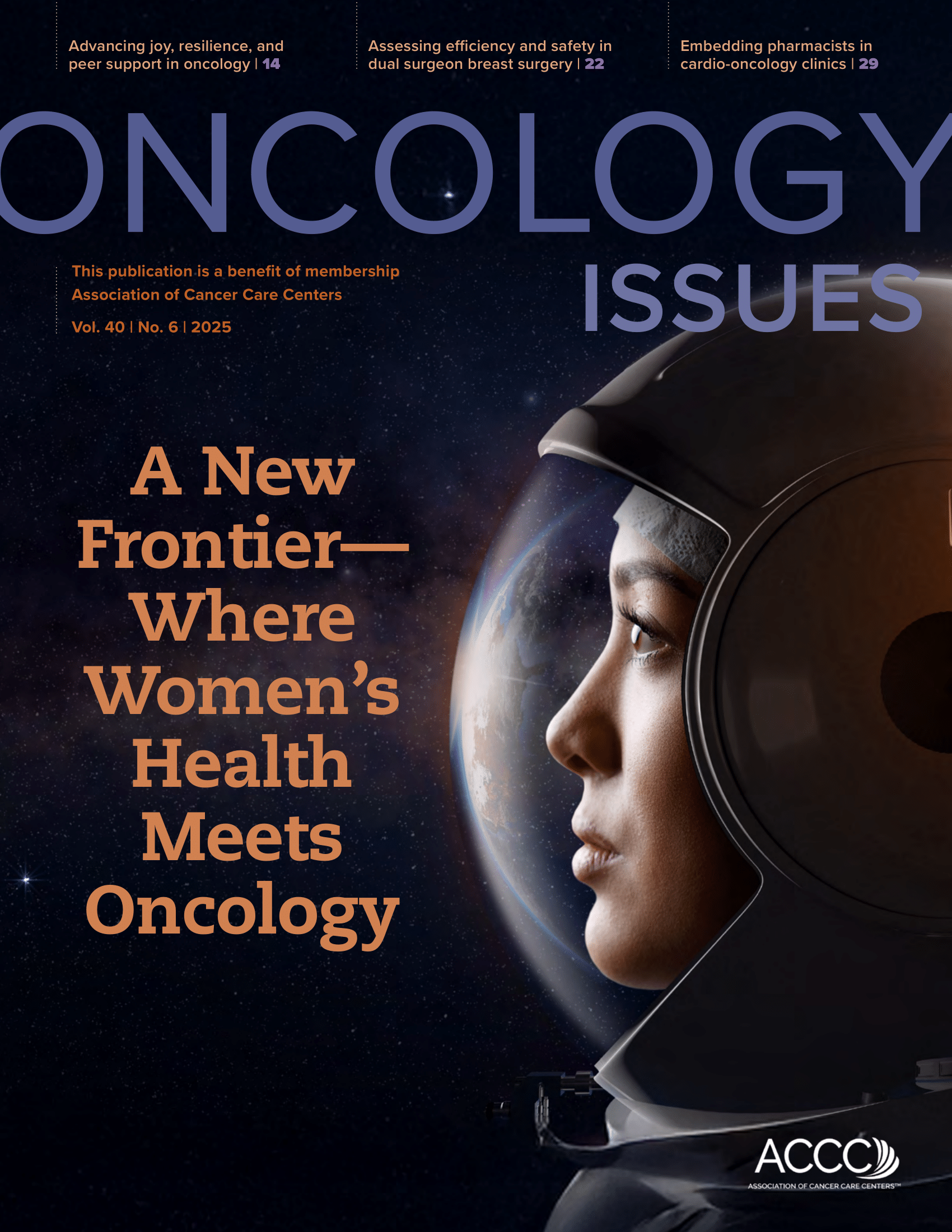
A New Frontier— Where Women’s Health Meets Oncology
Together As One: Advancing Joy, Resilience, and Peer Support in Oncology Care
Efficiency and Safety of the Dual Surgeon Bilateral Mastectomy Approach
Heart and Healing: Embedding Pharmacists in Cardio-Oncology Clinics
From Awareness to Advocacy: Missouri’s Fight Against Radon Exposure
Shared Solutions for Rural Oncology: Insights Across the Americas
Collaborative Care: A Solution for Providing Optimal Psychosocial Oncology Care
Fast Facts Vol. 40, No. 6
Policy Shifts in the One Big Beautiful Bill Act Threaten Access & Care Coverage for Patients With Cancer
Have You Checked on Your Compliance Plan Lately?
Optimizing Revenue Cycle Management in Oncology
Quincy Medical Group Cancer Institute, Quincy, Illinois
Highlights From the 42nd National Oncology  Conference in Denver, Colorado

Highlights From the 42nd National Oncology Conference in Denver, Colorado