Each year, the ACCC National Oncology Conference (NOC) provides a forum for cancer program administrators, operations leaders, clinicians, and other members of the multidisciplinary care team to learn, connect, and be inspired by the innovations shaping cancer care today. This year, the 42nd NOC took place on October 15-17 in Denver, Colorado, and brought a lineup of exceptional content ranging from machine learning-enabled decision support to collaborative care models that bridge oncology and primary care—and everything in between.
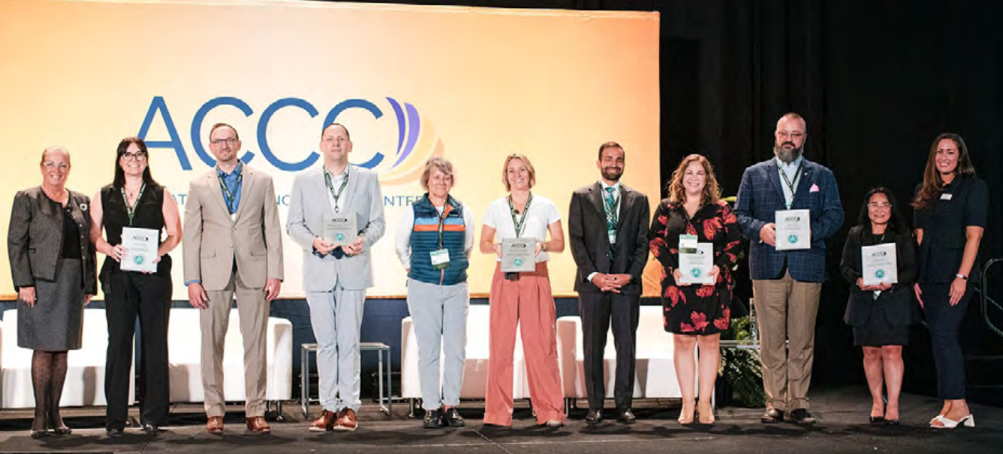
The conference kicked off with the 2025 ACCC Innovator Awards Ceremony where 2025-2026 ACCC President Una Hopkins, DNP, MSN, FNP-BC, NE-BC, RN, FACCC, and Meagan O’Neill, MS, ACCC Executive Director, presented the 2025 ACCC Innovator Awards to representatives from the 6 winning cancer programs:
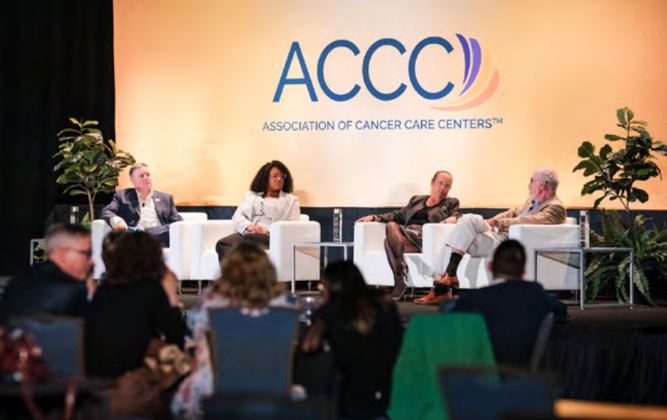
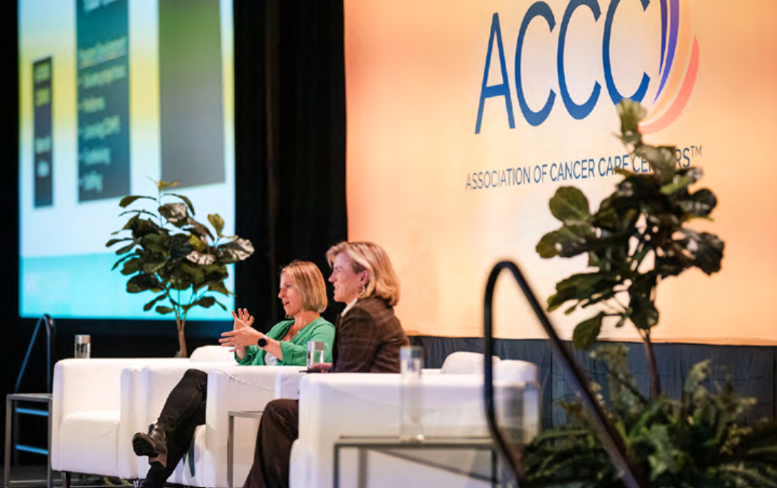
Following the awards presentation and innovation celebration, the evening continued with the ACCC President’s Fireside Chat. Dr. Hopkins led a dynamic panel on her President’s Theme, Designing Oncology Care to Meet the Needs of a Growing Patient Population, joined by providers from 3 cancer programs whose innovative care models are addressing this challenge.
Karla Bowen, MBA, BSN, RN, OCN, director of Nursing Operations at Orlando Health Cancer Institute, shared her program’s AI template management tool within the electronic health record, which has improved infusion operations, increased capacity, and enhanced both patient and provider satisfaction. Previously, patient scheduling required multiple screens of information to reference patient addresses, treatment locations, and route mapping. With this innovation, the information is centralized into a single screen, streamlining the process immensely. “It used to take about 7 days to get patients in. Now it’s within 24-48 hours,” said Bowen.
Brian Lasonde, MPAS, PA-C, advanced practice clinician manager for Medical Specialties at Sutter Health – Palo Alto Medical Foundation, has meanwhile leveraged AI at his program to develop patient education videos. “Instead of repeating the same statement over and over, we can now easily generate a script and present it as a video,” he explained. “When the patient finishes watching, we can focus on addressing their questions. It has saved us a tremendous amount of time.”
Finally, Charles Shelton, MD, radiation oncologist and medical director at Outer Banks Health, shared his perspective as a rural oncologist, highlighting his program’s use of virtual cancer conferences to connect with other centers. As a rural hospital in a resource-challenged region, his team recognized the need to make cancer care an essential service and piloted a virtual conference in 2014. “Now [in 2025], we meet for 1 hour every day, which adds up to 350 hours a year of knowledge and collaboration from incredibly smart and experienced professionals. This has built our workforce capacity tremendously. It’s a game changer for rural America.”

Left to right: Una Hopkins, DNP, MSN, FNP-BC, NE-BC, RN, FACCC; Lauren Hughes, RN; Andrew Ambort, MD; Andrew Munchel,
MSN, RN, OCN, CPHQ; Patricia Hardenbergh, MD, FASTRO; Erin Perejda, LCSW, OSW-C; Ramy Sedhom, MD; Julianne Ani, MPH;
Bart Daugherty; Anna Liza Rodriguez, MHA, MSN, RN, OCN, NEA-BC; and Meagan O'Neill, MS.

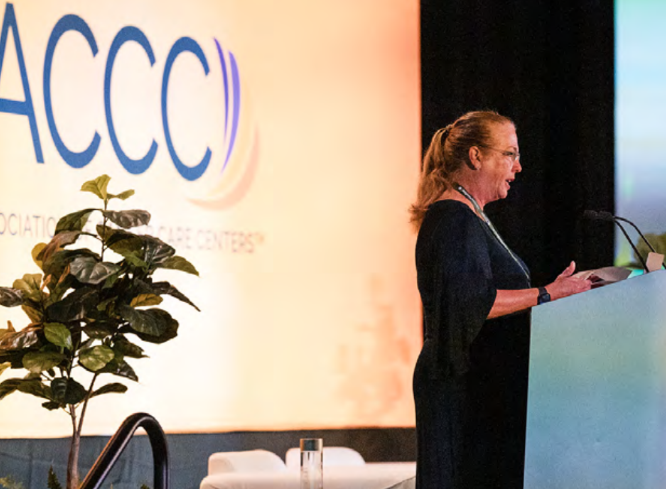
ACCC President Una Hopkins, DNP, MSN, FNP-BC, NE-BC, RN, FACCC

Left to right: Brian Lasonde, MPAS, PA-C; Karla Bowen, MBA, BSN, RN, OCN;
Una Hopkins, DNP, MSN, FNP-BC, NE-BC, RN, FACCC; Charles Shelton, MD.

Susan Salgado, PhD

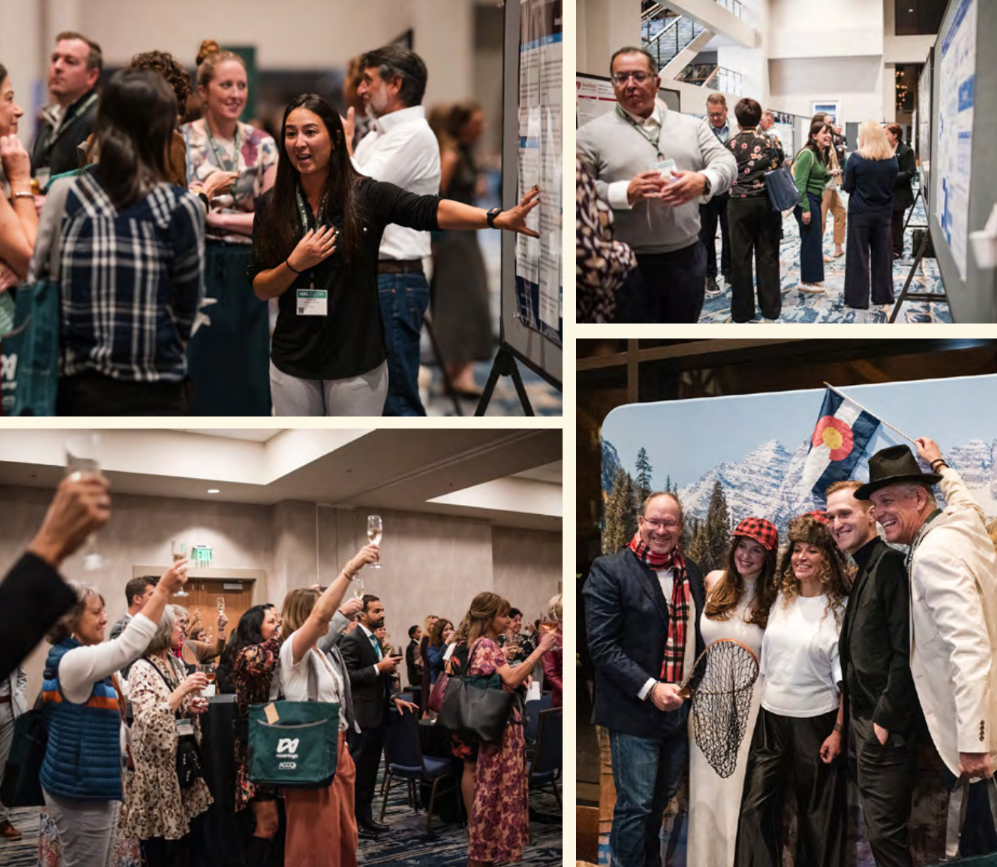
Following the President’s Fireside Chat, attendees enjoyed networking, poster presentations, refreshments, and a memorable photo booth at the ACCC Mile High Mixer.

Left to right: Andrew Munchel, MSN, RN, OCN, CPHQ, and Andrew Ambort, MD and Lauren Hughes, RN.

Erin Perejda, LCSW, OSW-C, and Patricia Hardenbergh, MD, FASTRO.
Christopher DeSimone, MD, FACOG, executive chief medical officer at Markey Cancer Center and professor of Gynecologic Oncology at the University of Kentucky Healthcare, commented that as a physician leader, he leads with 4 tenets, the first and most important of which is patient safety and quality of care. Next comes access, provider engagement and satisfaction, and fiscal wellbeing. “I feel very passionate about this as a physician leader—I never lead with finances. I want to have meaningful conversations with physicians and staff when they bring ideas to me,” said Dr. DeSimone.
New to the 2025 NOC, the day’s presentations concluded with 4 Spark Sessions—10-minute, dynamic presentations spotlighting early-stage programs just beginning to take shape but already show exciting potential.
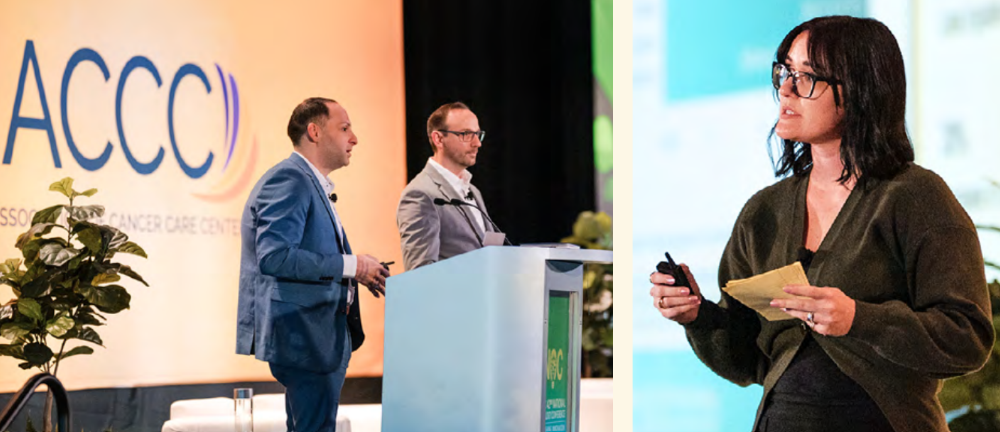
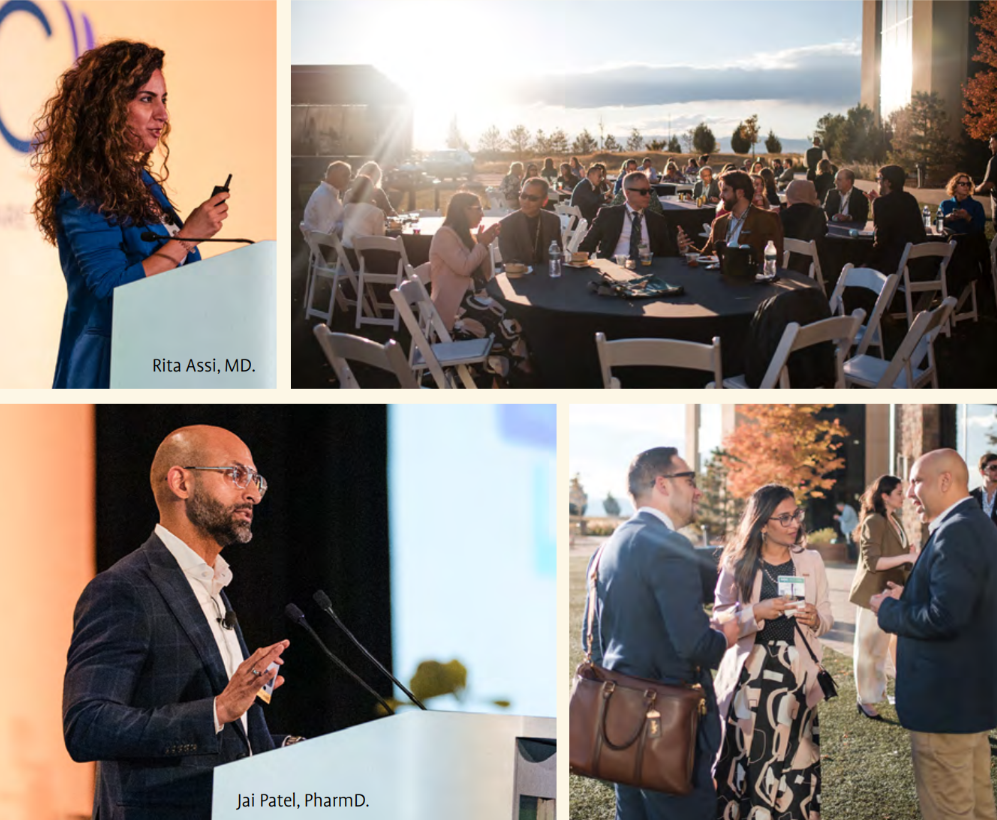
Rita Assi, MD, assistant professor of Medicine at Indiana University’s Melvin and Bren Simon Comprehensive Cancer Center, discussed improving the care of pregnant individuals diagnosed with hematologic malignancies. A major barrier to providing care for these patients is a lack of guidelines. As a result, care is improvised, and families are forced to make impossible choices, with maternal survival frequently being compromised by treatment delays. Dr. Assi’s pilot program, the Seed, seeks to standardize care and build the translational bridge into precision medicine. “We must leverage the advancements we have in this field,” she urged. “Having a rare diagnosis does not mean treatment is impossible; it just means it is more urgent.”
The final day of the 42nd NOC featured a series of panels that brought together leaders and innovators to discuss aligning clinical and administrative priorities, coordinating oncology and primary care, and addressing challenges faced by rural and remote communities.
As health care grows more complex, bridging business goals with quality, patient-centered care is essential. To achieve that alignment, more and more health systems are embracing a dyad leadership model.
One difficulty that can arise within dyad models is a lack of clear roles and responsibilities among leaders. To avoid this, Alyssia Crews, MBA, vice president of Orlando Health, recommended having the conversation about role delineation as early as possible to avoid overstepping. She noted that today, historical divisions between strictly clinical and strictly administrative responsibilities are fading in favor of a more collaborative model. “We’re both clinical and we’re both administrative,” she said of her dyad model.
One of the key advantages of partnering these 2 spheres at this level is understanding the “why” behind executive decisions. “Not having transparency and visibility behind decision-making can be frustrating,” said Jennie Crews, MD, MMM, FACCC, FASCO, chief medical officer of Ambulatory Care at Stanford Healthcare and Stanford Medicine Partners, clinical professor of Medicine at the Stanford University School of Medicine, and Interim CEO of Stanford Medicine Partners. “Being part of the process makes you feel some ownership over these decisions and better equips you to help carry them out and explain them to your teams.”

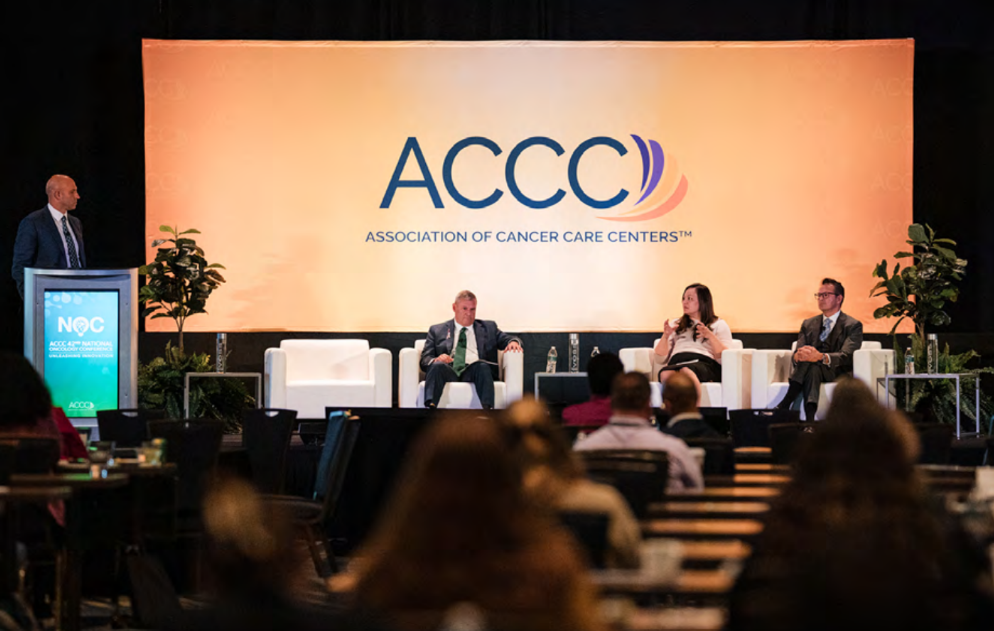
Left to right: Russell Langan, MD, FACS, FSSO; Christopher DeSimone, MD, FACOG; Carla Sims; and Tom Bird.

To cap off a day packed with enlightening sessions and meaningful opportunities for cross-collaboration, attendees took advantage of the natural beauty of our host city, Denver, at the Après ACCC evening event—complete with live music, local cuisine, and beer and hot chocolate tastings against the backdrop of the Rocky Mountains.
From prevention and early detection to treatment, survivorship, and long-term monitoring, there are distinct yet complementary roles that oncology and primary care must play to support whole-person health. The second panel of the day shared their insights into building integrated care models that work together across every phase of the cancer journey.
Cheyenne Corbett, PhD, director of Supportive Care & Survivorship Center and co-director of the Center for Onco-Primary Care at Duke Cancer Institute, began by underscoring the essential nature of ensuring cohesion between oncology and primary care: “Our title isn’t just a theme; it’s a call to action, because the future of cancer care will depend not only on the precision of our treatments, but on the precision of our collaboration. Our focus is on the practical steps that make collaboration real.”
Among the greatest gaps in onco-primary care is addressing comorbidities, such as diabetes and hypertension, during active treatment. In response, Duke built a dashboard to track these patients. “Our providers really appreciate those notifications because they incorporate the PCP into the care team more,” said Edward Cooner, MD, MBOE, primary care provider, senior medical director of Performance Excellence and chief patient safety officer at Duke Primary Care. “We see in primary care that patients tend to slip into a black hole, not focusing on health maintenance items as much during cancer treatment. There becomes a complacency with diseases like hypertension, which really shouldn’t happen.”
Afreen Shariff, MD, MBBS, endocrinologist, director of Duke’s Onco-Endocrinology Program and associate director of Duke Health’s Cancer Therapy Toxicity Program, agreed, adding that during active therapy, toxicities impact more than just quality of life—they may delay or even stop first-line treatments.
To address this need, Duke launched the Sugar High Intervention. “For every patient with cancer who has blood sugar over 300mg, my team gets an alert in the EHR,” explained Dr. Shariff. “We review the case and instantly see relevant information to do a quick expert triage.” Such rapid access to specialty care has transformed patient outcomes. Since launching the initiative in December of 2024, Dr. Shariff’s team has received about 500 alerts, 250 unique patients, and added 184 patients to the diabetes registry.
The final session of the day focused on equity in access to cancer care— particularly for patients in rural and remote communities. Beyond their cancer diagnosis, these patients face significant barriers to care, including limited access to oncology specialists, few transportation options, and fragmented care coordination. Recognizing that such challenges extend far beyond national borders, the panel brought together providers from Canada, the United States, and Mexico to share practical strategies for addressing these barriers, helping the global community learn from one another’s experiences and work together toward more equitable cancer care.
Jacqueline Galica, PhD, RN, OCN, associate professor at Queen’s University in Canada, shared that despite having a smaller population than the US and Mexico, Canada’s geographical space is huge, with 20% of Canadians residing in northern areas as high as the arctic circle. “We talk about not just rurality, but remoteness,” she said. “Spaces where there are little to no infrastructure and no roads in the winter.” Distance, therefore, acts as a major barrier to accessing care. “No roads means no physical space to get to chemotherapy or screening, or even access mobile screening,” said Dr. Galica.
In Mexico, patients experience a highly fragmented health system, according to Yanin Chavarri-Guerra, MD, medical oncologist, full professor of oncology, clinical researcher at the Instituto Nacional de Ciencias Médicas y Nutrición Salvador Zubirán. “Twenty percent of our population lives in rural areas, and of them, about 60% live in extreme poverty,” she said. “They have to travel very far to access cancer care, and fund those housing and travel costs themselves, which just isn’t feasible for many of them.”
Dr. Chavarri-Guerra also shared the significant delays in care that patients with cancer experience in Mexico. Patients typically go to 2 health care facilities before finally reaching a cancer care facility, with months between each visit. “Sixty percent of the population is diagnosed at a late stage, and it can take up to 8 months from the first sign of symptoms to the time of diagnosis,” she said.
In answer to this severe challenge, Dr. Chavarri-Guerra relayed the essential role patient navigators play in assisting patients with paperwork and appointment scheduling to reduce these delays as much as possible. To connect patients with support across vast geographical distances, Dr. Galica commented that mail-in colorectal cancer screening has been highly effective. However, only about 50% of eligible patients pursue it, due to issues like mistrust of the medical system and a lack of health literacy. Moderator Enrique Soto-Perez-de-Celis, MD, PhD, FASCO, associate director for Global Oncology at the University of Colorado Cancer Center, commented on the importance of working with native language speakers in outreach and patient education to inspire more confidence in the medical community.
As ever, NOC would not be the success it is without the engagement, participation, and heart of ACCC’s membership. Thank you to our speakers, poster presenters, and attendees for their commitment to learning, sharing experiences, and working towards more equitable cancer care for all.

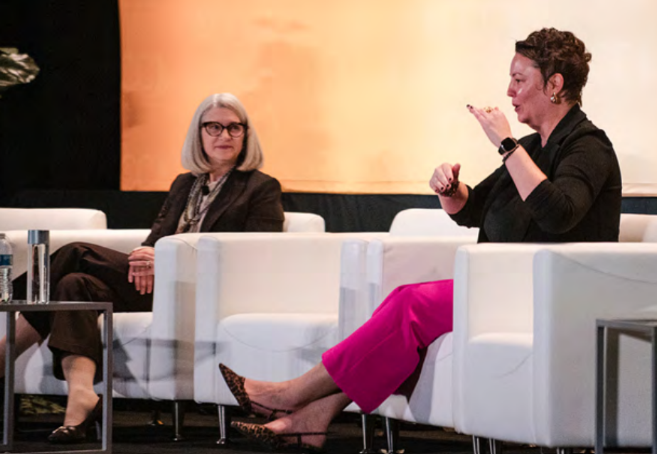
Left to right: Jennie Crews, MD, MMM, FACCC, FASCO; and Alyssia Crews, MBA.

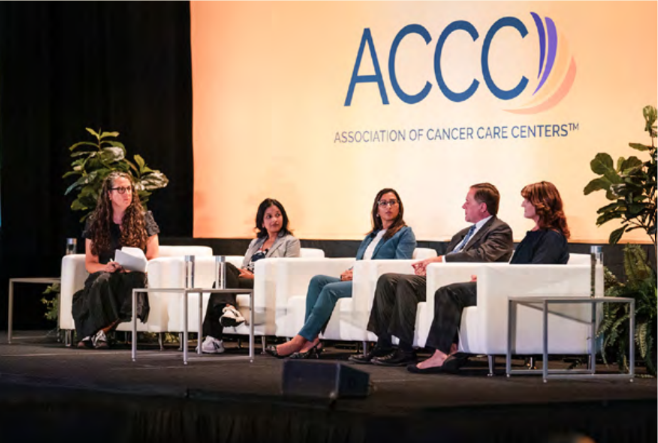
Left to right: Cheyenne Corbett, PhD; Nilam Patel, MHA; Afreen Shariff, MD, MBBS; Edward Cooner, MD, MBOE; and Kimberly Slawson, MSN, FNP-C.

Left to right: Enrique Soto-Perez-de-Celis, MD, PhD, FASCO; Jacqueline Galica,
PhD, RN, OCN; and Yanin Chavarri-Guerra, MD.
ACCC Welcomes its Newest Members
University of New Mexico Comprehensive Cancer Center
Albuquerque, New Mexico
Delegate Rep: Michelle Boehler
Website: cancer.unm.edu
University Medical Center of El Paso
El Paso, Texas
Delegate Rep: Franz Berthaud
Website: www.umcelpaso.org
Beaufort Memorial Hospital
Beaufort, South Carolina
Delegate Rep: Vanessa Bramble
Website: www.bmhsc.or
Apply for a 2026 ACCC Innovator Award
Applications for the 2026 ACCC Innovator Awards are open now. For the last 15 years, these awards have recognized visionary and compelling ideas in oncology from ACCC Cancer Program Members nationwide, honoring initiatives that advance access, quality, and value in cancer care delivery. Submit your application by February 26, 2026, for the opportunity to highlight your program’s innovation on a national stage at the 43rd National Oncology Conference in Boston, Massachusetts, and in an Oncology Issues feature article. Visit our Frequently Asked Questions page or email Monique Marino, senior director, Editorial Content and Strategy, at mmarino@accc-cancer.org for more information.
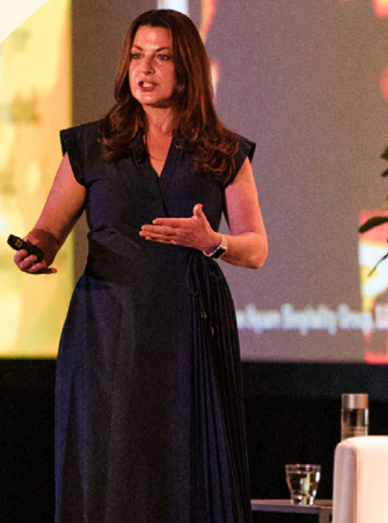
Day 2 of the NOC began with opening keynote speaker Susan Salgado, PhD, founder of Grason Consulting, who explored how to create a trusting and engaged workplace. Hailing from a background in the hospitality industry, Dr. Salgado understands the critical importance of cultivating a culture where happiness starts with employees so that it spills over into the customer or patient experience.
“The stronger our workforce is, the more engaged we are with one another, the better the patient experience,” she said. “Fulfilled, engaged workers are an organization’s greatest competitive advantage.” Dr. Salgado stressed the importance of building a culture of mutual respect, where both leadership and employees are motivated and enthusiastic to take care of one another.
Culture has many components, including values, beliefs, norms, and rituals, but perhaps the most important one is a clear standard of acceptable behaviors. If leadership neglects to identify and properly address instances of unacceptable behavior, the culture suffers. “It’s not enough to say our culture is one of mutual respect. You have to actively uphold the standard of acceptable behaviors among staff,” she urged, “because how we behave dictates the culture."
Among the day’s highlights were the 2025 ACCC Innovator Award presentations, showcasing their journey from idea to implementation, including securing leadership buy-in and navigating challenges. Notably, each innovation aligned with a key aspect of the ACCC President’s Theme—including Workforce Empowerment and Enablement, Optimized Service Line Structures, Technology as a Workforce Multiplier, and Capacity Building at Scale.
Penn Medicine Princeton Health’s innovation—Implementing a Structured, Scalable Geriatric Oncology Program— speaks to Optimized Service Line Structures. Through the integration of comprehensive geriatric assessments into oncology workflows, real-time data tracking, multidisciplinary team coordination, and dedicated support services, the program positioned itself to address the unique needs of older patients with cancer. Rather than focusing exclusively on length of life or quality of life, patients in this model were connected with supportive and palliative care services, resulting in notable increases in advance care planning and clinical trial enrollment.
“It’s really about implementation science,” explained Ramy Sedhom, MD, section chief of Medical Oncology. “How can you get clinicians and health systems to do the right thing, and how do you make doing the right thing the easy thing to do?” By making practical geriatric assessments the default process, Penn Medicine brought about significant culture change.
After learning how the 2025 ACCC Innovators brought their initiatives to life and the tremendous patient impact they’ve had, attendees heard from program leaders about the logistical and financial factors they consider in a compelling business case. Facilitating the panel was Russell Langan, MD, FACS, FSSO, associate chief surgical officer for System Integration and Quality and director of Surgical Oncology at RWJBarnabas Health and Rutgers Cancer Institute, who opened the session by asking what criteria panelists use to evaluate whether an innovative idea is worth pursuing in their organization.
For Thomas Bird, vice president of Business Development, Enterprise Growth & Innovation at City of Hope, it all starts with patient access and outcomes. “This is the first and most important pillar. Return on investment is absolutely important, but it’s one part of a comprehensive business assessment.” Carla Sims, associate vice president at Atrium Health Levine Cancer Center, agreed. “We look at this as a return on mission just as much as a return on investment.”





Recognizing the critical role advanced practice providers and allied health professionals play in the care continuum, the American Oncology Network provides infrastructure, leadership, and professional growth opportunities to empower these members of the cancer care team to practice at the top of their license.