
Located in a medically underserved area, Yuma Regional Medical Center Cancer Center joined forces with Myriad Genetics—a molecular diagnostic testing company—to offer genetic testing to appropriate patients who were flagged in the registration intake process prior to their first visit. After completing a hereditary cancer quiz, potential candidates are referred to a genetic counselor, who provides tele-education and conducts testing, if warranted. Within the first four months, there was a four-fold increase in genetic testing of cancer patients, affecting the clinical management of 20 percent of those cases.

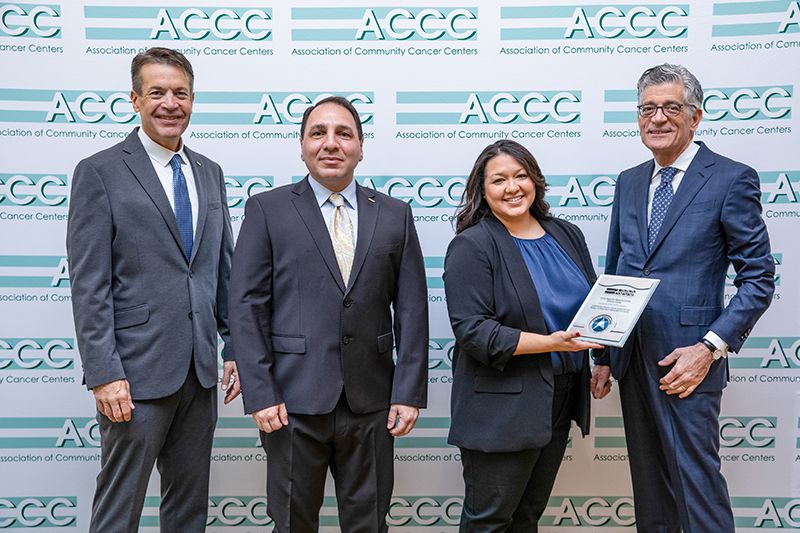


I think this award elevated the work we had done and made executive leaders across the system aware of our project. Although we had their support, receiving the award helped them understand that we truly did something innovative and with good outcomes.
Sherri Costa, MS, RN, AOCNS® Manager, Cancer Support Services, SEWI & Quality Improvement Coordinator, SEWI Cancer Care, Ascension SE Wisconsin Hospitals


Find the CANCER BUZZ podcast on Apple Podcasts, Spotify, or wherever you get your podcasts!
Oncology pharmacy has undergone a rapid transformation in recent years. On this episode of CANCER BUZZ, learn more about the role that oncology pharmacists play in cancer care and how that role is changing in the face of new therapies and the advent of value-based health. Discover how the University of North Carolina Hospital’s Department of Pharmacy developed a closed-loop, pharmacy-managed, pre-certification and denials management program to avoid passing surprise bills to patients and ensure financial stability for the cancer program.
Guests:
Relevant Content:
Genetic screening and testing are paving the way for improved patient care and outcomes on a broad scale that encompasses both cancer treatment and prevention. Access to this testing is key to identifying and thereby reducing disease burden, suffering, and cost. Being able to offer patients genetic screening and testing services also helps cancer programs provide the highest level of care. For medically underserved and rural regions, multiple barriers can limit access to these services, including cost and cultural and geographic challenges. This article describes how a community cancer center in rural Arizona overcame these obstacles so that patients receive genetic testing and counseling at no cost.
In the first four months of program's implementation, Yuma Cancer Center achieved a four-fold increase in genetic testing.