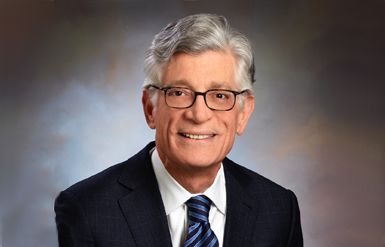
Randall A. Oyer, MD, was named the Association of Cancer Care Centers (ACCC) President for 2020-2021 at the ACCC 46th Annual Meeting & Cancer Center Business Summit held March 4-6 in Washington, D.C.
ACCC invites each president to select a theme for their year in office that addresses a timely issue in cancer care through the creation of programs and resources. Dr. Oyer announced that the theme of his presidency will be “Community Oncology Can Close the Gap in Cancer Research.”
“Over the past year ACCC has heard from our members that there are gaps in community research,” said Dr. Oyer. Respondents to ACCC’s “2019 Trending Now in Cancer Care Survey” identified their top three challenges to offering patients with cancer clinical trials as staff resources and training (53%), program infrastructure (50%), and lack of patient understanding of the clinical trials process (46%). Citing these survey findings, Dr. Oyer remarked: “We have a serious imbalance in our clinical trials work. Our patients are in the community, yet the trials are at academic medical centers. And I believe that ACCC is uniquely situated to close this gap.”
Among the plans to achieve this goal outlined by Dr. Oyer were the following:
“We would like to improve our care and access for traditionally underserved communities. We would like to increase sensitivity, awareness, and understanding of the needs specific to geriatric oncology. And we would like to bring precision medicine into the community by understanding how to use the new precision diagnostics and radiology techniques to make sure that our patients have access to these services.”
The resources and tools that will be developed in conjunction with Dr. Oyer’s President’s Theme will be posted to this webpage as they are available.
The Association of Cancer Care Centers (ACCC) has established the ACCC Community Oncology Research Institute (ACORI) to build on its existing mission to close the gap in cancer research through optimal oncology partnerships.
ACCC and ASCO are collaborating to increase cancer clinical trial participation among patients from underrepresented racial and ethnic groups. The two organizations are currently recruiting 40 oncology research programs to be part of a pilot program testing a site assessment tool and/or an implicit bias training program.

Explore key takeaways from a meeting between ACCC, Inova Schar Cancer Institute, and delegates from the Swedish Ministry of Health and Social Affairs.
COVID-19 has highlighted how challenging it is for cancer care providers large and small when healthcare resources are limited. One oncologist shares her experience on a task force that drafted a series of recommendations for moving forward in cancer care as the pandemic recedes.

Rather than fielding its annual Trending Now in Cancer Care survey while cancer programs were experiencing unprecedented challenges due to the extended public health emergency, ACCC chose to facilitate conversations with its members to capture the lived experiences of the most pertinent issues impacting oncology practice and care delivery.

This is the story of how a large independent practice in northwest Arkansas has nurtured its research program over several decades and is now able to offer patients access to phase I, II, and III trials close to home and their families.


provides important information and links to access the most current treatment guidelines and inpatient and outpatient clinical trials.
Published in the Journal of Oncology Practice

One of the ways in which community oncology is helping to close gaps in cancer research is through participation in the National Cancer Institute Community Oncology Research Program clinical trials. The Lahey Health Cancer Institute, a part of the Beth Israel Lahey Health System, continues to expand access to clinical trials and, in particular, the NCI National Clinical Trials Network into the community by partnering with affiliated community hospitals.
Presented at the 2020 JADPRO Live Virtual Meeting
Presented at the 2020 ASCO Quality Care Symposium
In the current oncology clinical trials landscape, many barriers remain to clinical trial enrollment that affect both the oncologist and the patient. Among these are trial locations, strict eligibility requirements, insufficient resources to support appropriate clinical trial education and screening, as well as patient and provider attitudes about trials.
Research nurse Joannne Riemer, RN, BSN, started her position at Johns Hopkins Medical Institution in 2010. Within six months, she was working with checkpoint inhibitors. From her vantage point in clinical trials research, she discusses the many changes in IO clinical trials patient selection over the last eight years.