
Acute myeloid leukemia, while rare and accounting for about one percent of all cancers, is one of the most common types of leukemia in adults. Primarily occurring in older patients (the average age at the time of diagnosis is 68), the disease is fast moving and determining the subtype is critically important, as it can impact both treatment plans and patient outcomes. Advancements in genetics and research have provided new insights into how various gene changes affect leukemia progression and treatment outcomes, which has resulted in an evolving treatment landscape in recent years.
While treatments can include chemotherapy, targeted therapy, and stem cell/bone marrow transplants, chemotherapy remains the standard of care for treating patients with newly diagnosed acute myeloid leukemia. In fact, induction therapy may begin upon diagnosis due to the acute nature of the disease.
Most patients achieve a first complete remission following induction chemotherapy, further extended by receiving an allogeneic hematopoietic stem cell transplantation in eligible patients. However, this treatment plan is dependent on several considerations, including a patient’s age, overall heath and/or comorbidities, cancer subtype, biomarker test results, and risk of relapse. Novel therapies have recently been approved in the maintenance or "continued treatment" setting that may offer clinical benefit to patients who are not candidates for transplant.
Patients with acute myeloid leukemia are most frequently treated by hematologists/oncologists practicing in an academic center due to the intensity of curative induction treatment. Patients may, however, transition to a local community cancer center following induction treatment, particularly if they're considered non-transplant eligible, or if they are unable or unwilling to travel to larger academic centers for treatment. This has led to a lack of care coordination between providers across the two settings and a need for increased collaboration and co-management strategies to ensure a smooth continuation of care for patients.
To address these challenges, the Association of Community Cancer Centers (ACCC), in partnership with HealthTree Foundation for Acute Myeloid Leukemia and with support by Bristol Myers-Squibb, has launched an education program, Achieving and Maintaining Better Outcomes for Patients with Acute Myeloid Leukemia. This program explores current barriers in care coordination and therapy options for patients who are not eligible for transplant, as well as highlights strategies and best practice guidelines to improve outcomes for patients with acute myeloid leukemia.
This program aims to:
For more information on this project, please contact the ACCC Provider Education department.
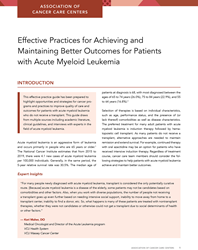
For many patients with acute myeloid leukemia who do not receive a transplant due to a constellation of factors, including social determinants of health and age-related comorbidities, alternative approaches are key to maintaining remission and extending survival. Access comprehensive, expert-driven, actionable recommendations in ACCC’s Practice Guide, Effective Practices for Achieving and Maintaining Better Outcomes for Patients with Acute Myeloid Leukemia, which details strategies to support care coordination as well as patient and caregiver engagement for this population and offers a wealth of helpful resources.
September is Blood Cancer Awareness month, an opportunity to spotlight the broad category of diseases that include leukemia, lymphoma, plasma cell neoplasms, myelodysplastic syndromes, and myeloproliferative neoplasms.

Discover recommendations for cancer care providers to improve care quality and outcomes for patients with acute myeloid leukemia who do not receive a transplant.
Learn about key barriers in care coordination and therapy options for patients with AML who are not eligible for transplant and how providers can address them.