Challenged by the limitations of a traditional tumor board, Ascension SE Wisconsin Hospital developed a dynamic discussion platform not hindered by time and location constraints. The eMDC model facilitates a prospective, real-time approach to case planning, allowing the care team to view case information and engage in ongoing dialogue with their peers at any time. After a one-year pilot, the number of patients discussed by the interdisciplinary team increased four-fold, and the hospital saw significant improvements in care coordination and strengthened communication across the care continuum.

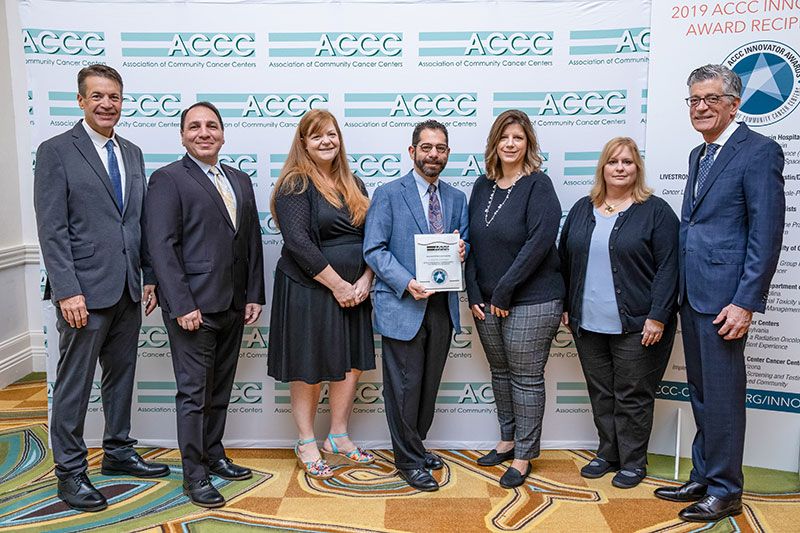
Christian G. Downs, JD, MHA, ACCC Executive Director, Ali McBride, PharmD, MS, BCOP, ACCC President 2019-2020, Ascension SE Wisconsin Hospital Members, Randall A. Oyer, MD, ACCC President Elect 2019-2020


I think this award elevated the work we had done and made executive leaders across the system aware of our project. Although we had their support, receiving the award helped them understand that we truly did something innovative and with good outcomes.
Sherri Costa, MS, RN, AOCNS® Manager, Cancer Support Services, SEWI & Quality Improvement Coordinator, SEWI Cancer Care, Ascension SE Wisconsin Hospitals


The care of patients with cancer is multifaceted, and the tools for diagnosing, staging, and treating patients continue to increase in complexity. Consultations about individual patient cases have traditionally taken the form of tumor boards— the standard for communication among the multiple specialists involved in the care of a patient. A tumor board generally is held as a scheduled meeting (typically over lunch) in which participants gather and present a patient’s currently available data. Because patient cases are presented only once during a prescheduled meeting, discussions about individual cases may be retrospective or lack complete patient information, limiting meaningful input. Presentation of new patient data—or the results of additional tests that may have been recommended during the first presentation—typically do not occur during subsequent tumor boards. Additional limitations to this model include increasing and competing demands on providers and a lack of evidence that tumor boards benefit patient outcomes.