Artificial intelligence (AI) is rapidly reshaping health care, offering new ways to enhance efficiency, precision, and quality in cancer care. The Association of Cancer Care Centers (ACCC) aims to help oncology practices understand where and how AI is being utilized, from reducing administrative burden and clinician burnout to advancing precision medicine through biomarker-driven, personalized treatment approaches. The program provides an overview of how modern cancer programs are evaluating or implementing AI solutions and showcases best practices from early adopters. By creating practical resources for readiness assessment and implementation, ACCC supports responsible, equitable AI integration that promotes innovation, transparency, and improved care delivery across the cancer care continuum.
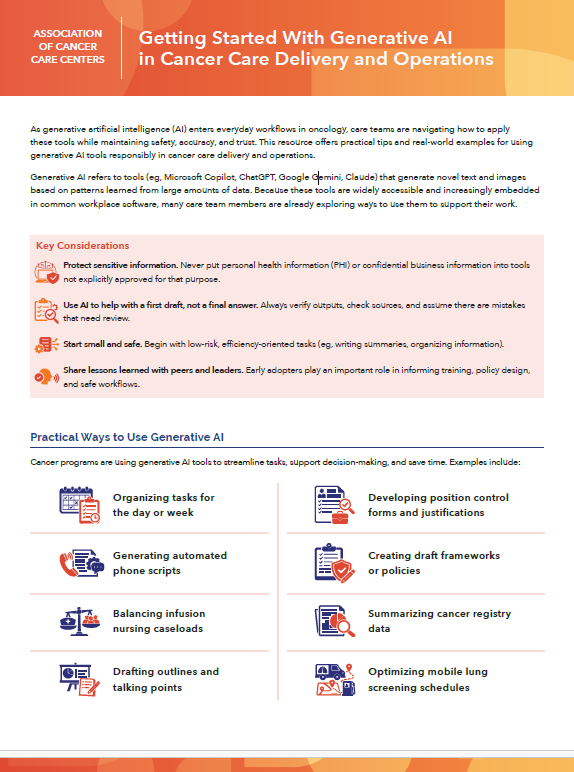
Use generative AI tools more effectively in your day-to-day work with practical tips on drafting, summarizing, and organizing prompts while safeguarding patient data, verifying outputs, and maintaining clinical oversight.
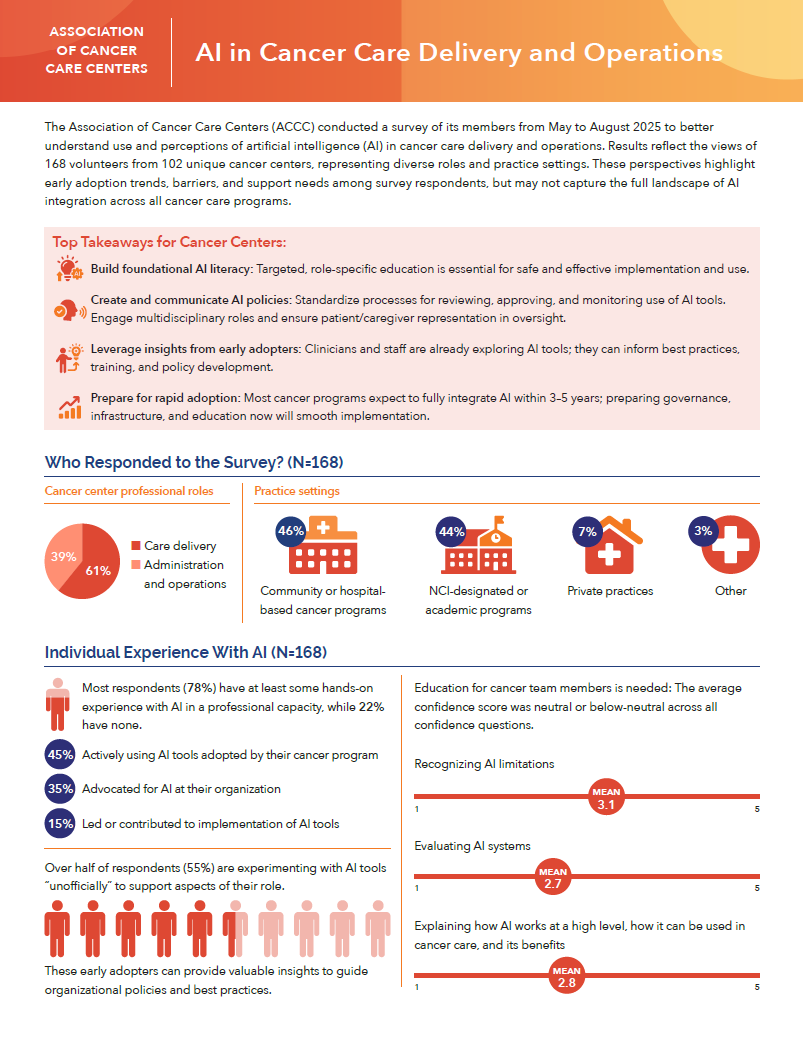
Assess current use, perceptions, and readiness for AI in cancer care based on a 2025 ACCC member survey of 168 professionals from 102 cancer centers, highlighting early adoption trends, implementation challenges, and priority support needs.
In this webinar, oncology leaders from Highlands Oncology share practical insights about AI adoption, including how they established governance structures, engaged multidisciplinary stakeholders, evaluated vendors, monitored AI outputs, and built trust among end users. The discussion explores strategies for aligning AI initiatives with organizational goals while maintaining quality, safety, and human oversight. Viewers will learn how thoughtful governance can help cancer programs avoid common implementation challenges, support workforce adoption, and create a scalable foundation for responsible AI integration.
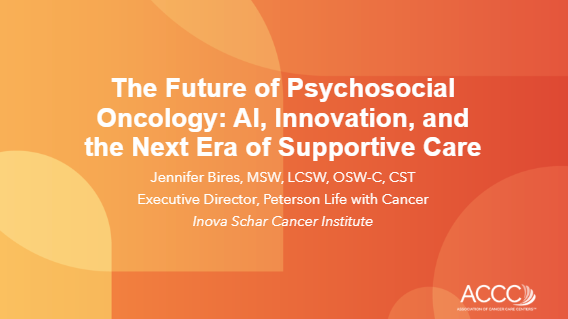
Explores how AI-driven innovation may shape the future of supportive oncology care delivery. The discussion examines emerging opportunities for improving patient access, streamlining workflows, enhancing distress screening and navigation, and supporting care teams while maintaining empathy, trust, and patient-centered communication.

In a recent conversation with ACCC, DiMe Associate Program Director Ian Miller discussed what responsible AI adoption looks like in practice, particularly for organizations early in their AI journey and seeking clearer guidance on how to evaluate, prioritize, and implement these tools.

A recent discussion between ACCC and Highlands Oncology centered on how artificial intelligence can be implemented thoughtfully in cancer care to support clinicians and operations without compromising clinical judgement or patient care.
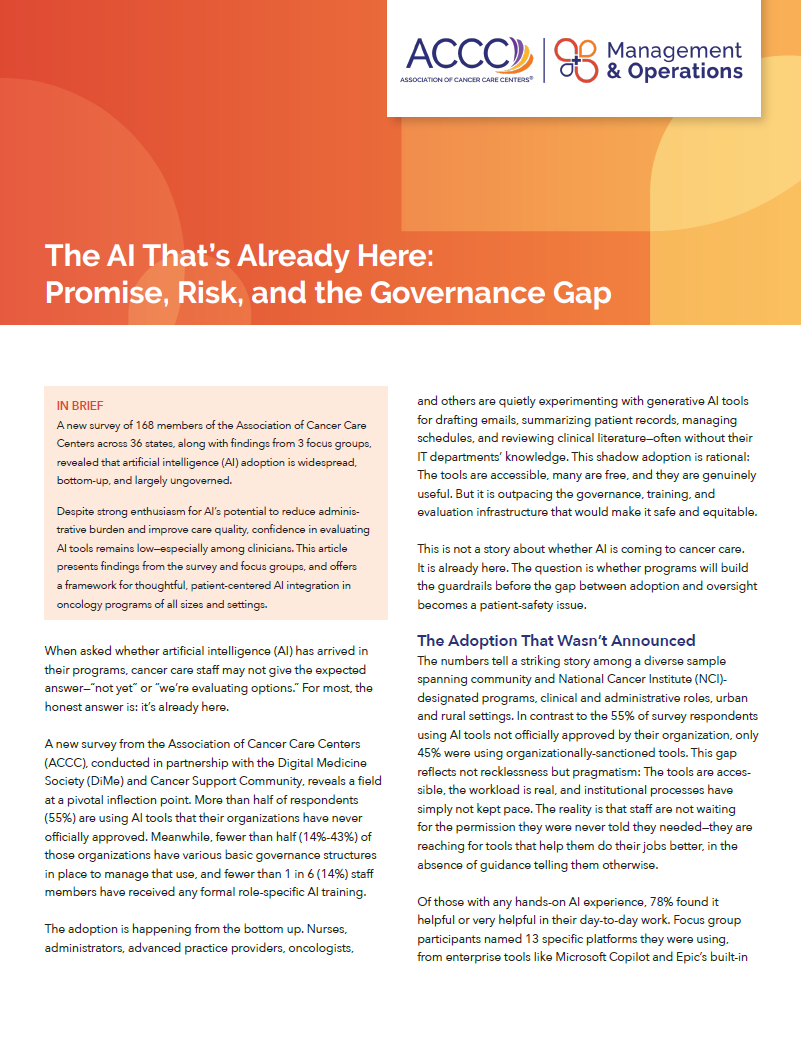
AI is no longer a future consideration in oncology—it is already shaping care delivery and operations. Learn how cancer programs can close the gap between adoption and oversight while supporting patient-centered innovation.
This resource was made possible with support from Gilead and Pfizer.


In partnership with Cancer Support Community and the Digital Medicine Society (DiME).