ACCC association of cancer care centers
Join/Renew
Login
Join/Renew
Login
Education & Resources
ACCC eXchange LogInCorporate Member Sponsored ResourcesPresentations & AbstractsPresident's ThemeACCC Connect eLearning LogIn
Publications
Oncology IssuesPatient Assistance & Reimbursement GuideTrending Now in Cancer Care
Events
2026 ACCC Leadership SummitAnnual Meeting & Cancer Center Business SummitCapitol Hill DayNational Oncology ConferenceOncology Reimbursement MeetingsOncology State Society Meetings
Policy & Advocacy
2024 Policy Wrap-Up and ACCC 2025 Policy PrioritiesLetters & StatementsAccess, Payment & Reimbursement ReformWhite Bagging & Brown BaggingAdvocacy ResourcesCancer Moonshot
Membership
Join | RenewWho We AreMembership Types & BenefitsCorporate MembersACCC Member Portal FAQMember Directory
Partners
Oncology State SocietiesPartner OrganizationsCME
News
News ReleasesAdvocacy News ReleasesOncology News
About ACCC
Timeline / 50th Anniversary2025 Impact ReportACCC Innovator AwardsACCC FellowsACCC Senior Staff
Breast CancerMetastatic Breast Cancer
Gastrointestinal CancerBiliary Tract CancerColorectal CancerGastric CancerLiver Cancer
Genitourinary CancerBladder CancerProstate CancerRenal Cell Carcinoma
Gynecologic CancerOvarian Cancer
Head & Neck Cancer
Hematologic MalignanciesAcute Lymphocytic Leukemia (ALL)Acute Myeloid Leukemia (AML)Chronic Lymphocytic Leukemia (CLL)Mantle Cell Lymphoma (MCL)Multiple Myeloma (MM)Myelodysplastic Syndromes (MDS)
Lung CancerNon-Small Cell Lung Cancer (NSCLC)Small Cell Lung Cancer (SCLC)
Sarcoma
Skin CancerMelanomaNon-Melanoma Skin Cancers (NMSC)
Clinical Practice & TreatmentCancer DiagnosticsCare CoordinationEHR Integration for Biomarker TestingQuality Improvement Collaboration: Integration of Precision Medicine in Community OncologyTreatment
Financial NavigationFAN Boot CampFinancial Advocacy Network (FAN) Resource LibraryPatient Assistance & Reimbursement GuidePrior Authorization
Health Equity & Access3, 2, 1, Go! Practical Solutions for Addressing Cancer Care DisparitiesAppalachian Community Cancer AllianceOncology Advanced PractitionersPersonalizing Care for Patients of All BackgroundsSocial Drivers of Health
Patient-Centered CareAddressing Care Disparities for VeteransAdolescent and Young Adult (AYA)Care Action Plans for People with CancerDermatologic ToxicitiesEmpowering CaregiversGeriatric OncologyHealth LiteracyNutritionOncology PharmacyPatient NavigationPsychosocial Care in OncologyShared Decision-MakingSupportive CareSurvivorship Care
Practice Management & OperationsCancer Program FundamentalsLeadership Sustainment and Engagement VideosOncology Practice Transformation and Integration CenterOncology Team Resiliency
ResearchACCC Community Oncology Research Institute (ACORI)
Technology & InnovationTelehealth & Digital Medicine
ACCCBuzz Blog
CANCER BUZZ Podcast
Oncology Issues
Join/Renew
Login
Breast CancerMetastatic Breast Cancer
Gastrointestinal CancerBiliary Tract CancerColorectal CancerGastric CancerLiver Cancer
Genitourinary CancerBladder CancerProstate CancerRenal Cell Carcinoma
Gynecologic CancerOvarian Cancer
Head & Neck Cancer
Hematologic MalignanciesAcute Lymphocytic Leukemia (ALL)Acute Myeloid Leukemia (AML)Chronic Lymphocytic Leukemia (CLL)Mantle Cell Lymphoma (MCL)Multiple Myeloma (MM)Myelodysplastic Syndromes (MDS)
Lung CancerNon-Small Cell Lung Cancer (NSCLC)Small Cell Lung Cancer (SCLC)
Sarcoma
Skin CancerMelanomaNon-Melanoma Skin Cancers (NMSC)
Clinical Practice & TreatmentCancer DiagnosticsCare CoordinationEHR Integration for Biomarker TestingQuality Improvement Collaboration: Integration of Precision Medicine in Community OncologyTreatment
Financial NavigationFAN Boot CampFinancial Advocacy Network (FAN) Resource LibraryPatient Assistance & Reimbursement GuidePrior Authorization
Health Equity & Access3, 2, 1, Go! Practical Solutions for Addressing Cancer Care DisparitiesAppalachian Community Cancer AllianceOncology Advanced PractitionersPersonalizing Care for Patients of All BackgroundsSocial Drivers of Health
Patient-Centered CareAddressing Care Disparities for VeteransAdolescent and Young Adult (AYA)Care Action Plans for People with CancerDermatologic ToxicitiesEmpowering CaregiversGeriatric OncologyHealth LiteracyNutritionOncology PharmacyPatient NavigationPsychosocial Care in OncologyShared Decision-MakingSupportive CareSurvivorship Care
Practice Management & OperationsCancer Program FundamentalsLeadership Sustainment and Engagement VideosOncology Practice Transformation and Integration CenterOncology Team Resiliency
ResearchACCC Community Oncology Research Institute (ACORI)
Technology & InnovationTelehealth & Digital Medicine
ACCCBuzz Blog
CANCER BUZZ Podcast
Oncology Issues
    • Education & Resources
    • Publications
    • Events
    • Policy & Advocacy
    • Membership
    • Partners
    • News
    • About ACCC
ACCC association of cancer care centers
1801 Research Boulevard, Suite 400, Rockville, MD 20850
Tel: 301.984.9496 Fax: 301.770.1949 Email Us
Contact UsVolunteers
Advertise
Career Center
Terms and Conditions
Privacy Policy
ACCC Rebranding
Copyright © 2026 Association of Cancer Care Centers. All Rights Reserved.
Advertisement

Blog

Article

October 7, 2021

Cancer Care from the Comfort of Your Car

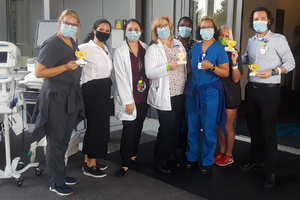
As we struggle to respond to fluctuating COVID-19 infection and vaccination rates, it is important to consider whether some of the initiatives developed in response to the pandemic are worth keeping. One such initiative is Moffitt Cancer Center's Oncology Curbside Clinic.
Cancer Care from the Comfort of Your Car

As we continually struggle to respond to widely fluctuating COVID-19 infection and vaccination rates, it is important to consider whether some of the initiatives developed in response to the pandemic are worth keeping. One such initiative is Moffitt Cancer Center's Oncology Curbside Clinic.

To offer its patients another option for accessing care with fewer risks than those posed by traditional in-person office visits, early in the pandemic, Johns Hopkins Hospital pioneered the concept of the curbside cancer care clinic in an effort to protect especially vulnerable patients. Dealing with her own obstacles to providing care to patients with cancer during the pandemic, Heather Morgan, MSN, RN, director of Infusion Services and Blood Draw Services at Moffitt Cancer Center in Tampa, Fla., spoke to her colleagues at Hopkins to learn more about how they made their curbside clinic a reality. She said the leadership team at Moffitt was enthusiastic from the start about being able to offer curbside services to patients who were hesitant to access in-office treatments.

“Our first conversation with Hopkins happened in August 2020, and on October 15, 2020, our program launched,” says Morgan. “Right now, the program is limited to Moffitt’s satellite McKinley campus, but we are seeking to expand to other locations.” Morgan says that once Moffitt committed to opening its curbside clinic, her staff had to determine which oncology services were safe and feasible to deliver while patients remained in their cars. “We currently offer non-chemo injections for patients who do not need same-day labs to receive treatment,” explains Morgan. “We also offer vaccinations, port flushes, and peripheral lab draws.”

Accurately and efficiently prepping for what each patient requires during their individual appointments is what makes Moffitt’s program work. The process starts two days prior to a patient’s visit, when the pharmacy is notified of the injection(s) that specific patient requires. All scheduled medications are prepared the night before and are delivered the next morning to a refrigerator near the curbside clinic, where nurses can easily access medications by key when they are needed. This way, no further pharmacist review is necessary on the day of a patient’s visit.

“Because we have what we need at hand when a patient arrives,” says Morgan, “there are no waits, and appointments take 10 to 15 minutes.” In-office appointments for the same services, she adds, can take much longer: “For example, if a patient comes in for a pump disconnect, by the time they park, come inside, get checked in, get their vitals taken, and then wait for and receive care, it can easily take an hour.”

Morgan says that it took coordination among numerous Moffitt stakeholders to make the curbside clinic a reality, including people who may not immediately come to mind. “The clinic requires the coordination of multiple departments and leadership,” Morgan explains. “And we needed buy-in from all of them.” Among the stakeholders Morgan engaged to ensure patient safety and best practices were physician and pharmacy leadership, legal, IT, parking and transportation, revenue cycle (to ensure charge capture), security, and patient relations.

Morgan says the strong positive patient response to Moffitt’s Curbside Clinic has the cancer program planning to continue to offer these services—and perhaps others—after the pandemic subsides.

Shanel Fisher, PharmD, MHA, BCOP, manager of Pharmacy Satellite Operations at Moffitt, attributes patient enthusiasm for the program to the desire to spend as little time in treatment as possible. “The fact is that patients value their time,” says Dr. Fisher. “They want to spend it with family and friends. Our goal is for them to spend as little time here as possible; we want them to have more time in their day to be out and enjoying time with those who mean the most to them.”

To learn more about Moffitt’s Curbside Clinic and what it took to make it a reality, access this article from ACCC’s Oncology Issues.