ACCC association of cancer care centers
Join/Renew
Login
Join/Renew
Login
Education & Resources
ACCC eXchange LogInCorporate Member Sponsored ResourcesPresentations & AbstractsPresident's ThemeACCC Connect eLearning LogIn
Publications
Oncology IssuesPatient Assistance & Reimbursement GuideTrending Now in Cancer Care
Events
2026 ACCC Leadership SummitAnnual Meeting & Cancer Center Business SummitCapitol Hill DayNational Oncology ConferenceOncology Reimbursement MeetingsOncology State Society Meetings
Policy & Advocacy
2024 Policy Wrap-Up and ACCC 2025 Policy PrioritiesLetters & StatementsAccess, Payment & Reimbursement ReformWhite Bagging & Brown BaggingAdvocacy ResourcesCancer Moonshot
Membership
Join | RenewWho We AreMembership Types & BenefitsCorporate MembersACCC Member Portal FAQMember Directory
Partners
Oncology State SocietiesPartner OrganizationsCME
News
News ReleasesAdvocacy News ReleasesOncology News
About ACCC
Timeline / 50th Anniversary2025 Impact ReportACCC Innovator AwardsACCC FellowsACCC Senior Staff
Breast CancerMetastatic Breast Cancer
Gastrointestinal CancerBiliary Tract CancerColorectal CancerGastric CancerLiver Cancer
Genitourinary CancerBladder CancerProstate CancerRenal Cell Carcinoma
Gynecologic CancerOvarian Cancer
Head & Neck Cancer
Hematologic MalignanciesAcute Lymphocytic Leukemia (ALL)Acute Myeloid Leukemia (AML)Chronic Lymphocytic Leukemia (CLL)Mantle Cell Lymphoma (MCL)Multiple Myeloma (MM)Myelodysplastic Syndromes (MDS)
Lung CancerNon-Small Cell Lung Cancer (NSCLC)Small Cell Lung Cancer (SCLC)
Sarcoma
Skin CancerMelanomaNon-Melanoma Skin Cancers (NMSC)
Clinical Practice & TreatmentCancer DiagnosticsCare CoordinationEHR Integration for Biomarker TestingQuality Improvement Collaboration: Integration of Precision Medicine in Community OncologyTreatment
Financial NavigationFAN Boot CampFinancial Advocacy Network (FAN) Resource LibraryPatient Assistance & Reimbursement GuidePrior Authorization
Health Equity & Access3, 2, 1, Go! Practical Solutions for Addressing Cancer Care DisparitiesAppalachian Community Cancer AllianceOncology Advanced PractitionersPersonalizing Care for Patients of All BackgroundsSocial Drivers of Health
Patient-Centered CareAddressing Care Disparities for VeteransAdolescent and Young Adult (AYA)Care Action Plans for People with CancerDermatologic ToxicitiesEmpowering CaregiversGeriatric OncologyHealth LiteracyNutritionOncology PharmacyPatient NavigationPsychosocial Care in OncologyShared Decision-MakingSupportive CareSurvivorship Care
Practice Management & OperationsCancer Program FundamentalsLeadership Sustainment and Engagement VideosOncology Practice Transformation and Integration CenterOncology Team Resiliency
ResearchACCC Community Oncology Research Institute (ACORI)
Technology & InnovationTelehealth & Digital Medicine
ACCCBuzz Blog
CANCER BUZZ Podcast
Oncology Issues
Join/Renew
Login
Breast CancerMetastatic Breast Cancer
Gastrointestinal CancerBiliary Tract CancerColorectal CancerGastric CancerLiver Cancer
Genitourinary CancerBladder CancerProstate CancerRenal Cell Carcinoma
Gynecologic CancerOvarian Cancer
Head & Neck Cancer
Hematologic MalignanciesAcute Lymphocytic Leukemia (ALL)Acute Myeloid Leukemia (AML)Chronic Lymphocytic Leukemia (CLL)Mantle Cell Lymphoma (MCL)Multiple Myeloma (MM)Myelodysplastic Syndromes (MDS)
Lung CancerNon-Small Cell Lung Cancer (NSCLC)Small Cell Lung Cancer (SCLC)
Sarcoma
Skin CancerMelanomaNon-Melanoma Skin Cancers (NMSC)
Clinical Practice & TreatmentCancer DiagnosticsCare CoordinationEHR Integration for Biomarker TestingQuality Improvement Collaboration: Integration of Precision Medicine in Community OncologyTreatment
Financial NavigationFAN Boot CampFinancial Advocacy Network (FAN) Resource LibraryPatient Assistance & Reimbursement GuidePrior Authorization
Health Equity & Access3, 2, 1, Go! Practical Solutions for Addressing Cancer Care DisparitiesAppalachian Community Cancer AllianceOncology Advanced PractitionersPersonalizing Care for Patients of All BackgroundsSocial Drivers of Health
Patient-Centered CareAddressing Care Disparities for VeteransAdolescent and Young Adult (AYA)Care Action Plans for People with CancerDermatologic ToxicitiesEmpowering CaregiversGeriatric OncologyHealth LiteracyNutritionOncology PharmacyPatient NavigationPsychosocial Care in OncologyShared Decision-MakingSupportive CareSurvivorship Care
Practice Management & OperationsCancer Program FundamentalsLeadership Sustainment and Engagement VideosOncology Practice Transformation and Integration CenterOncology Team Resiliency
ResearchACCC Community Oncology Research Institute (ACORI)
Technology & InnovationTelehealth & Digital Medicine
ACCCBuzz Blog
CANCER BUZZ Podcast
Oncology Issues
    • Education & Resources
    • Publications
    • Events
    • Policy & Advocacy
    • Membership
    • Partners
    • News
    • About ACCC
ACCC association of cancer care centers
1801 Research Boulevard, Suite 400, Rockville, MD 20850
Tel: 301.984.9496 Fax: 301.770.1949 Email Us
Contact UsVolunteers
Advertise
Career Center
Terms and Conditions
Privacy Policy
ACCC Rebranding
Copyright © 2026 Association of Cancer Care Centers. All Rights Reserved.
Advertisement

Blog

Article

September 27, 2019

Backyard Gardening: Rx for Cancer Survivors

Backyard Gardening: Rx for Cancer Survivors

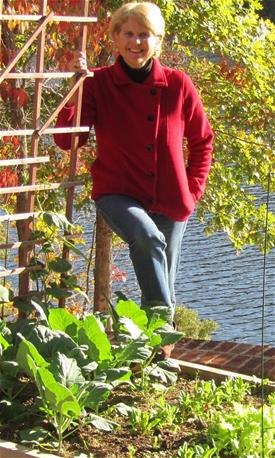
Wendy Demark-Wahnefried, PhD, RD, first heard about the Master Gardener Program while on faculty at Duke University. The school was participating in the Black Churches United for Better Health Project, which aimed to increased fruit and vegetable consumption among rural African Americans in North Carolina. To accomplish this, the project paired participants with Master Gardeners who guided them in cultivating gardens at their churches.

Master Gardeners are volunteers who receive their certification through cooperative extension offices in local land-grant universities. Participating institutions train people to become Master Gardenersby teaching them the science and art of gardening.After completing 50-100 hours of training and community service—and providing an additional 50 hours of service per year—Master Gardeners share their skills with their local communities.

Recalling Duke’s success in capitalizing on the Master Gardener Program to enhance the health of a local at-risk population, Dr. Demark-Wahnefried—now associate director of cancer prevention and control at the O’Neal Comprehensive Cancer Center at the University of Alabama at Birmingham—began pairing Master Gardeners with cancer survivors in Alabama. What started as a feasibility study with 12 participants in 2012 has evolved into a five-year clinical trial that will conclude in 2021. The Harvest for Health study has enrolled 326 participants thus far, and Dr. Demark-Wahnefried says she hopes to enroll up to 100 more before the trial’s conclusion.

Funded by the National Institutes of Health, Harvest for Health continually recruits participants age 60 and older who have completed cancer treatment and have a positive prognosis. Participants are part of the study for two years, during which they are monitored every six months for their levels of physical activity, stress, and quality of diet.

After applying to and being accepted into the study, participants meet their individually assigned Master Gardener, who mentors them throughout their program participation. These mentors help participants create their own gardens with tools and supplies provided by the program. Once their gardens are in place, mentors visit participants monthly to check on their progress, answer questions, and offer advice. When the seasons change, mentors help participants transform their gardens in response to the new season.

“Thus far, the program has been a success,” says Dr. Demark-Wahnefried. “Preliminary results show that diet and physical activity improve for people in this program and that participants maintain their behavior changes. Most participants continue gardening for years after the program ends for them.”

Dr. Demark-Wahnefried adds that interventions such as Harvest for Health may be particularly appealing to older cancer survivors. “I think that survivors are expressing a need, particularly older survivors, for more than just prescribed exercises,” says Dr. Demark-Wahnefried. “We’ve found in focus groups that older cancer survivors are looking for interventions that have personal meaning for them, that address holistic health beyond simply having a gym membership.”

Dr. Demark-Wahnefried expresses optimism that Harvest for Health can serve as a model for future, long-term wellness initiatives for cancer survivors. She says that participants remain enthusiastic about their gardens after they leave the program, and many maintain friendships with their gardening mentors. “We think this program is replicable, and we want to expand it more broadly,” Dr. Demark-Wahnefried says, “perhaps do a nationwide push.”

In the meantime, Dr. Demark-Wahnefried says she will be recruiting cancer survivors from middle to northern Alabama to participant in the last study cohort. Cancer survivors who are age 60 and older who are interested in the program can reach study staff toll-free at 1-844-476-9478 or by email to Harvest4Health@uab.edu.

Dr. Demark-Wahnefried and her colleagues will publish a comprehensive article on Harvest for Health and its findings in an upcoming issue of Oncology Issues. Follow ACCBuzz for updates on the program and its findings as it approaches its final stages.

The opinions expressed in this blog post are not necessarily those of ACCC or our member organizations. We encourage you to share our blog posts. You may reproduce our posts either in part or in full, or you may link to specific posts. Images may not be used or distributed. Any reproduction must link back to the original source. Do not alter the text of our materials, and cite the source as follows: “[blog title] was first published on [date] by the Association of Cancer Care Centers.” For more information, visit our Terms of Use.