Author(s):
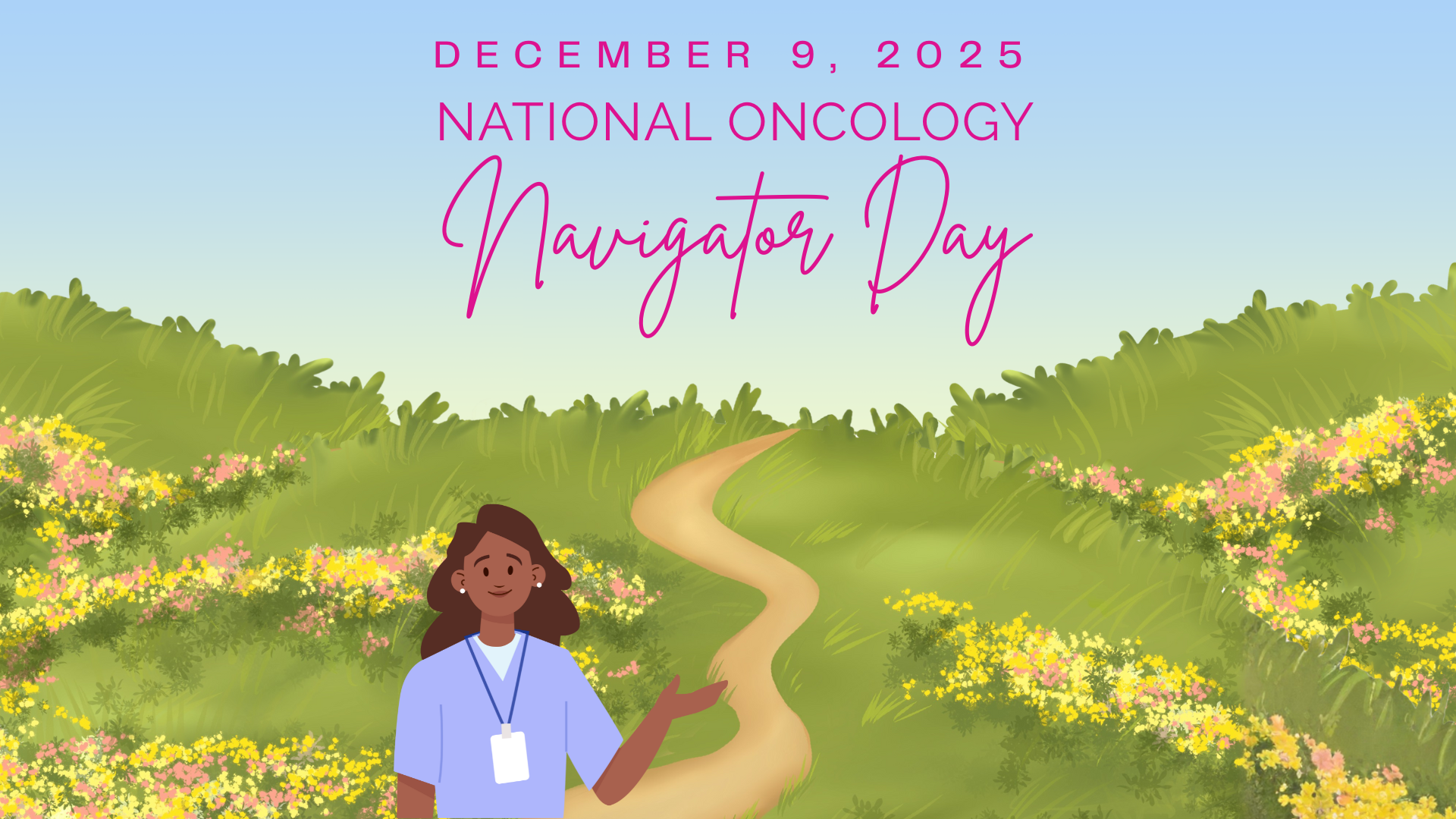
In honor of National Oncology Navigator Day, ACCC is pleased to share several initiatives from cancer programs across the country who are leveraging navigators in creative and successful ways.
No matter how efficient a health system is, navigating the cancer care continuum from diagnosis to survivorship can be a confusing and stressful process for patients. From financial challenges such as insurance questions and prior authorization to psychosocial needs and caregiver support, there are many areas of care to be addressed aside from the treatment itself.
Oncology navigators step in to fill this gap, and they do so with incredible knowledge, compassion, and empathy, understanding that the fragmented nature of the US health care system is challenging in the best of times, much less when a patient is weighed down by the stress of a cancer diagnosis. In honor of National Oncology Navigator Day, ACCC is pleased to share several initiatives from cancer programs across the country who are leveraging navigators in creative and successful ways.
With the support of the American Cancer Society, the first patient navigation program was established in 1990 at the Harlem Hospital Center by Harold P. Freeman, who firmly believed that “No person with cancer should spend more time fighting their way through the cancer system than fighting the disease.”
Since then, the navigator role has taken on new variations to best suit cancer programs and their communities. A prime example of this shift is George Washington (GW) Cancer Center’s move to employ a patient navigator rather than a traditional nurse navigator with a clinical background. By incorporating a nonclinical team member embedded within the community, the navigator can more easily build trust and rapport with patients with whom they already have much in common.
GW Cancer Center understands the resistance and distrust that historically marginalized populations have against the medical community. For patients, being able to talk to someone from their community and ask questions about support services, appointment scheduling, and clinical trials goes a long way to building confidence and self-advocacy skills.
Atrium Health Wake Forest Baptist’s comprehensive cancer center has implemented its own variation of the navigator role in the form of population health navigators. These team members are dedicated to supporting a specific underserved patient population—whether it be Black, Hispanic, or rural patients—rather than a specific cancer type.
Part of the value these navigators bring is their shared lived experiences with patients. As nonclinical professionals, such as legal specialists and patient advocates, their real-world skills allow them to connect with patients in a meaningful way. By understanding the nuances of a patient’s culture and identity, population health navigators are well-suited to provide culturally and linguistically competent services that truly meet patients and caregivers where they are.
One area in which Atrium Health Wake Forest Baptist has seen significant improvement is diverse clinical trial enrollment. Undeserved patient populations are frequently underrepresented in clinical research, both denying these patients access to cutting-edge treatment methods and yielding trial results that may not be applicable to all patients.
Prior to the integration of population health navigators, 12% of rural patients, 18% of Black patients, and 14% of Hispanic patients participated in clinical trials. When these patients had the support of a navigator, those numbers increased to 36%, 32%, and 31%, respectively. Read the full feature in Oncology Issues to learn how Atrium Health Wake Forest Baptist developed this novel approach to navigation and how it has evolved over time.
Advances in precision medicine continue to identify specific genes and proteins that are key elements in determining optimal treatment plans for individual patients. Unfortunately, not all patients have equal access to genetic and biomarker testing, causing racial and socioeconomic disparities in testing rates to grow.
The role of the precision medicine steward has since emerged as a means of meeting the demands of guideline-concordant biomarker testing. These stewards act as navigators who are dedicated exclusively to biomarker test ordering, biopsy samples, coordination of logistics for tissue transport, and delivery of test results. Acting as a liaison between oncologists, patients, nursing teams, pathology teams, and external reference laboratories, the precision medicine steward facilitates multidisciplinary coordination so that every patient has the same access to potentially life-saving cancer diagnostics.
To make the case for precision medicine stewards, ACCC partnered with the Academy of Oncology Nurse and Patient Navigators and the American Society for Clinical Pathology to showcase oncology programs that have successfully implemented these stewards into their centers. For an inside look into these programs’ focus groups—which examine the mechanics, advantages, and feasibility of integrating the role—read this executive summary.
Whether acting as patient navigators in the traditional clinical sense, working as a fixture in the community, or ensuring efficient care coordination for precision medicine, oncology navigators are key members of the multidisciplinary care team. Not only do they provide vital information and logistical support for patients, but they frequently serve as a compassionate ear who can ease some of the burden of cancer treatment.