Author(s):
In honor of the great sacrifice of Veterans and first responders and in pursuit of improving awareness, health literacy, and availability of assistance programs, the NCCN hosted a patient advocacy summit on December 9, 2025, in the nation’s capital.
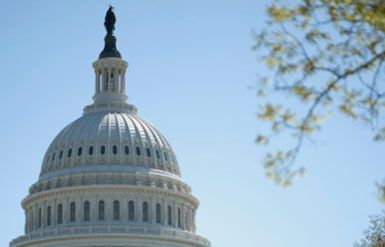
Members of the armed forces and first responders demonstrate incredible courage, selflessness, and resiliency each day when they put themselves in harm’s way for the good of others. In addition to the inherent occupational risk these individuals face, they are also at a higher risk for a variety of cancers, depending on their branch of service, location, and years served. Even more concerning, awareness levels of these risks remain alarmingly low, both among Veterans and first responders and among federal institutions.
In honor of these individuals’ great sacrifice and in pursuit of improving awareness, health literacy, and availability of assistance programs, the National Comprehensive Cancer Network (NCCN) hosted a patient advocacy summit on December 9, 2025, in the nation’s capital. There, providers, patients, patient advocates, and industry members gathered to address this population’s increased incidence of cancer and the unique needs they have as a result.
Moderated by Clifford Goodman, PhD, consultant, health care technology and policy, the first panel of the day opened with discussions of the key risk factors faced by Veterans and first responders and the awareness of these risks. According to Brett Sloan, MD, FAAD, professor of dermatology, former VA site director, and residency program director, UConn School of Medicine, the primary risk for Veterans is high UV exposure, since they often serve in desert and tropical environments with no sunscreen. “We see high incidence of melanoma,” he said, “and in Veterans, it’s typically late-stage.”
Jim Pantelas, Vietnam Era Veteran, survivor, and advocate, added that exposure to known toxins and carcinogens depends on the war a Veteran served in. For instance, many Veterans of the Cold War were exposed to high amounts of plutonium and uranium, while those who served in Afghanistan and Iraq were exposed to asbestos.
Firefighters, meanwhile, are exposed to carcinogens that originate from class A combustibles. “As firefighting has evolved, we’ve been exposed to more man-made toxins,” explained Dan Whu, MD, MPH, chief medical officer, International Association of Fire Fighters. This profession is the number 1 cause of line-of-duty deaths, or deaths that result directly from performing service.
A large proportion of these deaths result from direct and constant exposure to per- and polyfluoroalkyl substances (PFAS), which are applied to firefighters’ gear. Also known as “forever chemicals,” these fluorinated chemicals accumulate over time in the human body and in the surrounding environment. According to Dr. Whu, up to 50% of PFAS can migrate into the air to create what is dubbed “fire station dust,” therefore affecting both firefighters and those whom they interact with.
As Dr. Whu noted, “You can’t fix what you don’t identify. Awareness programs are the cornerstone of extinguishing cancer in the firefighter service.” Effective education allows for early screening, diagnosis, and intervention.
Shehnaz Hussain, PhD, ScM, lead researcher, California Firefighter Cancer Research Study, stated that many of the firefighters with whom she interacts have pretty high awareness of their cancer risk. The challenge, however, lies in intervention. “With firefighters, we need an intervention that is compatible with the duties of their profession, otherwise it won’t garner acceptable uptake,” she said.
One of the major barriers to care for Veterans brought to light by the panel is the fragmented nature of the Veterans Administration (VA) and the difference in the care received there and in community care centers. Pantelas affirmed that the Veteran community is not a monolith. Of the approximately 18 million US Veterans, only about 9 million qualify for care at the VA, of which 6 million actually receive care. The remaining Veterans get care in the general population, where primary care providers may not know to ask the right questions about relevant risk factors.
Dr. Sloan and Haley Moss, MD, MBA, gynecologic oncologist, Duke Cancer Institute, agreed, citing that the VA is known to have higher screening rates for skin, lung, breast, and cervical cancer than in the civilian population. Therefore, those Veterans who are unaware of the VA or do not qualify to receive care at VA health systems may not be appropriately screened and experience a late-stage diagnosis as a result.
The panelists also agreed that the differences in the VA from state to state amplify the difficulty of access. Dr. Sloan shared that for him, Disabled American Veterans was instrumental in getting him the care he needed. “When I was discharged from the Air Force, I didn’t even know I could get care at the VA,” he said. “Service members are not being educated as they leave.”
Dr. Moss added that depending on the state, some VA facilities have oncologists on staff and clinical trials available, and some don’t. “If you’re getting the majority of your care in the community, you’re likely not talking to social workers who can tell you if you qualify for benefits. It’s a largely fragmented system,” she noted.
Rounding out the discussion, Dr. Whu reaffirmed that for many first responders, lack of accessibility is rooted in a lack of knowledge. “When you get diagnosed with cancer, your world changes, and it’s up to you to navigate the complex system of cancer care,” he said. This is where the help of navigators is incredibly valuable.
Following the morning panel, attendees heard from Mariannette Miller-Meeks, MD, MS, Army Veteran, US House of Representatives (IA-01), on her legislative priorities for supporting Veterans and first responders. As an Army Veteran herself, Representative Miller-Meeks understands firsthand the myriad challenges—physical, emotional, and psychological—these individuals face in such a fragmented health care system.
Reflecting on her unique background, she emphasized that one of the most important attributes for a nurse, physician, and member of the military is the ability to listen: “Not listening to know what you’re going to say next. Listening to pick up on clues before a person tells you anything. Listening with your eyes as well as your ears. Looking at the behavior around you. That skillset is tremendously important and can be used as a member of Congress, where you hope to use your foundational knowledge to craft policy.”
Representative Miller-Meeks also addressed earlier concerns raised by the panel, such as the lack of continuity of care Veterans and first responders frequently experience. She stated that legislation addressing suicide prevention and the treatment of posttraumatic stress disorder and substance use disorder is a huge priority for her. She also expressed interest in investigating how psychedelics can be used in the treatment of mental illness, understanding how significant the side effects of traditional mental health medication can be.
When it comes to fragmented care, Representative Miller-Meeks said that when members of the military in reserve return from active duty, they don’t return to a base—where they would have the support of other military members who understand what they’ve been through—but to the community. Often, these individuals are discharged, and then are at a loss as how to get access to the care they need, especially if they live far away from a VA center.
“It is a priority for us, making sure Veterans have access to care when and where they are,” said Representative Miller-Meeks, mentioning the importance of the Transition Assistance Program for service members as they adjust to civilian life. She also alluded to Congress’ awareness of and efforts to address difficulties with sharing patient information via electronic health records among active-duty military, VA health centers, and community care centers.
To close out the segment, Representative Miller-Meeks reaffirmed her commitment to drive down prescription drug costs and premiums. “We want health care costs to become more affordable for everyone,” she said. “Whatever policies we develop must be geared toward this goal.”
For a recap of the afternoon portion of the NCCN Patient Advocacy Summit, read the next ACCCBuzz Blog.